
What Insurance Group Is My Car? One Number, Big Savings
Find out what insurance group your car is in, how UK car insurance groups work, what affects premiums and why newer cars use Vehicle Risk Rating.
What Insurance Group Is My Car? How to Check and What It Really Means
If you're asking, "what insurance group is my car?", you're probably trying to work out why one car costs buttons to insure while another makes your quote look like a small mortgage.
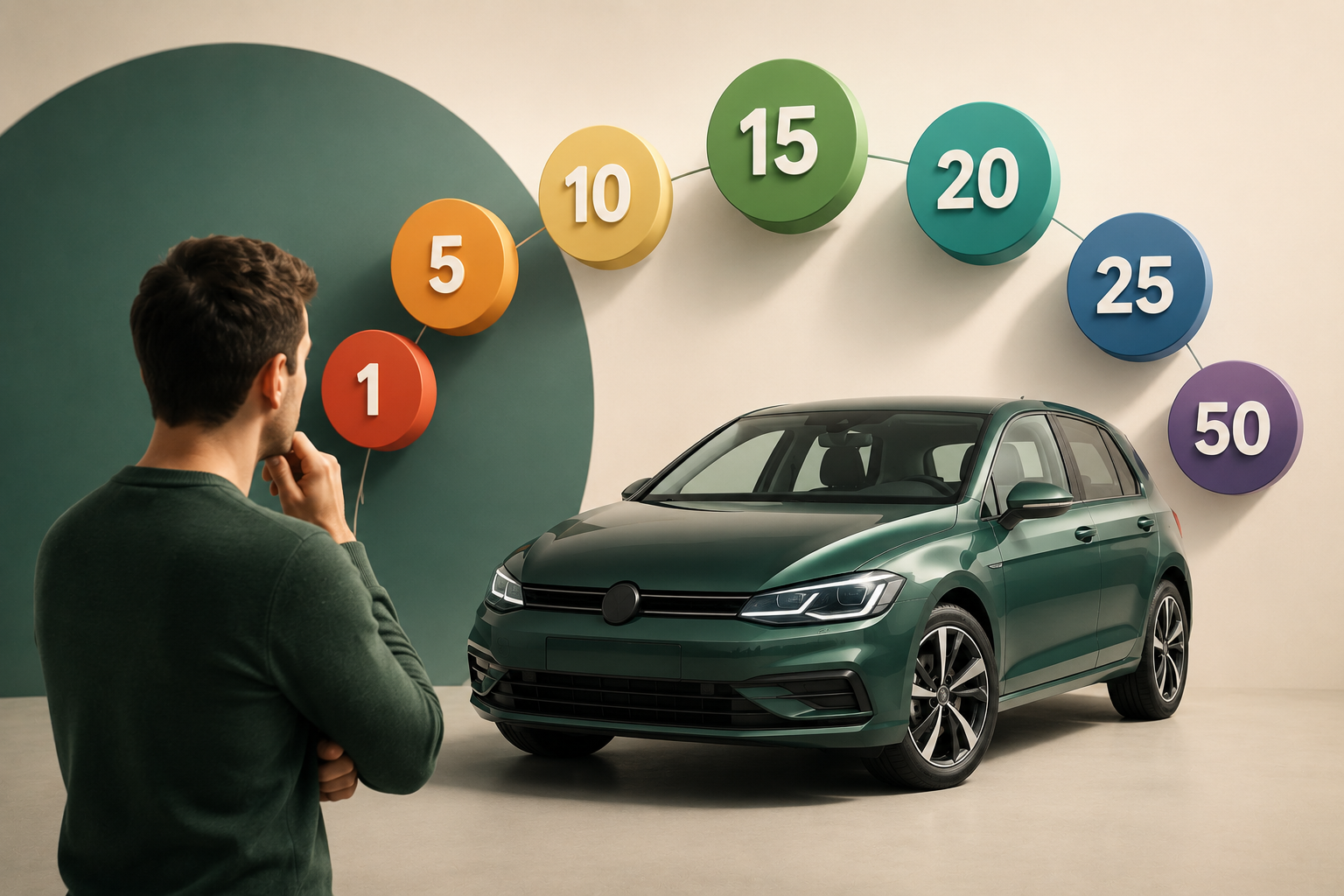
In the UK, most cars have traditionally been placed into an insurance group from 1 to 50. The lower the group, the cheaper the car is usually expected to be to insure. But the group number is only part of the story. Your age, postcode, driving history, mileage, occupation and even where the car sleeps at night can all change the final price.
This guide explains how car insurance groups work, how to check your car's group, what affects the rating and why newer cars may now be assessed differently under Vehicle Risk Rating.
Quick Answer: What Insurance Group Is My Car?
You can check your car's insurance group using a car insurance group checker, your insurer, a comparison site or vehicle data tools such as Thatcham Research's vehicle lookup. Most UK cars are rated from group 1 to group 50, with group 1 generally being the cheapest to insure and group 50 typically the most expensive.
For newer model ranges launched from August 2024 onwards, insurers are also moving towards the newer Vehicle Risk Rating system.
Useful source: Thatcham Research Group Rating information
What Is a Car Insurance Group?
A car insurance group is a rating used by insurers to help estimate how risky and expensive a vehicle may be to insure. The traditional UK system places cars into one of 50 groups:
| Insurance Group | General Meaning |
|---|---|
| 1–10 | Usually cheaper, smaller or lower-risk cars |
| 11–20 | Typical small family cars and everyday hatchbacks |
| 21–30 | Larger, more powerful or better-equipped models |
| 31–40 | Premium, performance or more complex vehicles |
| 41–50 | High-performance, luxury or expensive-to-repair cars |
Useful source: RAC car insurance groups guide
Who Decides Car Insurance Groups?
Car insurance group ratings are administered by Thatcham Research on behalf of the Association of British Insurers. The Group Rating Panel uses detailed vehicle data to assess the risk of different models, reviewing more than 125 vehicle attributes including repair costs, parts prices, performance, safety technology and security.
How to Check What Insurance Group Your Car Is In
You can usually check your car's insurance group in several ways:
- Use an insurance group checker — Many comparison websites and motoring services allow you to search by registration number or make and model.
- Check with your insurer — Your current or prospective insurer can usually confirm the group used for your vehicle.
- Use Thatcham-related vehicle data tools — Thatcham Research provides industry data used to support insurance group ratings.
- Check car buying websites — Auto Trader, Parkers, What Car? and similar UK sites often include insurance group information in vehicle specifications.
- Look carefully at the exact model — Insurance groups vary by engine, trim, body style, transmission and sometimes even equipment level.
What Affects a Car's Insurance Group?
Several factors influence the group a car is placed in.
Repair Costs
If a car is expensive to repair after an accident, it will usually sit in a higher insurance group. Modern cars can be particularly costly because sensors, cameras and driver-assistance systems may be built into bumpers, windscreens and mirrors.
Parts Prices
The cost and availability of replacement parts matters. A car with cheap, widely available parts is usually less costly to repair than one requiring specialist components.
Performance
Faster cars tend to sit in higher insurance groups. Acceleration, top speed, engine power and weight can all affect risk.
Vehicle Value
More expensive cars usually cost more to replace if written off, which can increase the group rating.
Safety Equipment
Features such as autonomous emergency braking, lane support, stability control and strong crash protection may help lower the likelihood or severity of claims.
Security
Factory-fitted alarms, immobilisers, tracking systems and resistance to theft all play a role. Cars vulnerable to theft or keyless-entry attacks may cost more to insure.
Useful source: MoneyHelper car insurance cost guidance
Does a Lower Insurance Group Always Mean Cheaper Insurance?
Usually, but not always. Insurance groups are important, but they are only one part of the calculation. Insurers also consider your age, driving experience, claims history, convictions, postcode, occupation, annual mileage, where the car is parked overnight, the type of cover, voluntary excess, modifications, no-claims discount, and whether the car is used for commuting or business.
A 45-year-old with 20 years of claim-free driving may find a group 25 car perfectly affordable. A 17-year-old newly qualified driver may discover that even a group 8 car produces a quote that needs a chair and a glass of water.
What Are the Cheapest Insurance Groups?
Group 1 is generally the cheapest insurance group. Cars in lower groups are usually smaller, less powerful, cheaper to repair, less expensive when new, and popular enough to have widely available parts. If you're buying your first car, looking at groups 1–10 is often a sensible starting point.
What Are the Most Expensive Insurance Groups?
Group 50 is generally the most expensive. Cars in the highest groups are often powerful, expensive, rare, complex to repair, performance-focused, or costly to replace after a total loss. Sports cars, luxury SUVs, high-performance saloons and some electric vehicles can sit in higher groups.
What Do Insurance Group Letters Mean?
You may sometimes see letters after an insurance group number, such as 12E, 25A or 30D. These letters relate to how the vehicle's security compares with expectations for that group.
| Letter | Meaning |
|---|---|
| A | Meets security requirements for the group |
| D | Does not meet expected security requirements, so the group may be increased |
| E | Exceeds security requirements, so the group may be reduced |
| P | Provisional rating because data is incomplete |
| U | Unacceptable security risk |
| G | Grey import |
What Is Vehicle Risk Rating?
Vehicle Risk Rating (VRR) is a newer system developed by Thatcham Research to reflect modern vehicle risk more accurately. Instead of one broad 1–50 group, VRR looks at five key areas: Damage, Repair, Safety, Security and Performance.
Useful source: Thatcham Research Vehicle Risk Rating
Does Vehicle Risk Rating Replace Insurance Groups?
For many existing cars, the familiar 1–50 insurance group system still matters. However, new model ranges launched from August 2024 onwards are moving towards Vehicle Risk Rating. Some newer cars may therefore be assessed using both the old group rating and the newer VRR approach.
Why Insurance Group Matters When Buying a Used Car
If you're buying a used car, insurance group should be one of your checks before you commit. It affects running costs, first-year affordability, whether the car suits new drivers, young driver insurance quotes, and long-term ownership costs.
Before buying, you should also check the vehicle's MOT history for mileage records, advisories and repeated faults.
Buying a used car? CHECK THE VEHICLE'S MOT HISTORY HERE BEFORE YOU BUY.
Can You Lower Your Car's Insurance Group?
No, not usually. The insurance group belongs to the vehicle, not the driver. However, you may still reduce your premium by comparing quotes, choosing a car in a lower group, building a no-claims discount, increasing voluntary excess carefully, reducing annual mileage if accurate, avoiding unnecessary modifications, parking securely overnight, adding an experienced named driver where legitimate, paying annually if affordable, and renewing at the right time.
Never lie on an insurance application. It can invalidate your policy and make future insurance more difficult or expensive.
Are Modified Cars in Higher Insurance Groups?
The official group may not change, but your premium can. Modifications can increase insurance costs because they may affect performance, value, theft risk or repair complexity. Always declare modifications including engine remaps, exhaust changes, suspension lowering, alloy wheels, body kits, performance upgrades, non-standard audio systems, and cosmetic wraps in some cases.
FAQs
What insurance group is my car in?
You can check your car's insurance group using a car insurance group checker, your insurer, comparison websites or vehicle data services. Make sure you search for the exact make, model, engine, trim and year.
Is insurance group 1 cheap?
Yes. Group 1 is generally the cheapest car insurance group in the traditional UK system. However, your personal details and driving history still affect your quote.
Is insurance group 50 expensive?
Usually, yes. Group 50 vehicles are typically among the most expensive to insure because they may be powerful, valuable, complex or costly to repair.
Does insurance group affect my quote?
Yes, but it is only one factor. Your age, postcode, claims history, mileage, occupation, parking location and chosen cover level also affect your premium.
Can the same car have different insurance groups?
Yes. Different versions of the same model can have different groups depending on engine size, trim, performance, safety equipment and specification.
Are electric cars more expensive to insure?
Some electric cars can be more expensive to insure because of battery costs, specialist repairs and advanced technology. However, this varies by model and insurer.
What is replacing car insurance groups?
Vehicle Risk Rating is gradually being introduced for newer vehicles. It assesses damage, repair, safety, security and performance rather than relying on one broad group number.
Should I check insurance group before buying a car?
Yes. Always check the insurance group and get real quotes before buying, especially if you are a young driver or choosing a performance, premium or electric vehicle.
Conclusion
Your car's insurance group gives insurers an important clue about how expensive and risky the vehicle may be to insure. Lower groups are usually cheaper, while higher groups tend to belong to more powerful, valuable or complex cars. But the group number is not the final quote. Your personal circumstances matter just as much.
If you're choosing your next car, check the insurance group, compare real quotes and review the vehicle's MOT history before handing over your money.