
How to Clean Car Seats: Fabric & Leather Guide
Learn how to clean car seats properly, remove stains from fabric and leather, avoid damage and keep your car interior fresh.
How to Clean Car Seats Properly: Fabric, Leather and Stain Removal Guide
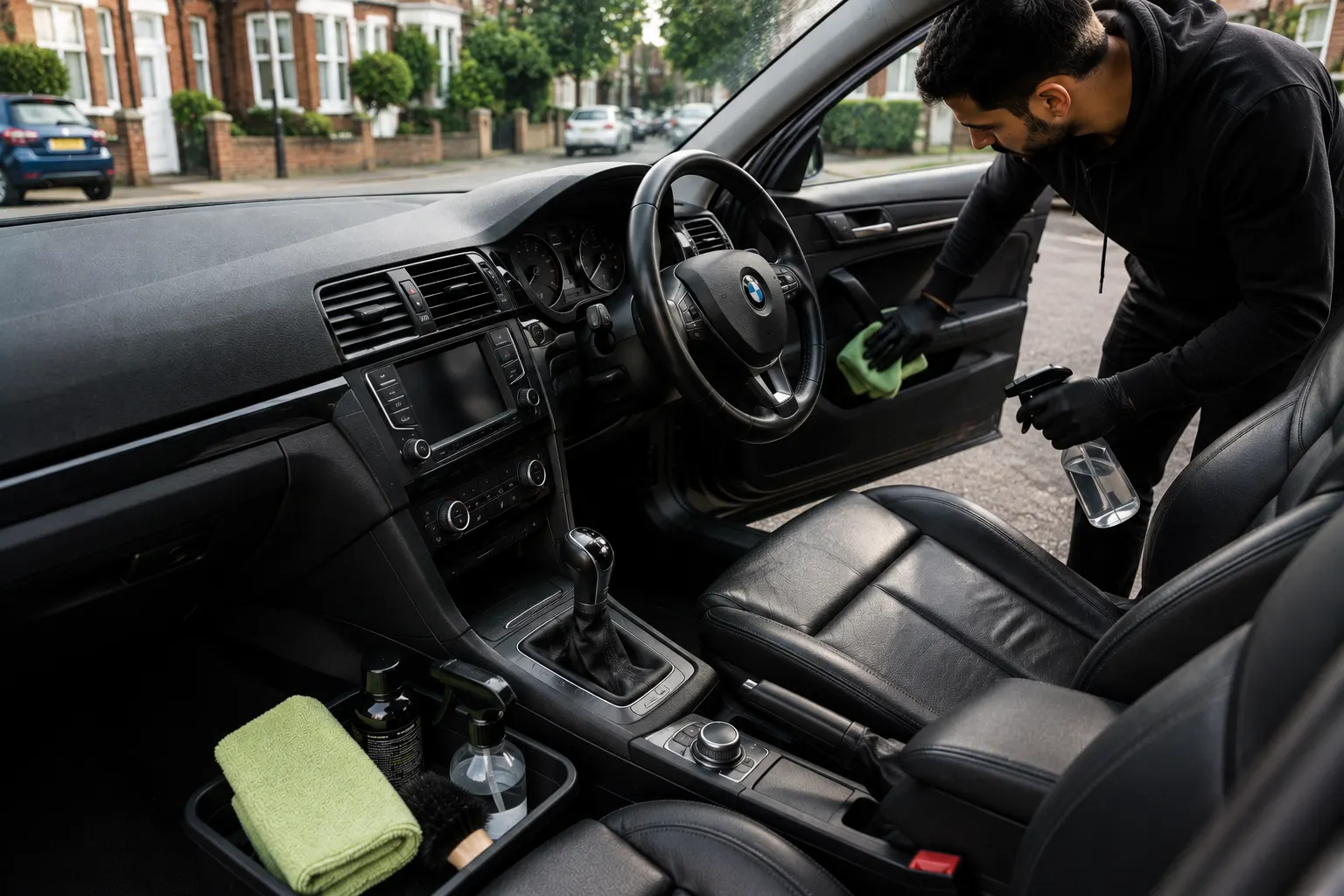
Car seats live a hard life. Coffee gets launched at them during ambitious roundabout manoeuvres, children treat them like snack storage, and dogs somehow manage to distribute half a field across the back bench. Happily, most car seats can be cleaned properly at home if you use the right method.
The key is knowing what material you're dealing with. Fabric, leather, faux leather and child car seats all need slightly different treatment. Use the wrong product and you may turn a simple clean into a permanent reminder of your enthusiasm.
This guide explains how to clean car seats safely, remove common stains, avoid damage and keep your interior looking fresh for longer.
Quick Answer: What Is the Best Way to Clean Car Seats?
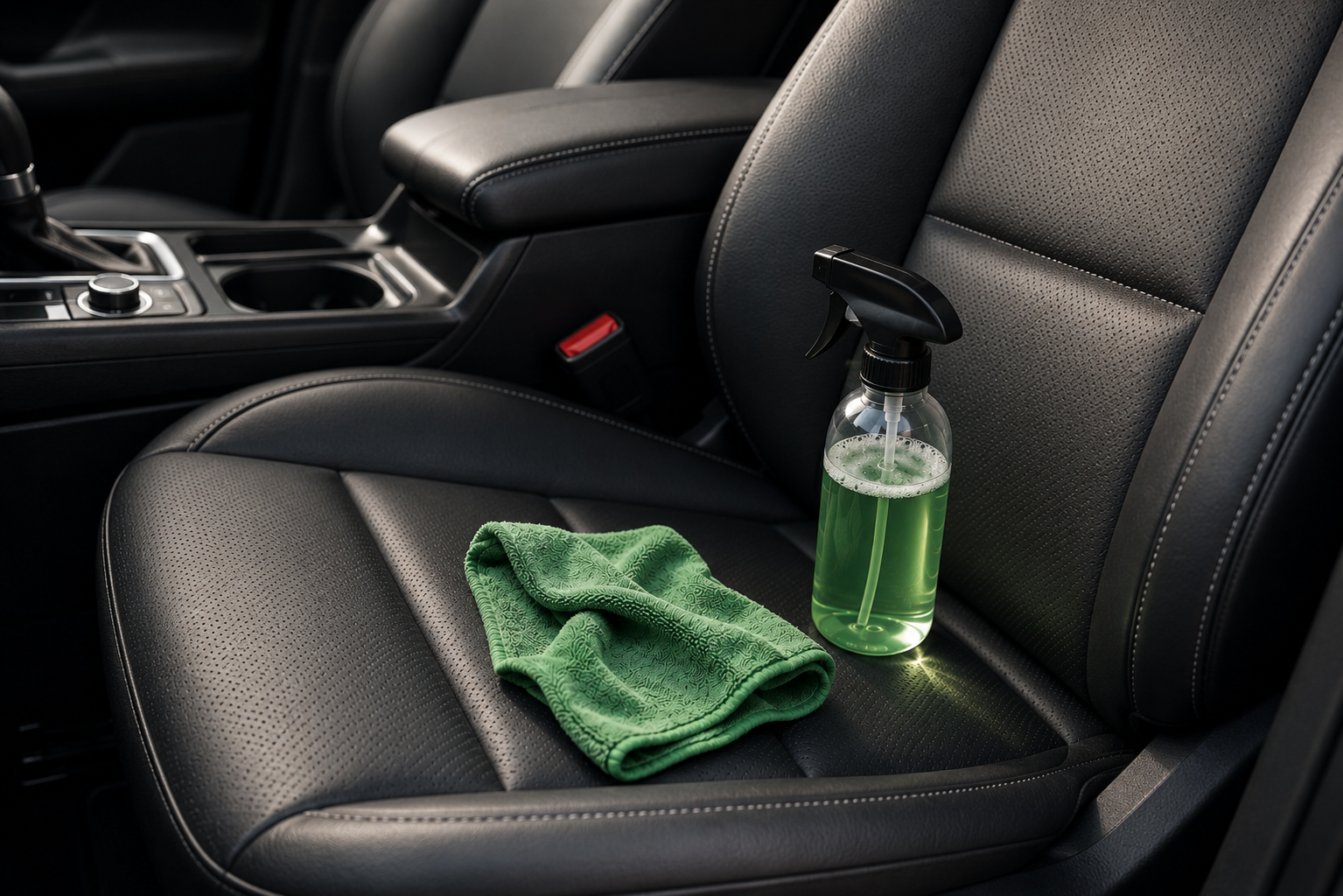
The best way to clean car seats is to vacuum thoroughly first, identify the seat material, then use a cleaner designed for that surface. Fabric seats usually need a car upholstery cleaner and gentle agitation. Leather seats need a dedicated leather cleaner and soft cloth. Avoid soaking seats, using bleach or scrubbing aggressively.
What You'll Need Before You Start
You do not need a professional detailing van or a cupboard full of mysterious bottles. For most car interiors, you'll need:
- Vacuum cleaner with brush and crevice tools
- Microfibre cloths
- Soft detailing brush or upholstery brush
- Car upholstery cleaner for fabric seats
- Leather cleaner for leather seats
- Leather conditioner or protector, where suitable
- Warm water
- Clean dry towels
- Wet-dry vacuum or upholstery extractor, if deep cleaning fabric
- Nitrile gloves, if using cleaning chemicals
Avoid using strong household cleaners unless the product clearly says it is safe for car upholstery. Car interiors use different materials, coatings, adhesives and stitching compared with household furniture.
Step 1: Identify Your Seat Material
Before cleaning, work out what your seats are made from. Most car seats fall into one of these categories:
| Seat Type | Best Cleaning Approach |
|---|---|
| Fabric / cloth | Vacuum, upholstery cleaner, soft brush, blot dry |
| Leather | Vacuum gently, leather cleaner, microfibre cloth, conditioner |
| Faux leather / vinyl | Mild interior cleaner, damp cloth, wipe dry |
| Alcantara / suede-like trim | Specialist cleaner, very gentle brushing, minimal moisture |
| Child car seat | Follow manufacturer instructions carefully |
If you are unsure, check your vehicle handbook or the manufacturer's website. Do not rely entirely on appearance. Some "leather" seats are actually coated leather, synthetic leather or part-leather. Treating everything like an old Chesterfield sofa is how interiors end up shiny, cracked and faintly tragic.
Step 2: Remove Rubbish and Vacuum Thoroughly
Start with the basics. Remove mats, seat covers, child seats, loose rubbish, coins, food wrappers and the ancient chip wedged between seat and centre console.
Then vacuum the seats properly. Use a crevice tool to clean seat seams, seat bolsters, gaps between backrest and base, around seat rails, rear bench edges and ISOFIX points.
This step matters because loose grit can scratch leather or become muddy when you add cleaner to fabric. It is also astonishing what a vacuum finds. Often enough crumbs to reconstruct a biscuit.
How to Clean Fabric Car Seats
Fabric car seats are common, practical and good at absorbing everyday mess.
Step 1: Test the Cleaner First
Spray a small amount of upholstery cleaner on a hidden area and wait a few minutes. Check for colour transfer, fading, water marks or fabric distortion. If the material reacts badly, stop and use a different product.
Step 2: Apply Cleaner Lightly
Spray upholstery cleaner onto the seat or onto a microfibre cloth, depending on the product instructions. Do not saturate the fabric. Too much water can soak into the foam beneath and cause damp smells, mould or water marks.
Step 3: Agitate Gently
Use a soft upholstery brush or microfibre cloth to work the cleaner into the fabric. Use gentle circular or straight-line motions. You are cleaning a car seat, not sanding a garden fence.
Step 4: Blot and Wipe
Use a clean microfibre towel to lift dirt and excess cleaner. Repeat the process if needed rather than drowning the seat in one attempt.
Step 5: Dry Properly
Leave the doors or windows open if safe to do so. You can speed up drying with ventilation, heater fan, dehumidifier, clean dry towels or a wet-dry vacuum. Do not sit on damp seats if you can avoid it — trapped moisture can lead to smells.
Deep Cleaning Fabric Seats
For heavily soiled fabric seats, an upholstery extractor or carpet cleaner can work well. These machines spray water and cleaning solution into the fabric, then vacuum the dirty liquid back out. It is a more thorough method than hand cleaning and can reduce water marks when used properly.
This is useful for food stains, mud, drink spills, general grime, odours and older cars with neglected interiors. Use the correct detergent and do not over-wet the seats.
How to Clean Leather Car Seats
Leather needs a more careful approach.
Step 1: Vacuum Gently
Use a soft brush attachment. Pay special attention to seams and creases where grit collects. Grit left on leather can act like sandpaper when you start wiping.
Step 2: Use a Dedicated Leather Cleaner
Apply leather cleaner to a microfibre cloth rather than spraying heavily onto the seat. Work in small sections and wipe gently. Avoid scrubbing, especially on older leather where the protective coating may already be worn.
Step 3: Wipe Away Residue
Use a clean, slightly damp cloth to remove loosened dirt and product residue, then dry with another microfibre cloth.
Step 4: Condition or Protect
Some leather interiors benefit from a suitable leather conditioner or protector after cleaning, especially older leather. Many modern car seats use coated leather, so choose a product designed for automotive leather. Avoid greasy conditioners that leave seats shiny and slippery. Your driver's seat should not feel like a frying pan.
How to Clean Faux Leather or Vinyl Seats
Faux leather and vinyl are usually easier to clean than fabric, but they can still be damaged by harsh chemicals. Use mild interior cleaner, a damp microfibre cloth, soft brush for textured areas, and dry cloth afterwards. Avoid bleach, abrasive pads, strong solvents, excessive scrubbing and silicone-heavy products that leave a greasy finish.
How to Clean Alcantara or Suede-Style Seats
Alcantara and suede-like trims need specialist care. Use a cleaner specifically designed for Alcantara or microsuede. Avoid heavy soaking, aggressive brushing and standard upholstery products unless the label clearly says they are suitable. For expensive or heavily stained Alcantara, professional cleaning may be safer.
How to Remove Common Car Seat Stains
Different stains need different treatment:
| Stain | What to Do |
|---|---|
| Coffee | Blot quickly, use upholstery cleaner, repeat gently |
| Mud | Let it dry first, vacuum, then clean |
| Grease | Use an upholstery cleaner suitable for oily stains |
| Chocolate | Remove solids first, clean gently with fabric cleaner |
| Milk | Blot quickly, clean thoroughly and dry well to prevent odour |
| Vomit | Remove solids, clean, deodorise and dry fully |
| Ink | Use a specialist product; test first |
| Pet mess | Use an enzyme cleaner if safe for the material |
The golden rule is to blot, not rub. Rubbing often spreads the stain and drives it deeper into the fibres.
How to Remove Bad Smells from Car Seats
Odours usually come from trapped moisture, food, milk, smoke, pets or bacteria. Try this: remove all rubbish, vacuum thoroughly, clean the affected area, dry the seats completely, air the car, replace cabin air filter if smells persist, and use an odour neutraliser designed for car interiors.
Avoid simply spraying air freshener over the problem. That just gives you "old milk and pine forest", which is not an improvement. For persistent damp smells, check for water leaks around doors, windows, boot seals and sunroofs.
How to Clean Child Car Seats Safely
Child car seats are safety equipment, not ordinary upholstery. Always follow the child seat manufacturer's instructions. Some covers can be removed and washed, but harness straps and buckles often need much more careful treatment.
- Check the manual before removing covers
- Take photos before disassembly
- Do not machine wash harness straps unless the manufacturer specifically allows it
- Do not use bleach or harsh chemicals on harnesses
- Do not soak safety straps
- Clean buckles only as instructed
- Let all parts dry fully before refitting
- Make sure the seat is reassembled correctly
If the harness, buckle or shell appears damaged, contact the manufacturer before using the seat again.
Mistakes to Avoid When Cleaning Car Seats
- Using too much water
- Scrubbing aggressively
- Using bleach
- Using washing-up liquid on leather
- Cleaning leather with household wipes
- Leaving fabric seats damp
- Skipping the vacuum stage
- Forgetting to test products first
- Using silicone dressings on seats
- Reassembling child seats incorrectly
A quick clean done carefully is better than a heroic deep clean that ruins the material.
How Often Should You Clean Car Seats?
| Cleaning Task | Suggested Frequency |
|---|---|
| Remove rubbish | Weekly |
| Vacuum seats | Every 2–4 weeks |
| Spot clean stains | As soon as possible |
| Deep clean fabric | Every 3–6 months, or as needed |
| Clean leather | Every 1–3 months |
| Condition/protect leather | Every 3–6 months, depending on use |
| Child car seat clean | As needed, following manual |
Families, pet owners, taxis and rideshare drivers will usually need to clean more often. Regular cleaning helps preserve resale value. A buyer may forgive stone chips. They are less forgiving when the interior smells like a service station bin in August.
Should You Get Car Seats Professionally Cleaned?
Professional cleaning may be worth it if the stains are severe, the car smells strongly of smoke or pets, the seats are expensive leather or Alcantara, you are preparing the car for sale, or there is mould or water damage. Professional detailers have extraction machines, steam tools, specialist products and experience with different materials.
Does Cleaning Car Seats Help Resale Value?
Yes, indirectly. Clean seats will not turn a tired old hatchback into a collector's item, but they can improve buyer confidence. Interior condition tells buyers how the car has been treated.
Selling or buying a used car? CHECK THE VEHICLE'S MOT HISTORY HERE.
FAQs
Can I clean car seats with washing-up liquid?
It is better to use a cleaner designed for car upholstery. Washing-up liquid can leave residue and may not be suitable for leather, coated materials or interior trims.
Can I use a carpet cleaner on car seats?
Yes, an upholstery extractor or carpet cleaner can be used on many fabric car seats, provided you use the correct attachment, detergent and avoid over-wetting the seat.
How do I dry car seats after cleaning?
Use clean towels, ventilation, a wet-dry vacuum if available and warm airflow from the car's heater. Make sure seats are fully dry to prevent odours or mould.
Can I steam clean car seats?
Steam can be useful on some surfaces, but it is not suitable for every material. Be very careful with leather, Alcantara, adhesives, electronics and child car seats. Check manufacturer guidance first.
How do I remove water marks from fabric car seats?
Water marks often happen when only one small area is cleaned. Lightly cleaning the whole panel evenly and extracting moisture properly can help reduce marks.
How do I clean leather car seats without damaging them?
Vacuum gently, use a dedicated automotive leather cleaner on a microfibre cloth, avoid harsh chemicals, wipe away residue and use a suitable leather protector or conditioner if appropriate.
Can I clean child car seat straps?
Usually only with a damp cloth and mild soap if permitted by the manufacturer. Do not soak, bleach or machine wash harness straps unless the manufacturer specifically says it is safe.
What is the best way to remove smells from car seats?
Remove the source, vacuum thoroughly, clean the affected area with a suitable product, dry the seat completely and ventilate the car. For organic smells, a safe enzyme cleaner may help.
Conclusion
Cleaning car seats properly is mostly about patience, the right products and not treating every surface the same. Fabric seats can usually be cleaned with upholstery cleaner and gentle brushing, leather needs specialist care, and child car seats must always be cleaned according to manufacturer instructions.
The best approach is simple: vacuum first, test products, use minimal moisture, clean gently and dry thoroughly. Do that, and your interior should look fresher, smell better and feel far less like it has spent the last five years hosting a mobile picnic.