
How to Freshen a Car Interior
Learn how to freshen a car interior, remove bad smells, clean seats and mats, deal with air-con odours and keep your cabin smelling clean.
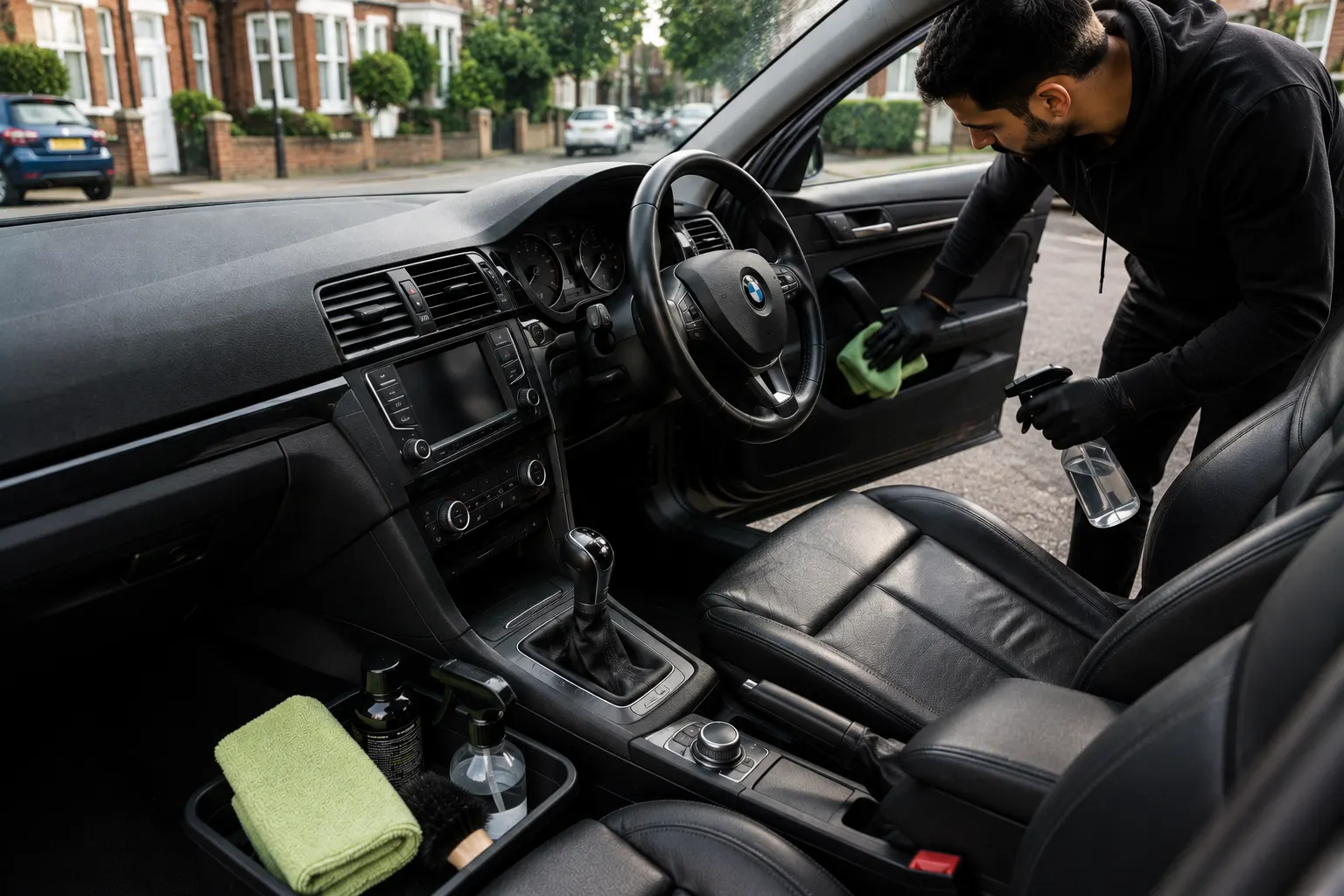
How to Freshen a Car Interior
The best way to freshen a car interior is to remove the source of the smell first, then clean the surfaces, carpets, seats, mats and air vents properly. Air freshener on its own will not fix a dirty cabin. It only hides the problem for a while.
Start by taking everything out of the car, vacuuming thoroughly, wiping hard surfaces, cleaning the mats, treating fabric or leather seats, and airing the car out. If the smell is musty, smoky, damp or coming from the vents, you may also need to clean the air-conditioning system, replace the cabin filter or dry out wet carpets.
A fresh-smelling car is not about hanging three pine trees from the mirror and hoping for the best. It is about cleaning the places where dirt, moisture and odours actually live.
Quick Answer: How Do You Freshen a Car Interior?
To freshen a car interior, remove rubbish and personal items, vacuum the seats and carpets, clean the mats separately, wipe the dashboard and trim, clean the glass, treat fabric or leather seats, clean air vents, replace the cabin filter if needed, and let the car air out properly. If the smell remains, find the source rather than just adding air freshener.
Step 1: Remove Everything from the Car
Before cleaning, empty the car properly.
Take out:
- Rubbish
- Food wrappers
- Drinks bottles
- Receipts
- Old parking tickets
- Gym bags
- Wet clothes
- Child seats
- Boot clutter
- Floor mats
- Seat covers
- Loose items under the seats
Bad smells often come from something simple that has been left in the car too long. Food, spilled drinks, wet towels, muddy shoes, takeaway bags and damp mats can all make the cabin smell stale.
Check under the seats carefully. That is where old chips, coins, wrappers and mystery objects go to build their own civilisation.
Step 2: Vacuum the Interior Properly
Vacuuming is the foundation of a fresh interior.
Do not just run the vacuum over the middle of the floor and call it done. Dirt and smells sit in the edges, seams and gaps.
Vacuum:
- Front footwells
- Rear footwells
- Under the seats
- Seat rails
- Seat gaps
- Seat stitching
- Boot carpet
- Door pockets
- Centre console gaps
- Around pedals
- Between seat cushions
- Rear parcel shelf
- Child-seat areas
Use a crevice tool if you have one. It makes a big difference around seat rails, gear selectors and the centre console.
If you have pets, use a rubber brush, pet-hair tool or slightly damp rubber glove to lift hair before vacuuming. Pet hair clings to fabric like it has paid rent.
Step 3: Clean the Floor Mats Separately
Floor mats trap a lot of dirt, water and odour.
Remove them from the car before cleaning.
For rubber mats:
- Shake off loose dirt.
- Rinse with water.
- Scrub with mild cleaner.
- Rinse again.
- Dry fully before putting them back.
For carpet mats:
- Shake them out.
- Vacuum both sides.
- Use carpet cleaner if needed.
- Scrub stains gently.
- Let them dry completely.
Do not put damp mats back into the car. Damp mats can make the cabin smell musty and can cause moisture problems inside the vehicle.
If the mats still smell after cleaning, replace them. Sometimes a mat has suffered enough.
Step 4: Wipe the Dashboard, Doors and Trim
Hard surfaces collect dust, fingerprints, grease and old product residue.
Wipe down:
- Dashboard
- Steering wheel
- Gear selector
- Handbrake
- Door cards
- Window switches
- Indicator stalks
- Cup holders
- Centre console
- Glovebox handle
- Seat controls
- Boot trim
Use a proper interior cleaner or a mild all-purpose cleaner that is safe for car interiors. Avoid soaking electrical switches or screens.
For touchscreens and gloss-black trim, use a soft microfibre cloth. These surfaces scratch easily.
Be careful with shiny dashboard dressings. Too much product can leave a greasy finish and cause glare on the windscreen. A clean, satin finish usually looks better than a dashboard that resembles a glazed doughnut.
Step 5: Clean the Seats
The right method depends on the seat material.
Fabric Seats
For fabric seats:
- Vacuum first.
- Use a fabric or upholstery cleaner.
- Spray lightly rather than soaking.
- Agitate with a soft brush.
- Wipe with a clean microfibre cloth.
- Leave the doors open so the seats can dry.
Do not over-wet fabric seats. Too much moisture can soak into the foam and cause musty smells later.
For stains, treat the specific area first. Coffee, milk, fizzy drinks and food spills may need more than one clean.
Leather Seats
For leather seats:
- Vacuum gently.
- Use a leather-safe cleaner.
- Wipe with a soft cloth.
- Avoid harsh household cleaners.
- Condition if the leather feels dry.
Do not scrub aggressively. Leather can crack, fade or become shiny if treated badly.
Also, not all “leather” interiors are full leather. Some are coated leather, synthetic leather or part-leather. Use products designed for car interiors, not random kitchen sprays.
Alcantara or Suede-Like Seats
For Alcantara or suede-style materials, be gentle.
Use a suitable cleaner, a soft brush and light pressure. Avoid soaking the material.
If you are unsure, test in a hidden area first or use a professional detailer.
These materials can look premium when clean and tragic when attacked with the wrong product.
Step 6: Clean the Windows and Mirrors
Dirty interior glass makes the car feel older and grimier than it is.
Clean:
- Inside of windscreen
- Side windows
- Rear window
- Mirrors
- Sunroof glass, if fitted
Use a good glass cleaner and a clean microfibre cloth.
The inside windscreen often gets a greasy film from breath, dust, plastics, smoking, vaping and air vents. Cleaning it properly can make the interior feel much fresher and improve visibility at night.
Do not forget the top corners of the windscreen. That is where streaks like to hide until headlights expose your life choices.
Step 7: Clean the Air Vents
Air vents collect dust and can spread stale smells through the cabin.
Use:
- A soft detailing brush
- A small vacuum attachment
- A microfibre cloth
- Vent-cleaning brush
- Cotton buds for tight gaps
Gently clean around each vent and vacuum loose dust.
If the smell comes from the vents when you turn the fan or air conditioning on, the issue may be deeper than surface dust. It could be the cabin filter, moisture in the system, mould in the evaporator area or blocked drainage.
Step 8: Replace the Cabin Filter If Needed
The cabin filter helps filter air entering the cabin. If it is old, dirty or damp, it can make the interior smell stale.
Signs the cabin filter may need replacing include:
- Musty smell from vents
- Weak airflow
- Dusty cabin
- Allergy symptoms inside the car
- Air con smells bad when switched on
- Filter has not been changed for years
Cabin filters are often replaced during servicing, but not always. Check your service schedule or ask your garage.
On some cars, the cabin filter is easy to access. On others, it is hidden behind trim panels in a place clearly designed by someone who hates wrists.
Step 9: Deal with Air-Con Smells
If the car smells musty when the air conditioning is on, the smell may be coming from bacteria, mould or moisture in the air-con system.
You can try:
- Running the fan with fresh air mode
- Using an air-con cleaner or sanitiser
- Replacing the cabin filter
- Checking for blocked drain tubes
- Making sure carpets are not wet
- Getting the system professionally cleaned
If the air-con is not blowing cold, smells bad, or the windows mist up badly, it may need inspection.
A scented air freshener will not fix mouldy air vents. It will just create “vanilla mildew”, which is not an upgrade.
Step 10: Remove Bad Smells at the Source
Different smells need different solutions.
| Smell | Possible Cause | What to Do |
|---|---|---|
| Musty smell | Damp carpets, old cabin filter, air-con moisture | Dry the car, replace filter, clean vents |
| Smoke smell | Smoke in fabric, headlining, vents | Deep clean fabrics, clean glass, treat vents |
| Dog smell | Pet hair, saliva, wet mats | Vacuum thoroughly, clean seats and mats |
| Sour milk smell | Spilled milk in carpet or seats | Clean immediately, may need extraction |
| Fuel smell | Fuel leak or spill | Investigate urgently |
| Burning smell | Mechanical or electrical issue | Stop and check safely |
| Rotten smell | Food, damp, blocked drains | Find and remove source |
| Chemical smell | Spilled cleaner or screenwash | Ventilate and clean affected area |
Do not ignore strong fuel, burning or chemical smells. Those may not be normal cleaning problems.
If a smell suggests a mechanical, electrical or fuel issue, get the car checked.
How to Remove Smoke Smell from a Car
Smoke smell is one of the hardest interior odours to remove because it gets into fabric, carpets, headlining, vents and glass.
To reduce smoke smell:
- Remove all rubbish and ash.
- Vacuum thoroughly.
- Clean carpets and mats.
- Clean fabric seats.
- Wipe all hard surfaces.
- Clean interior glass.
- Clean the headlining carefully.
- Replace the cabin filter.
- Use an odour neutraliser.
- Consider professional ozone treatment if needed.
Be careful with the headlining. Too much moisture or scrubbing can damage the adhesive and make it sag.
Smoke smell often needs repeated cleaning. One quick spray rarely fixes it.
How to Remove Dog Smell from a Car
Pet smell usually comes from hair, damp, saliva and fabric.
To freshen a dog-smelling car:
- Remove pet blankets
- Vacuum pet hair carefully
- Use a rubber brush on carpets
- Clean seats and mats
- Wipe door cards and boot trim
- Clean the boot area thoroughly
- Use washable boot liners
- Let the car air out
- Use a fabric-safe odour neutraliser
If your dog travels often, prevention is easier than deep cleaning.
Use:
- Seat covers
- Boot liners
- Pet hammocks
- Washable blankets
- Regular vacuuming
- Towel drying after wet walks
A wet dog can defeat even the most optimistic air freshener.
How to Remove Damp or Musty Smells
A damp smell usually means moisture is trapped somewhere.
Check:
- Wet carpets
- Damp boot floor
- Leaking door seals
- Sunroof drains
- Blocked scuttle drains
- Air-con drains
- Wet floor mats
- Water under the spare wheel
- Damp underlay
- Condensation inside windows
If carpets are wet, dry them properly. The surface may feel dry while the underlay is still soaked.
Use towels, ventilation, a wet vacuum, moisture absorbers or professional drying if needed.
Do not ignore water leaks. If water keeps getting in, the smell will keep coming back.
Can You Use Baking Soda in a Car Interior?
Yes, baking soda can help absorb some odours from carpets and fabric.
Use it carefully:
- Sprinkle lightly on dry carpet or fabric.
- Leave it for several hours.
- Vacuum thoroughly.
- Do not use on damp areas.
- Avoid electronics, vents and switches.
Baking soda can help with mild stale smells, but it will not fix mould, wet carpets, fuel smells, smoke damage or serious spills.
It is a helper, not a miracle worker.
Can You Use Air Fresheners?
Yes, but only after cleaning.
Air fresheners work best when the car is already clean. If the interior is dirty, damp or smoky, the freshener just mixes with the bad smell.
Good options include:
- Vent clips
- Hanging fresheners
- Under-seat fresheners
- Fabric-safe sprays
- Odour neutralisers
- Charcoal bags
- Moisture absorbers
Avoid overpowering scents. A clean car with a subtle smell feels premium. A car that smells like a perfume shop crashed into a taxi does not.
What Is the Best Order to Freshen a Car Interior?
Use this order:
- Empty the car.
- Remove mats and seat covers.
- Vacuum everything.
- Clean mats separately.
- Wipe hard surfaces.
- Clean seats.
- Clean carpets.
- Clean glass.
- Clean vents.
- Replace cabin filter if needed.
- Treat odours.
- Air the car out.
- Add a light freshener if wanted.
This order matters. If you spray fragrance first and vacuum last, you are just decorating dust.
How to Keep Your Car Interior Fresh
Once the interior is clean, keeping it fresh is easier.
Simple habits help:
- Remove rubbish daily
- Do not leave food in the car
- Take wet clothes out quickly
- Shake out mats weekly
- Vacuum regularly
- Wipe dust from the dashboard
- Keep a small bin or rubbish bag
- Use seat covers for pets
- Dry the car if water gets in
- Replace the cabin filter when needed
- Open windows when safe after cleaning
- Avoid smoking or vaping inside
The best interior smell is not “new car”. It is “nothing weird is happening in here”.
Freshening a Car Before Selling It
If you are selling a car, a clean interior can make a big difference.
Buyers notice:
- Smell
- Seat condition
- Carpet stains
- Sticky buttons
- Dirty steering wheel
- Pet hair
- Smoke smell
- Muddy boot
- Dusty dashboard
- Clean glass
A fresh interior makes the car feel better cared for.
Before selling, also check the basics buyers care about: MOT status, mileage, advisories and previous failures. You can check the car’s MOT history here before writing the advert, so you know exactly what a buyer may see.
Do not try to hide problems with strong air freshener. Buyers know. Everyone knows.
Freshening a Car After Buying It
If you have just bought a used car, freshening the interior is a good first job.
Start with:
- Removing anything left by the previous owner
- Deep vacuuming
- Cleaning seats and mats
- Replacing cabin filter
- Cleaning vents
- Wiping touch points
- Cleaning glass
- Checking for damp
- Treating odours
- Sanitising high-touch areas
Pay attention to touch points such as:
- Steering wheel
- Gear selector
- Handbrake
- Door handles
- Indicator stalks
- Seatbelt buckles
- Window switches
- Infotainment controls
A used car feels more like yours once it no longer smells like someone else’s coffee, dog and gym bag.
Mistakes to Avoid
Avoid these common mistakes:
- Using too much water on seats
- Putting damp mats back in the car
- Spraying air freshener before cleaning
- Ignoring wet carpets
- Using household cleaners on leather
- Scrubbing headlining too hard
- Forgetting the cabin filter
- Masking smoke smell instead of removing it
- Ignoring air-con smells
- Leaving rubbish in door pockets
- Using greasy dashboard products
- Not testing cleaners on a hidden area first
A clean interior is about patience. Most damage comes from rushing, soaking or using the wrong product.
Simple Interior Freshening Checklist
Use this quick checklist:
- Remove rubbish
- Empty door pockets
- Take out mats
- Vacuum seats and carpets
- Clean mats separately
- Wipe dashboard and doors
- Clean steering wheel and controls
- Clean seats
- Clean carpets
- Clean glass
- Brush air vents
- Replace cabin filter if needed
- Treat odours at source
- Dry the interior fully
- Add a subtle air freshener
Do this properly once, then maintain it lightly each week.
FAQs
How do I freshen my car interior quickly?
Remove rubbish, vacuum the seats and carpets, wipe the dashboard and controls, clean the mats, open the windows and use a light odour neutraliser. If the smell remains, find the source.
Why does my car interior smell musty?
A musty smell is usually caused by damp carpets, wet mats, blocked drains, air-con moisture, mould or an old cabin filter. Dry the interior and check where water may be getting in.
How do I make my car smell nice naturally?
Clean the interior first, then air it out. Charcoal bags, moisture absorbers and light fabric-safe odour neutralisers can help. Avoid overpowering scents.
How do I remove smoke smell from a car?
Vacuum and clean all fabric, carpets, mats, hard surfaces and glass. Replace the cabin filter and clean the vents. Heavy smoke smell may need professional treatment.
Can I use baking soda in my car?
Yes, baking soda can help absorb mild odours from dry carpets and fabric. Sprinkle lightly, leave it for a few hours, then vacuum thoroughly.
Why does my car smell when I turn the air con on?
The smell may come from bacteria, mould, moisture in the air-con system or an old cabin filter. Try replacing the cabin filter and using an air-con cleaner. If it continues, get it checked.
Should I clean the car interior before selling?
Yes. A clean, fresh-smelling interior makes the car feel better cared for and can improve buyer confidence.
Conclusion
To freshen a car interior properly, clean first and scent second. Remove rubbish, vacuum thoroughly, clean the mats, wipe the surfaces, treat the seats, clean the vents and let the car dry properly.
If the smell is musty, smoky, damp or coming from the air conditioning, do not just cover it with air freshener. Find the source and fix it.
A fresh interior does not need to smell like a showroom. It just needs to feel clean, dry and looked after. That is what makes a car nicer to drive, easier to sell and more pleasant for everyone inside.