
What Should My Tyre Pressure Be?
Find out what your tyre pressure should be, where to find the correct PSI or bar, when to check tyres and why pressure changes with load and temperature.
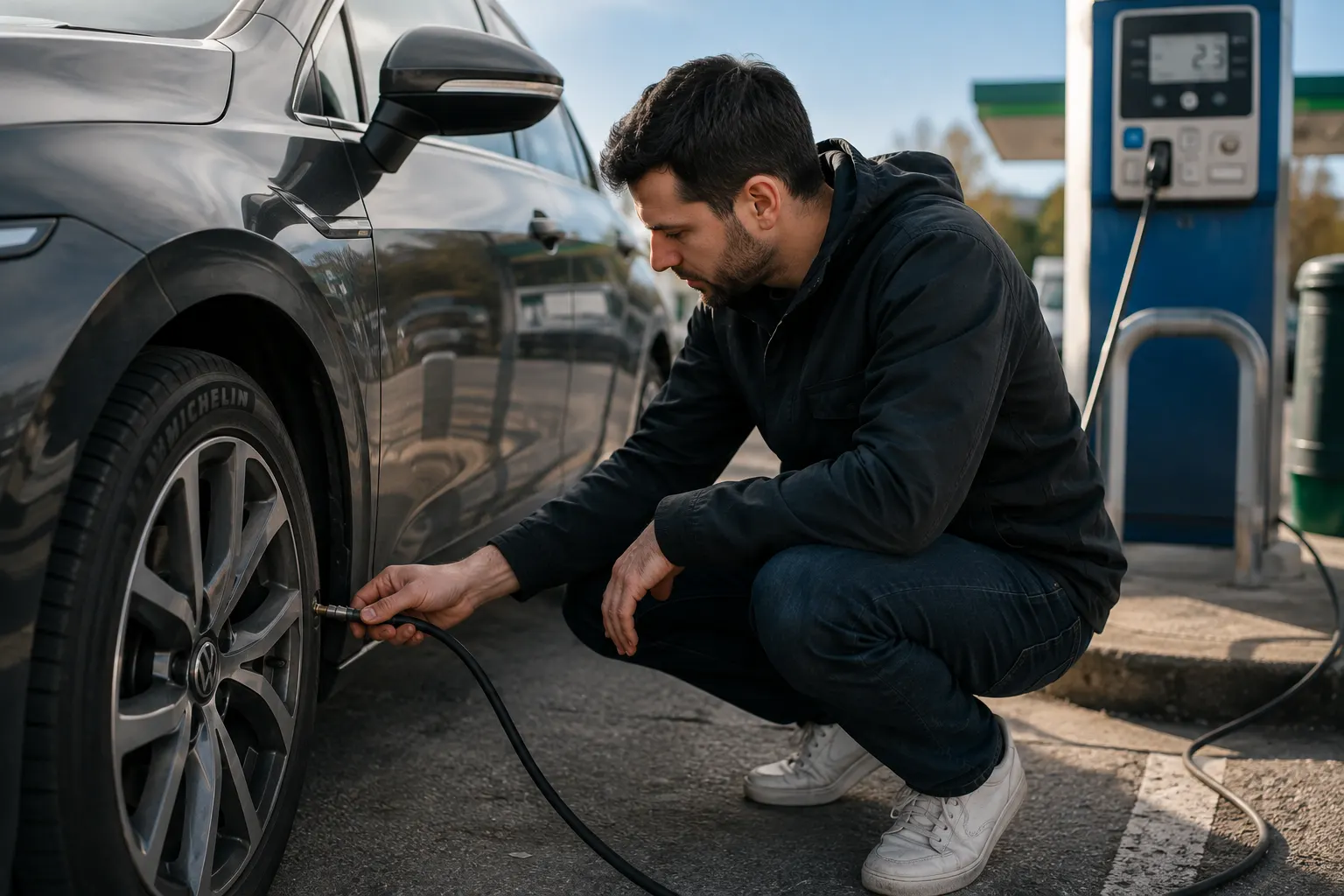
What Should My Tyre Pressure Be?
Your tyre pressure should be the pressure recommended by your car’s manufacturer, not the number printed on the side of the tyre.
You can usually find the correct tyre pressure in the owner’s manual, inside the driver’s door frame, inside the fuel filler flap, or sometimes on a sticker in the glovebox. Many cars have different pressures for the front and rear tyres, and different settings depending on whether the car is lightly loaded or carrying passengers and luggage.
For many normal cars, tyre pressures are often somewhere around 30–35 PSI, but that is only a rough guide. The correct pressure depends on your exact car, tyre size, wheel size and load.
The safest answer is simple: check the manufacturer’s tyre-pressure label and set the tyres when they are cold.
Quick Answer: What Should My Tyre Pressure Be?
Your tyre pressure should match the manufacturer’s recommended figure for your exact car, tyre size and load. You can usually find it in the handbook, on a sticker inside the driver’s door frame, or inside the fuel filler flap. Check and adjust tyre pressure when the tyres are cold.
Where Do I Find the Correct Tyre Pressure?
The correct tyre pressure is usually shown in one of these places:
- Inside the driver’s door frame
- Inside the fuel filler flap
- In the owner’s manual
- Inside the glovebox
- On the manufacturer’s app or website
- In the car’s infotainment system
- On a tyre-pressure chart from a reputable tyre supplier
The label usually shows pressures in PSI, bar, or both.
It may also show different settings for:
- Front tyres
- Rear tyres
- Normal load
- Full load
- Eco pressure
- Motorway driving
- Different wheel sizes
- Different tyre sizes
Do not guess. Tyre pressure is specific to the vehicle.
A small hatchback, a family SUV and a loaded estate car should not all be running the same pressure just because “32 PSI sounds about right”.
What Does PSI Mean?
PSI stands for pounds per square inch. It is one way of measuring tyre pressure.
In the UK, tyre pressure is usually shown in:
| Unit | Meaning |
|---|---|
| PSI | Pounds per square inch |
| bar | Metric pressure unit |
| kPa | Kilopascal, sometimes shown on labels |
Most UK petrol station air machines let you choose PSI or bar.
If your car’s label shows both, use whichever matches the machine or your tyre-pressure gauge. Do not mix them up.
A pressure of 2.2 bar is roughly 32 PSI, but you do not need to do mental maths if the label already gives both.
Should I Use the Pressure on the Tyre Sidewall?
No. Do not use the pressure printed on the tyre sidewall as your normal tyre pressure.
The number on the tyre sidewall is usually the tyre’s maximum pressure rating, not the recommended pressure for your car.
Your car manufacturer sets the correct pressure based on:
- Vehicle weight
- Tyre size
- Wheel size
- Suspension setup
- Load rating
- Handling
- Braking
- Fuel economy
- Comfort
- Safety
The tyre sidewall tells you about the tyre. The car’s pressure label tells you what that tyre should usually be inflated to on that car.
That difference matters.
Should Front and Rear Tyres Be the Same Pressure?
Not always.
Many cars use different front and rear tyre pressures.
That can be because the car’s weight is not distributed evenly. For example, front-engined cars often carry more weight over the front axle. Some cars also need higher rear pressure when carrying passengers or luggage.
Your tyre-pressure label may show something like:
| Load | Front | Rear |
|---|---|---|
| Normal load | 32 PSI | 30 PSI |
| Full load | 35 PSI | 38 PSI |
Those numbers are only examples. Use your own car’s label.
If your label gives different front and rear settings, follow them. Do not make all four tyres the same unless the manufacturer says so.
What Pressure Should I Use When the Car Is Fully Loaded?
Use the loaded setting on your tyre-pressure label.
Many cars have one pressure for normal driving and a higher pressure for carrying extra weight.
Use the higher loaded pressure when you are carrying:
- Several passengers
- Heavy luggage
- Roof box
- Boot full of items
- Holiday load
- Long motorway trip with weight
- Towing, if your vehicle guidance says so
Extra load puts more stress on the tyres. Higher pressure helps the tyres support the weight properly.
Before a long trip, check the tyre-pressure label and set the tyres for the load you are actually carrying.
If you unload the car after the trip, remember to return the pressures to the normal setting if the manufacturer recommends it.
Should Tyre Pressure Be Checked Cold or Hot?
Check tyre pressure when the tyres are cold.
Cold tyres usually means the car has been parked for a few hours, or has only been driven a very short distance at low speed.
Tyre pressure rises as the tyres warm up during driving. If you check them after a long journey, the reading may be higher than the true cold pressure.
Best times to check:
- First thing in the morning
- Before driving far
- After the car has been parked for a few hours
- Before a long journey
If you must check tyres when hot, do not release air just because the pressure looks slightly high. You may end up underinflated once the tyres cool down.
Cold pressure is the figure the manufacturer’s label is based on.
How Often Should You Check Tyre Pressure?
Check your tyre pressure at least once a month and before long journeys.
You should also check it:
- Before motorway trips
- Before holidays
- When carrying heavy loads
- When the weather changes sharply
- If the steering feels heavy
- If the car pulls to one side
- If fuel economy drops
- If the TPMS warning light comes on
- If a tyre looks low
- After hitting a pothole
- After kerbing a wheel
Tyres naturally lose pressure over time. A slow puncture, leaking valve or damaged wheel can make the pressure drop faster.
A tyre can look fine and still be underinflated. Eyes are useful, but they are not a pressure gauge.
How to Check Tyre Pressure
You can check tyre pressure with a handheld gauge, a home inflator, or a petrol station air machine.
Use this process:
- Find the correct pressure on the car’s tyre-pressure label.
- Check whether the label gives normal-load or full-load settings.
- Make sure the tyres are cold if possible.
- Unscrew the valve cap.
- Press the gauge or air hose firmly onto the valve.
- Read the pressure.
- Add air if the pressure is too low.
- Release a little air if the pressure is too high.
- Recheck the pressure.
- Refit the valve cap.
- Repeat for all tyres.
- Check the spare tyre if your car has one.
Do not forget the spare. A flat spare tyre is just boot decoration.
What Happens If Tyre Pressure Is Too Low?
Low tyre pressure can make the car less safe and more expensive to run.
Underinflated tyres can cause:
- Poor handling
- Longer braking distances
- Higher fuel use
- Uneven tyre wear
- Overheating
- Increased risk of tyre failure
- Heavier steering
- Poor stability
- Damage to tyre sidewalls
- More stress on the tyre structure
Low pressure can also make the outer edges of the tyre wear faster.
If one tyre keeps losing pressure, do not just keep topping it up forever. Get it checked for a puncture, valve issue, cracked wheel or rim leak.
A tyre that keeps asking for air is trying to tell you something.
What Happens If Tyre Pressure Is Too High?
Overinflated tyres can also cause problems.
Too much pressure can lead to:
- Less grip
- Harsher ride
- Uneven tyre wear
- Faster centre tread wear
- Reduced comfort
- More road noise
- Poor contact with the road
- Increased chance of damage from potholes
Some drivers overinflate tyres hoping for better fuel economy. That is not a smart trade-off if it affects grip, comfort and tyre wear.
Use the manufacturer’s recommended pressure, not your own “economy mode”.
Does Tyre Pressure Affect Fuel Economy?
Yes. Incorrect tyre pressure can affect fuel economy.
Underinflated tyres create more rolling resistance, which can make the engine work harder and use more fuel.
Correct tyre pressure can help with:
- Fuel economy
- Tyre life
- Braking
- Handling
- Ride stability
- Safety
It is one of the easiest maintenance checks you can do, and it costs almost nothing.
There are not many car problems that can be improved with 60 seconds at an air pump. This is one of them.
Does Tyre Pressure Affect MOT?
Tyre pressure itself is not usually listed as a simple pass/fail item in the same way as tread depth or tyre damage, but tyres are a major part of the MOT.
The MOT checks tyre condition, suitability, tread depth, damage, load rating and other safety-related tyre issues. The TPMS warning system is also part of the MOT for cars where it applies.
Low tyre pressure can contribute to uneven wear, poor condition and tyre damage, which can become MOT issues.
Before your MOT, check:
- Tyre pressure
- Tread depth
- Cuts
- Bulges
- Cracks
- Nails or screws
- Uneven wear
- Sidewall damage
- TPMS warning light
- Spare wheel condition if fitted and relevant
The legal minimum tread depth for cars, light vans and light trailers is 1.6mm across the central three-quarters of the tyre and around the entire circumference.
Pressure is only one part of tyre safety. Tread and condition matter too.
What Is TPMS?
TPMS stands for Tyre Pressure Monitoring System.
It warns you when tyre pressure appears too low or when there may be a tyre-pressure issue.
There are two main types:
| Type | How It Works |
|---|---|
| Direct TPMS | Uses pressure sensors inside the wheels |
| Indirect TPMS | Uses wheel-speed data to detect changes |
A TPMS warning light should not be ignored.
But TPMS is not a replacement for manual checks. You should still check pressures with a gauge, especially before long journeys.
If your TPMS warning light comes on:
- Stop somewhere safe.
- Check the tyres visually.
- Use a pressure gauge.
- Inflate to the recommended level.
- Reset the TPMS if your car requires it.
- Get the tyre checked if pressure drops again.
If the warning comes back, there may be a puncture, faulty valve, sensor issue or pressure difference.
Why Does Tyre Pressure Change in Cold Weather?
Tyre pressure can drop in colder weather.
That is because air pressure changes with temperature. When the air inside the tyre gets colder, the pressure can fall.
This is why TPMS lights often appear during cold mornings.
If the weather suddenly gets colder, check your tyre pressures instead of assuming the car is being dramatic.
You may need to top them up to the recommended cold pressure.
Should Electric Cars Have Different Tyre Pressure?
Electric cars often have specific tyre-pressure requirements because they can be heavier than petrol or diesel cars due to the battery pack.
EVs may also use:
- Low rolling resistance tyres
- Higher load-rated tyres
- Manufacturer-specific tyre sizes
- Different pressure settings for efficiency and range
Do not guess EV tyre pressures based on a similar-looking petrol car. Use the EV’s own tyre-pressure label.
Correct pressure matters for EV range, tyre wear and safety.
What If My Tyre Pressure Label Is Missing?
If the tyre-pressure label is missing, try:
- Owner’s manual
- Manufacturer website
- Manufacturer app
- Main dealer
- Reputable tyre retailer
- Vehicle infotainment system
- Online tyre-pressure lookup tool
- Service book or vehicle documents
Make sure you match:
- Exact model
- Year
- Engine
- Wheel size
- Tyre size
- Load setting
Do not rely on a random forum answer unless it matches your exact vehicle and tyre size.
Forums are useful. Your tyre-pressure label is better.
Can I Use a Petrol Station Air Pump?
Yes, petrol station air pumps are fine for normal tyre-pressure checks.
However:
- Set the correct PSI or bar first.
- Make sure the hose fits securely.
- Check tyres cold if possible.
- Recheck if the machine seems inaccurate.
- Do not forget valve caps.
- Check all four tyres.
- Check the spare if fitted.
Some petrol station gauges are more accurate than others, so keeping a small digital gauge at home is useful.
If the reading seems wildly different from expected, double-check with another gauge.
Buying a Used Car? Check the Tyres Properly
When buying a used car, tyre pressure is only one part of the tyre check.
Look at:
- Pressure
- Tread depth
- Uneven wear
- Sidewall cracks
- Bulges
- Cuts
- Brand mismatch
- Tyre age
- Load rating
- Speed rating
- Spare wheel or repair kit
- TPMS warning light
Uneven tyre wear can suggest alignment, suspension or pressure problems.
Before buying, you can also check the car’s MOT history here to see whether tyres, suspension or steering have appeared in previous advisories or failures.
A seller can pump up a tyre before you arrive. MOT history can show whether the same tyre problems keep coming back.
Simple Tyre Pressure Checklist
Use this checklist:
- Find the manufacturer’s recommended pressure.
- Check whether your car is lightly or heavily loaded.
- Check tyres when cold.
- Use an accurate pressure gauge.
- Set front and rear pressures correctly.
- Do not use the sidewall maximum as the normal pressure.
- Refit valve caps.
- Check the spare tyre if fitted.
- Reset TPMS if required.
- Recheck monthly and before long journeys.
Tyre pressure is a small job with a big effect on safety.
Common Mistakes Drivers Make
Avoid these:
- Guessing the pressure
- Using the number on the tyre sidewall
- Making all four tyres the same when the label says otherwise
- Checking only when tyres are hot
- Ignoring the loaded setting
- Ignoring the TPMS warning light
- Forgetting the spare tyre
- Not replacing valve caps
- Overinflating for “better MPG”
- Driving for weeks with a slow puncture
- Checking pressure but ignoring tread depth
- Buying a used car without checking tyre wear
Tyres are the only part of the car touching the road. Treating pressure as a minor detail is not smart.
FAQs
What should my tyre pressure be?
Your tyre pressure should match the manufacturer’s recommended figure for your exact car, tyre size and load. Check the door frame, fuel filler flap or owner’s manual.
Is 32 PSI good tyre pressure?
32 PSI is common on many cars, but it is not correct for every vehicle. Always use the manufacturer’s recommended pressure for your car.
Where is tyre pressure written on a car?
It is usually shown on a sticker inside the driver’s door frame, inside the fuel filler flap, in the handbook or in the car’s infotainment system.
Should I check tyre pressure cold or hot?
Check tyre pressure when the tyres are cold. Pressure rises when tyres warm up during driving, which can give a higher reading.
Should front and rear tyre pressures be the same?
Not always. Many cars have different front and rear pressures, especially when loaded. Follow the pressure label for your vehicle.
How often should I check tyre pressure?
Check tyre pressure at least once a month and before long journeys. Also check if the TPMS warning light comes on or the car feels different to drive.
What happens if tyre pressure is too low?
Low tyre pressure can affect handling, braking, fuel economy and tyre wear. It can also increase the risk of overheating or tyre failure.
Should I use the pressure printed on the tyre?
No. The pressure printed on the tyre sidewall is usually the maximum tyre pressure, not the recommended pressure for your car.
Conclusion
Your tyre pressure should be whatever your car manufacturer recommends for your exact vehicle, tyre size and load. You can usually find it inside the driver’s door frame, inside the fuel filler flap, in the handbook or in the vehicle settings.
Do not guess, do not copy another car, and do not use the tyre sidewall maximum as your normal pressure.
Check pressures when the tyres are cold, adjust for heavy loads when needed, and check at least monthly or before long journeys. It is one of the simplest car checks you can do, but it affects safety, fuel economy, tyre wear and how the car feels on the road.