
What Happens If Your Car Fails Its MOT?
Find out what happens if your car fails its MOT, whether you can drive it, what major and dangerous defects mean, and how retests work.
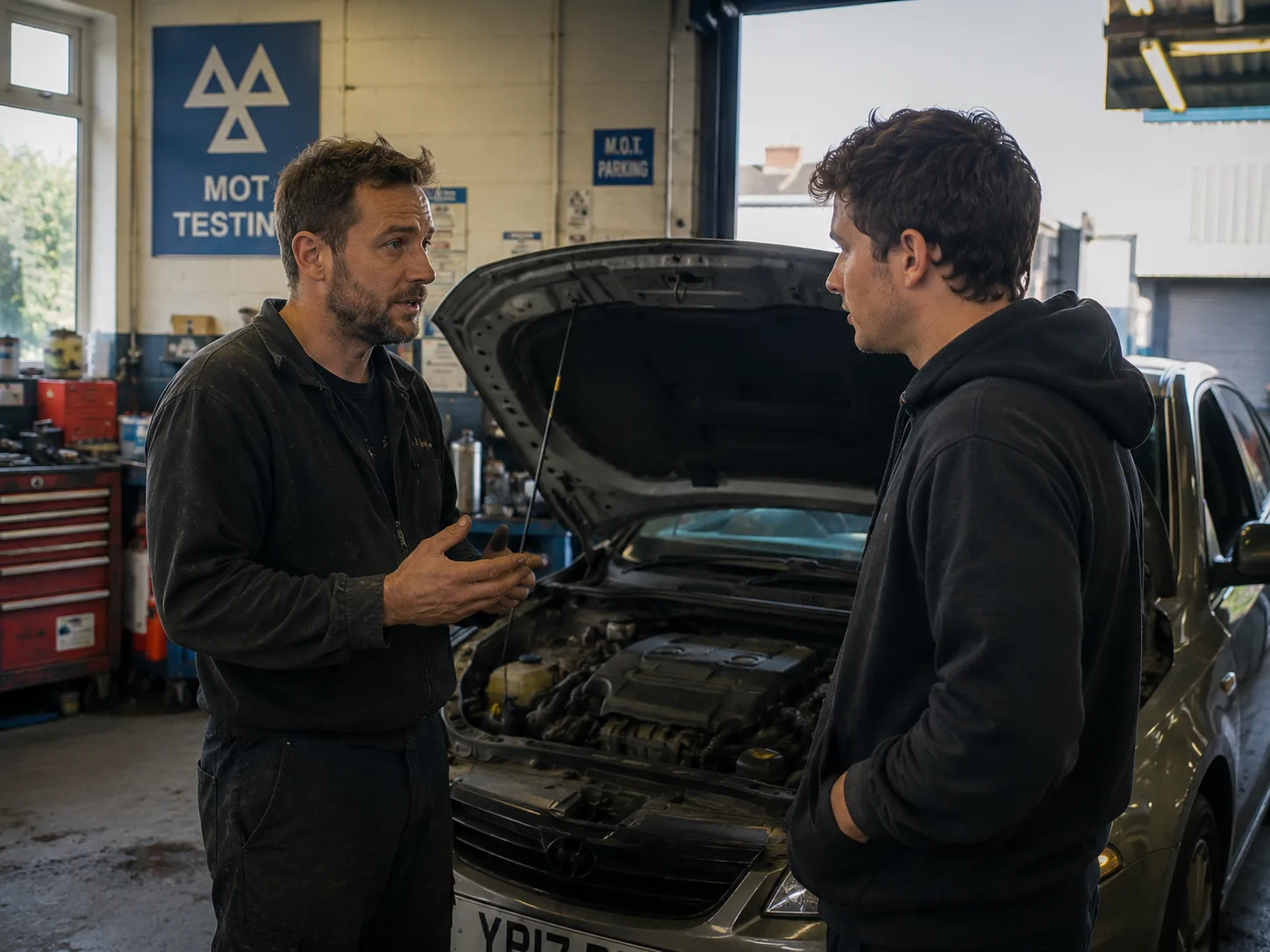
What Happens If Your Car Fails Its MOT? Your Next Steps Explained
If your car fails its MOT, it means the tester has found at least one major or dangerous defect. The failure is recorded in the MOT database, and you will receive a refusal of an MOT test certificate.
That sounds dramatic, but what happens next depends on the type of defect, whether your existing MOT is still valid and whether the car is safe to drive.
In some cases, you can have the car repaired and retested quickly. In others, especially if the failure includes a dangerous defect, you should not drive the vehicle until it has been fixed.
This guide explains what happens if your car fails its MOT, whether you can drive it, how MOT retests work, what major and dangerous defects mean, how much a retest may cost and what to do if you think the result is wrong.
Quick Answer: What Happens If Your Car Fails Its MOT?
If your car fails its MOT, the failure is recorded in the MOT database and you receive a refusal of an MOT test certificate. You must repair the major or dangerous defects before the vehicle can pass. If a dangerous defect is listed, you should not drive the car until it is repaired. If no dangerous defect is listed and your current MOT is still valid, you may be able to take it away, but it must remain roadworthy.
Useful source: GOV.UK MOT test result guidance
What Does an MOT Fail Mean?
An MOT fail means the vehicle did not meet the minimum legal standards for road safety or environmental performance at the time of the test.
A car fails if the result includes:
- Major defects
- Dangerous defects
The fail will be recorded on the official MOT database, and you can view it in the vehicle’s MOT history.
The test centre should give you a refusal of an MOT test certificate, often called a VT30.
This document lists the reasons the vehicle failed. It may also include minor defects and advisories that do not cause the fail but should still be monitored or repaired.
In plain English, the car has not passed the legal inspection. What you can do next depends on how serious the defects are.
MOT Defect Categories Explained
MOT defects are grouped into categories.
| MOT Result | What It Means | Does It Fail the MOT? |
|---|---|---|
| Pass | The vehicle meets the MOT standard | No |
| Advisory | Something to monitor or repair in future | No |
| Minor | A defect with no significant safety or environmental effect | No |
| Major | A defect that may affect safety, the environment or other road users | Yes |
| Dangerous | A direct and immediate risk to road safety or serious environmental impact | Yes |
A car can pass with advisories and minor defects. It cannot pass with major or dangerous defects.
Useful source: GOV.UK MOT inspection manual
Major Defect vs Dangerous Defect
This difference matters because it affects whether you can drive the vehicle away.
Major defect
A major defect means the vehicle has failed the MOT because there is a serious issue that may affect safety, road users or the environment.
Examples could include:
- A defective brake light
- Excessively worn suspension component
- Tyre below the legal tread limit
- Serious exhaust leak
- Faulty steering component
- Emissions failure
- Damaged seat belt
- Insecure component
A major defect means the car has failed, but it is not necessarily classed as an immediate danger in the same way as a dangerous defect.
That does not mean you should ignore it. A major defect still needs fixing.
Dangerous defect
A dangerous defect is more serious.
It means the vehicle has a direct and immediate risk to road safety or a serious environmental issue.
Examples could include:
- A tyre at serious risk of failure
- Brakes dangerously defective
- Steering likely to fail
- A wheel likely to detach
- Serious structural corrosion affecting safety
- Dangerous suspension failure
- Fuel leak creating a fire risk
If your car fails with a dangerous defect, do not drive it away. Get it repaired where it is or have it recovered.
Driving a car with a dangerous defect is not “taking a chance”. It is putting yourself and others at risk, with a possible fine attached for good measure.
Can You Drive Your Car After It Fails Its MOT?
Sometimes, but only in limited circumstances.
GOV.UK says you can take your vehicle away after an MOT fail if:
- Your current MOT is still valid
- No dangerous defects were listed
Even then, the vehicle must still meet minimum roadworthiness standards at all times.
Useful source: GOV.UK MOT test result guidance
So the answer depends on three questions:
- Is the old MOT still valid?
- Did the vehicle fail with any dangerous defects?
- Is the vehicle still roadworthy?
If the answer to any of those creates doubt, do not drive it casually. Speak to the test centre or arrange recovery.
What If Your MOT Has Already Expired?
If your MOT has already expired, the rules are stricter.
GOV.UK says you cannot drive or park your vehicle on the road if the MOT has run out, and you can be prosecuted if caught.
The only exceptions are driving it:
- To or from somewhere to be repaired
- To a pre-arranged MOT test
Useful source: GOV.UK when to get an MOT
The vehicle must still be roadworthy. If it has failed with a dangerous defect, do not drive it. Arrange repair at the garage or recovery.
This is why leaving your MOT until the last possible day is risky. If it fails, you have very little room to manoeuvre. The car has failed, your MOT has expired and your diary suddenly belongs to the garage.
What If Your Existing MOT Is Still Valid?
If you test your car early and it fails, your previous MOT may still be valid until its original expiry date.
However, that does not mean you can ignore the fail.
The failed result is recorded in the MOT database, and the car must still be roadworthy. If the fail includes a dangerous defect, you should not drive it until fixed.
This is where many drivers get confused.
A valid MOT certificate is not a magic shield. If the car is dangerous, it is dangerous. A piece of paper does not make a bald tyre grow tread overnight.
Can You Drive to Another Garage After a Failed MOT?
Possibly, but be careful.
If your current MOT is still valid and the car has no dangerous defects, you may be able to take it away for repairs. If the MOT has expired, GOV.UK allows driving to or from somewhere for repairs or to a pre-arranged MOT test, but the vehicle must still be roadworthy.
If the car has a dangerous defect, do not drive it.
The safest options are:
- Leave it at the MOT centre for repair
- Arrange recovery to another garage
- Ask the test centre whether the vehicle is safe to move
- Only drive directly to a repair appointment if legally allowed and safe
Do not use a failed MOT as permission to carry on as normal for a week. “I was going to fix it soon” is unlikely to impress anyone if the vehicle is unsafe.
What Happens If You Drive a Car with a Dangerous MOT Failure?
Driving a vehicle that has failed its MOT because of a dangerous defect can lead to serious penalties.
GOV.UK says you can be fined up to £2,500, be banned from driving and get 3 penalty points for driving a vehicle that failed because of a dangerous problem.
Useful source: GOV.UK MOT test result guidance
More importantly, a dangerous defect is a genuine safety issue. The penalty is not the worst-case scenario. The worst-case scenario is the defect causing a crash.
If your MOT says dangerous, treat it as dangerous. Not “probably fine”. Not “only five minutes away”. Dangerous.
What Should You Do Immediately After an MOT Fail?
Follow these steps.
Step 1: Read the Failure Notice
Look at the refusal certificate carefully. Check:
- Which items failed
- Whether defects are major or dangerous
- Whether there are advisories
- Whether there are minor defects
- Whether the failure matches what the tester explained
- Whether the vehicle details are correct
Do not just skim it and panic. The document tells you what needs fixing.
Step 2: Ask the Garage to Explain the Defects
Ask the MOT centre to explain what has failed, why it failed, how serious it is, whether the vehicle is safe to move, what repair options are available, whether a retest can be done after repair and whether it qualifies for a free or reduced retest.
A good garage should be able to explain the failure in plain English. If the explanation sounds like a spell from a mechanical wizard, ask them to show you the problem.
Step 3: Decide Where to Repair It
You can usually choose where to get repairs done. Options include:
- The MOT test centre
- A trusted local garage
- A specialist repairer
- A main dealer
- A mobile mechanic, depending on the fault
- Repairing it yourself, if you are competent and the car can be safely retested
Leaving the vehicle at the test centre can be convenient and may help with retest fees. But you are not forced to have every repair done there. If the quote feels high, you can ask another garage. Just remember that moving the car must be legal and safe.
Step 4: Get the Defects Fixed
Major and dangerous defects need fixing before the car can pass. Keep receipts for repairs, especially if the vehicle has failed on more serious items such as brakes, suspension, tyres, emissions, steering or corrosion.
For dangerous defects, do not drive the vehicle until repaired.
Step 5: Book the Retest
Once repairs are done, the car needs a retest. Depending on the circumstances, this may be a free partial retest, a reduced-fee partial retest or a full MOT test again. The rules depend on where the repairs are done, how quickly the vehicle is retested and which items failed.
How Does an MOT Retest Work?
An MOT retest checks whether the failed items have been repaired.
In some cases, the tester only needs to check the items that failed. This is called a partial retest.
In other cases, the car may need a full MOT test again.
Useful source: GOV.UK MOT retest after repair
Is an MOT Retest Free?
It can be.
GOV.UK says if you leave the vehicle at the test centre for repair and it is retested within 10 working days, only a partial retest is needed and there is no fee.
Useful source: GOV.UK MOT retest after repair
That is often the simplest route if the test centre can do the repairs at a fair price.
What If You Take the Car Away for Repairs?
If you take the vehicle away and bring it back to the same test centre, retest rules depend on timing and the defect.
Back by the next working day
GOV.UK says you will not have to pay again if you take the vehicle back to the same test centre before the end of the next working day for a partial retest on certain items, including:
- Battery
- Bonnet
- Bootlid
- Doors
- Fuel filler cap
- Horn
- Lamps, excluding headlamp aim
- Mirrors
- Registration plates
- Seat belts, excluding anchorages
- Seats
- Tyre pressure monitoring system
- VIN
- Windscreen glass
- Wipers and washers
- Wheels and tyres
Useful source: GOV.UK MOT retest after repair
Back within 10 working days
If you take the vehicle away for repairs and return it within 10 working days, you will usually only need a partial retest, but the test centre can charge a partial retest fee.
After 10 working days
If you return after 10 working days, you normally need a full MOT test again and may have to pay the full MOT fee. This is why it is worth sorting repairs quickly. Waiting can turn a simple retest into another full test.
How Much Does an MOT Retest Cost?
It depends on the situation.
| Situation | Likely Retest Cost |
|---|---|
| Vehicle left at test centre, repaired and retested within 10 working days | Free partial retest |
| Taken away and returned next working day for certain items | Free partial retest |
| Taken away and returned within 10 working days | Partial retest fee may apply |
| Returned after 10 working days | Full MOT fee may apply |
The maximum MOT test fee for a standard car is £54.85, but garages can charge less.
Useful source: GOV.UK MOT test fees
What Are Common Reasons Cars Fail an MOT?
Many MOT failures are caused by simple safety items. Common fail areas include:
- Lights not working
- Poor headlamp aim
- Worn tyres
- Tyres below legal tread depth
- Brake defects
- Suspension wear
- Windscreen damage
- Wipers not clearing properly
- Empty washer bottle
- Faulty horn
- Number plate issues
- Exhaust emissions
- Warning lights
- Seat belt problems
- Corrosion
- Fluid leaks
Some failures are cheap. Some are not. A bulb is annoying. Corrosion near a suspension mount is the car clearing its throat before asking for serious money.
What If Your Car Fails on Emissions?
An emissions failure means the vehicle exceeded the permitted emissions limits or had an emissions-related problem. Possible causes include:
- Exhaust leak
- Faulty catalytic converter
- Faulty diesel particulate filter
- Engine running poorly
- Sensor fault
- Air leak
- Poor servicing
- Incorrect fuel mixture
- Engine warning light
- AdBlue or emissions system fault on some diesels
Do not just clear a warning light and hope. If the underlying issue remains, the car may fail again. A service, diagnostic check or emissions specialist may be needed.
What If Your Car Fails on Tyres?
Tyre failures are serious because they directly affect grip, braking and control. A tyre may fail if it has:
- Tread below the legal limit
- Serious cuts
- Bulges
- Exposed cords
- Incorrect size or type
- Dangerous damage
- Insecure fitment
For cars, the legal minimum tread depth is 1.6mm across the central three-quarters of the tyre and around the full circumference.
If a tyre is listed as dangerous, do not drive on it. Have it replaced before moving the car.
What If Your Car Fails on Brakes?
Brake failures can range from worn components to serious safety defects. Possible brake MOT failures include:
- Poor brake performance
- Imbalanced braking
- Brake fluid leak
- Worn discs or pads
- Corroded brake pipes
- ABS warning light
- Parking brake failure
- Electronic parking brake fault
If brakes are dangerous, do not drive. Get them repaired where the car is or arrange recovery. Brakes are one of those areas where optimism has very little stopping power.
What If Your Car Fails on Suspension?
Suspension failures are common, especially on older cars and vehicles driven on poor roads. Possible failures include:
- Broken coil spring
- Leaking shock absorber
- Worn ball joint
- Worn bushes
- Damaged suspension arm
- Wheel bearing issues
- Excessive corrosion
- Insecure component
Suspension problems can affect handling, braking, tyre wear and stability. Do not ignore them just because the car still moves. A car can still move with many faults. That does not make it safe.
What If Your Car Fails on Corrosion?
Corrosion can be minor, major or dangerous depending on where it is and how severe it is. Rust becomes an MOT problem when it affects structural areas or components linked to safety, such as:
- Suspension mounting points
- Seat belt mounting points
- Steering areas
- Braking system areas
- Load-bearing structure
- Body areas with sharp edges
Corrosion repairs can vary from simple welding to uneconomical repairs. If an older car fails heavily on corrosion, ask for a realistic repair quote before spending money elsewhere. There is no point fitting four new tyres to a car that is structurally trying to return to nature.
Can You Appeal an MOT Failure?
Yes, if you think the result is wrong.
GOV.UK says you should discuss the result with the test centre before anyone starts repairs. You can appeal against the failure by sending the complaint form to DVSA within 14 working days of the test.
You should not have repairs carried out until the appeal process has finished.
Useful source: GOV.UK MOT appeals and problems
DVSA will contact you within 5 days to discuss the appeal. If DVSA rechecks the vehicle, you may need to pay the full test fee again. If your appeal is successful, the test fee is refunded.
Appealing can make sense if you genuinely believe the tester made a mistake. It does not make sense if the tyre is bald and you simply dislike the result.
Does a Failed MOT Show Online?
Yes. If your vehicle fails, the result is recorded in the MOT database. You can view the result in the vehicle’s MOT history.
This means future buyers may also see the failure when checking the car’s history.
A failed MOT is not always a disaster. Many cars fail, get repaired and pass. What matters is the pattern. One fail for a bulb is very different from repeated failures for brakes, tyres, corrosion and suspension neglect.
check your MOT history here to review MOT history, mileage records, previous failures, advisories and recurring defect patterns.
Does an MOT Fail Affect Insurance?
An MOT failure itself does not automatically cancel your insurance, but driving without a valid MOT or driving an unroadworthy vehicle can cause serious problems.
Most insurance policies require the vehicle to be kept roadworthy. If you have an accident in a car with known dangerous defects, your insurer may investigate.
You still need valid insurance to drive to a repair appointment or MOT appointment where the law allows it. Do not assume insurance makes an unsafe car legal. Insurance is not a magic invisibility cloak.
Can You Tax a Car After It Fails Its MOT?
Usually no, because you normally need a valid MOT to tax a vehicle.
GOV.UK says if your MOT has run out and your tax is due to run out, you may need to register the vehicle as off the road, book an MOT and tax it once it has passed.
Useful source: GOV.UK when to get an MOT
If the car fails and the MOT expires, you may be stuck until the repairs and retest are completed.
Should You Scrap a Car That Fails Its MOT?
Not always. It depends on repair cost, vehicle value, age, mileage, condition, service history, future reliability and whether failures are recurring.
| Situation | Likely Decision |
|---|---|
| Minor repair, otherwise good car | Repair and retest |
| Moderate repair, good history | Usually repair |
| Expensive repair, high-value car | Consider repair |
| Expensive repair, low-value car | Compare against replacement |
| Serious corrosion on old car | Get a realistic quote before spending |
| Dangerous defects across multiple systems | Think carefully |
Do not scrap a car just because it failed. But do not keep throwing money at a car that has clearly resigned.
What Should You Do Before Buying a Car That Recently Failed Its MOT?
A recent failed MOT is not automatically a reason to walk away, but it needs investigation. Check:
- What it failed on
- Whether repairs were completed
- Whether it passed a retest
- Whether advisories remain
- Whether the same issues appear repeatedly
- Whether invoices prove repair work
- Whether the price reflects the history
A seller saying “it’s all sorted now” is not enough. Ask for proof.
Before buying, check your MOT history here to review MOT history, mileage records, failures, advisories and recurring warning signs.
A car that failed once and was properly repaired may be fine. A car that fails every year for neglected basics may be telling you exactly what ownership will be like.
How to Avoid an MOT Failure Next Time
You cannot guarantee a pass, but you can reduce the chance of failing on simple items. Before your MOT, check:
- Lights
- Indicators
- Brake lights
- Tyre tread
- Tyre condition
- Tyre pressure
- Wipers
- Screenwash
- Horn
- Mirrors
- Number plates
- Seat belts
- Warning lights
- Windscreen damage
- Fluid leaks
- Fuel cap
- Doors, boot and bonnet
Many MOT failures are avoidable. Turning up with no screenwash, dead bulbs or obviously bald tyres is like arriving at an exam having forgotten your name.
MOT Fail Next Steps Checklist
Use this checklist after a failed MOT:
- Read the refusal certificate.
- Check whether defects are major or dangerous.
- Do not drive if dangerous defects are listed.
- Check whether your existing MOT is still valid.
- Ask the test centre to explain the failure.
- Get a repair quote.
- Decide whether to repair at the test centre or elsewhere.
- Keep repair receipts.
- Book the retest quickly.
- Check whether you qualify for a free or reduced retest.
- Appeal before repairs if you think the result is wrong.
- Review MOT history to spot recurring issues.
FAQs
What happens if my car fails its MOT?
If your car fails its MOT, the failure is recorded in the MOT database and you receive a refusal of an MOT test certificate. You must repair the major or dangerous defects before the vehicle can pass.
Can I drive my car after it fails its MOT?
You can only take it away if your current MOT is still valid and no dangerous defects were listed. The vehicle must still be roadworthy. If the MOT has expired or the car has dangerous defects, do not drive it except where the law allows and where it is safe.
Can I drive a car with a dangerous MOT defect?
No. A dangerous defect means there is an immediate risk to road safety or serious environmental impact. Driving a vehicle that failed because of a dangerous defect can lead to a fine of up to £2,500, a driving ban and 3 penalty points.
Does a failed MOT cancel my old MOT?
Not exactly. If you tested early, your old MOT may still be valid until its expiry date, but the fail is recorded and the vehicle must still be roadworthy. If dangerous defects are listed, do not drive it.
What is a refusal of an MOT test certificate?
It is the document given when a vehicle fails its MOT. It lists the defects that caused the failure and may also show minor defects or advisories.
Is an MOT retest free?
It can be. If you leave the vehicle at the test centre for repair and it is retested within 10 working days, the partial retest is free. Some next-working-day retests are also free for certain items. Other retests may carry a partial or full fee.
How long do I have to get a free MOT retest?
If the car is left at the test centre for repair and retested within 10 working days, the partial retest is free. If you take it away, different rules apply depending on the defect and how quickly you return.
Can I appeal an MOT failure?
Yes. If you think the MOT failure is wrong, discuss it with the test centre before repairs are started. You can appeal to DVSA within 14 working days of the test.
Can I sell a car that has failed its MOT?
Yes, but you should be honest about the failed MOT and defects. A failed MOT will appear in the vehicle’s MOT history. The buyer may need to repair and retest the vehicle before using it legally.
Does a failed MOT affect car value?
Yes, usually. A failed MOT can reduce value because the buyer must consider repair costs, safety issues and retest requirements. Minor failures may have little effect if repaired quickly, while dangerous or expensive defects can significantly reduce value.
Can I tax a car that has failed its MOT?
Usually no. You generally need a valid MOT to tax a vehicle. If the MOT has expired, you normally need to get the car repaired, pass the MOT and then tax it.
Should I repair or scrap a car after an MOT fail?
Compare the repair cost with the car’s value and condition. Simple failures are usually worth repairing. Expensive corrosion, major mechanical safety issues or repeated failures on a low-value car may make scrapping or selling more sensible.
Conclusion
If your car fails its MOT, do not panic — but do not ignore it either. Read the failure notice, understand whether the defects are major or dangerous, and check whether the vehicle can legally and safely be moved.
A dangerous defect means the car should not be driven until repaired. A major defect still means the car has failed and needs fixing before it can pass. Retest rules can save you money if repairs are done quickly, especially if the vehicle stays at the test centre and is retested within 10 working days.
Most importantly, use the failure as information. A single failed MOT may just be an annoying repair. Repeated failures for tyres, brakes, suspension or corrosion may reveal a pattern. MOT history tells a story — and with cars, it is usually worth reading before the next chapter gets expensive.