
What Is Checked in an MOT Test? The Complete UK Checklist
Find out what is checked in an MOT test, including brakes, tyres, lights, suspension, emissions, warning lights and what is not checked.
What Is Checked in an MOT Test?
An MOT test checks whether your vehicle meets the minimum legal standards for road safety and environmental performance at the time of the test.
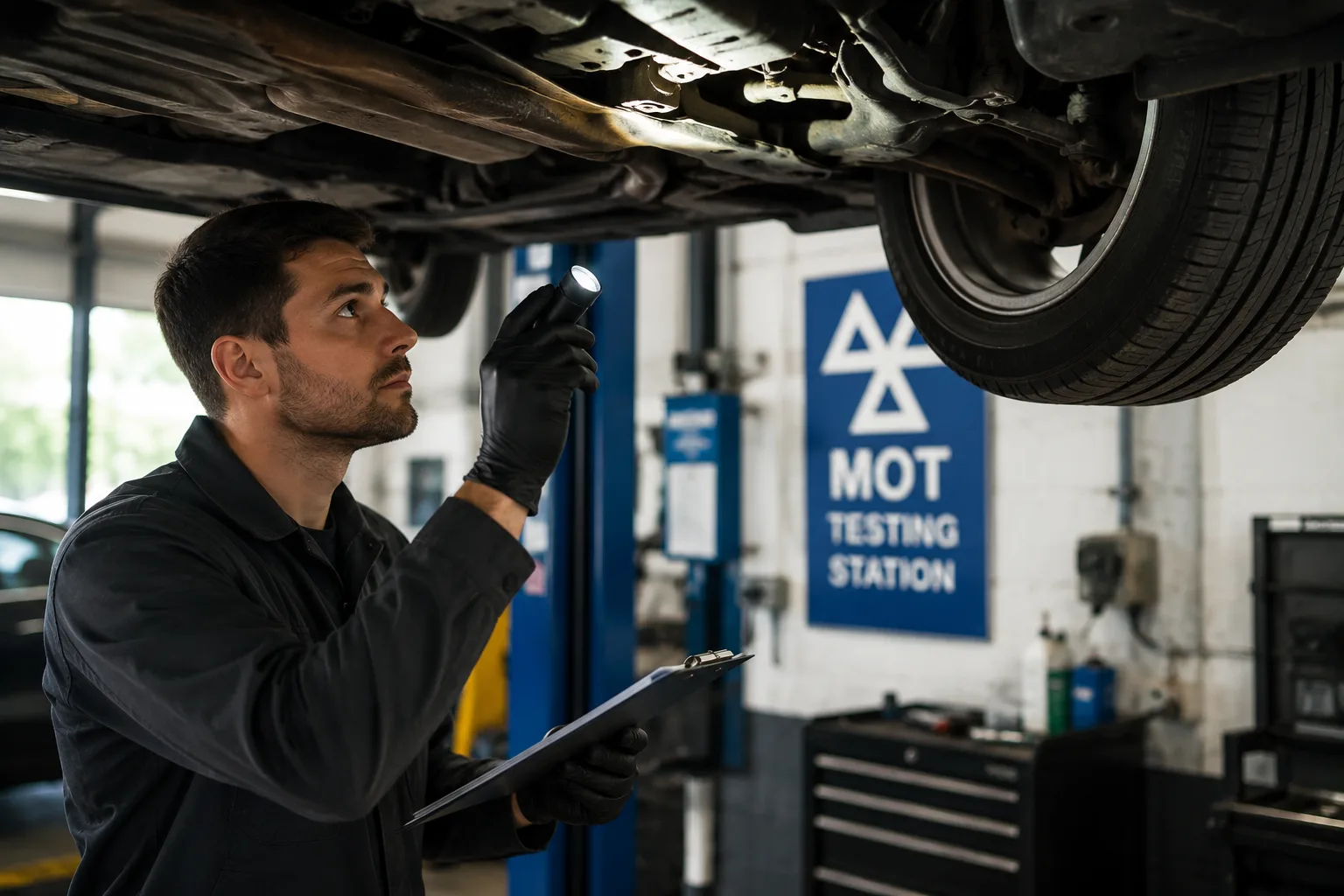
For most drivers, that means the tester will inspect things like lights, tyres, brakes, suspension, steering, seat belts, windscreen, wipers, number plates, emissions, body structure and visible electrical components. It is a safety and emissions inspection, not a full mechanical service.
That distinction matters. A car can pass its MOT and still need a service, fresh oil, a cambelt, a clutch, a gearbox repair or a very stern conversation with your wallet.
This guide explains what is checked in an MOT test, what is not checked, how MOT defects are categorised and what you can inspect yourself before booking.
Quick Answer: What Is Checked in an MOT Test?
An MOT test checks important safety and environmental items including lights, brakes, tyres, wheels, steering, suspension, seat belts, mirrors, windscreen, wipers, washers, horn, number plates, vehicle structure, doors, bonnet, fuel system, exhaust, emissions, visible wiring, battery and certain dashboard warning lights. It does not check the general condition of the engine, clutch or gearbox.
Useful source: GOV.UK car parts checked at an MOT
MOT Test Checklist: What Gets Checked?
Here is a simple overview of the main items checked during a standard car MOT.
| MOT Area | What Is Checked |
|---|---|
| Lights | Headlights, indicators, brake lights, fog lights, hazards, reflectors and number plate lamps |
| Brakes | Brake condition, operation, performance, ABS, ESC and brake warning lights |
| Tyres and wheels | Tyre condition, tread depth, size, type, security and TPMS warning light where applicable |
| Steering | Steering wheel, column, steering components, power steering and warning lights |
| Suspension | Springs, shock absorbers, arms, joints, wheel bearings and related components |
| Visibility | Windscreen, wipers, washers, mirrors and driver’s view of the road |
| Seat belts | Condition, operation, security and related restraint-system warning lights |
| Body and structure | Corrosion, sharp edges, structural damage, doors, bonnet, boot and general condition |
| Exhaust and emissions | Exhaust security, noise, leaks, catalyst where fitted and emissions output |
| Fuel system | Fuel leaks, fuel cap, pipes and hoses |
| Number plates | Condition, colour, spacing, attachment and character format |
| Horn | Operation and suitability |
| Electrical items | Visible wiring, battery and certain warning lamps |
| VIN | Vehicle Identification Number presence where required |
| Towbars | Security, condition, inappropriate repairs and electrical socket where fitted |
The actual MOT inspection manual is more detailed, but that table covers the main areas most drivers need to understand.
What Is the Purpose of an MOT Test?
The MOT exists to check whether a vehicle meets minimum road safety and environmental standards.
It is not designed to tell you whether the car is perfect. It is not a full health check. It is not a service. It is not a guarantee that nothing will go wrong next week.
A car can pass an MOT with advisories. It can pass with worn but legal tyres, slightly corroded components, ageing suspension parts or brake pads that are not yet bad enough to fail.
Think of an MOT as the legal minimum line. A service is about maintenance. A proper vehicle inspection is about deeper condition. Confusing those three is how people end up saying, “But it passed its MOT,” while standing next to a car making noises like a cutlery drawer in a tumble dryer.
Body, Structure and General Condition
The MOT tester checks the vehicle body and structure for excessive corrosion, damage and sharp edges likely to cause injury.
This includes areas such as:
- Main structure
- Chassis or load-bearing areas
- Body panels
- Sills
- Mounting points
- Doors
- Bonnet
- Boot or tailgate
- Bumpers
- General vehicle condition
Corrosion matters because rust can weaken structural areas, especially near suspension, steering, braking and seat belt mounting points.
A small patch of cosmetic rust may not fail. Serious corrosion in a prescribed structural area can.
The tester will also check that doors, boot lids and bonnets close properly. If your bonnet can fly open at speed, that is not a quirky feature. That is a very fast way to lose visibility and dignity.
Useful source: MOT inspection manual: body, structure and attachments
Towbars
If your car has a towbar, it will be inspected.
The MOT can check:
- Towbar security
- Towbar condition
- Inappropriate repairs
- Inappropriate modifications
- Electrical socket operation where applicable
If a towbar is badly fitted, insecure, heavily corroded or damaged, it can cause MOT problems.
A towbar is not just a metal hook for dragging garden waste to the tip. It is a safety-critical attachment. If it fails, the trailer does not simply feel disappointed. It leaves.
Fuel System
The MOT includes checks on the fuel system.
The tester will look for:
- Fuel leaks
- Secure pipes and hoses
- Fuel tank condition where visible
- Fuel cap condition
- Fuel cap sealing properly
You should make sure the fuel cap key is available if needed, because the tester may need to open it.
A leaking fuel system is serious. Petrol and diesel should stay inside the system, not decorate the underside of the car like a fire-risk signature.
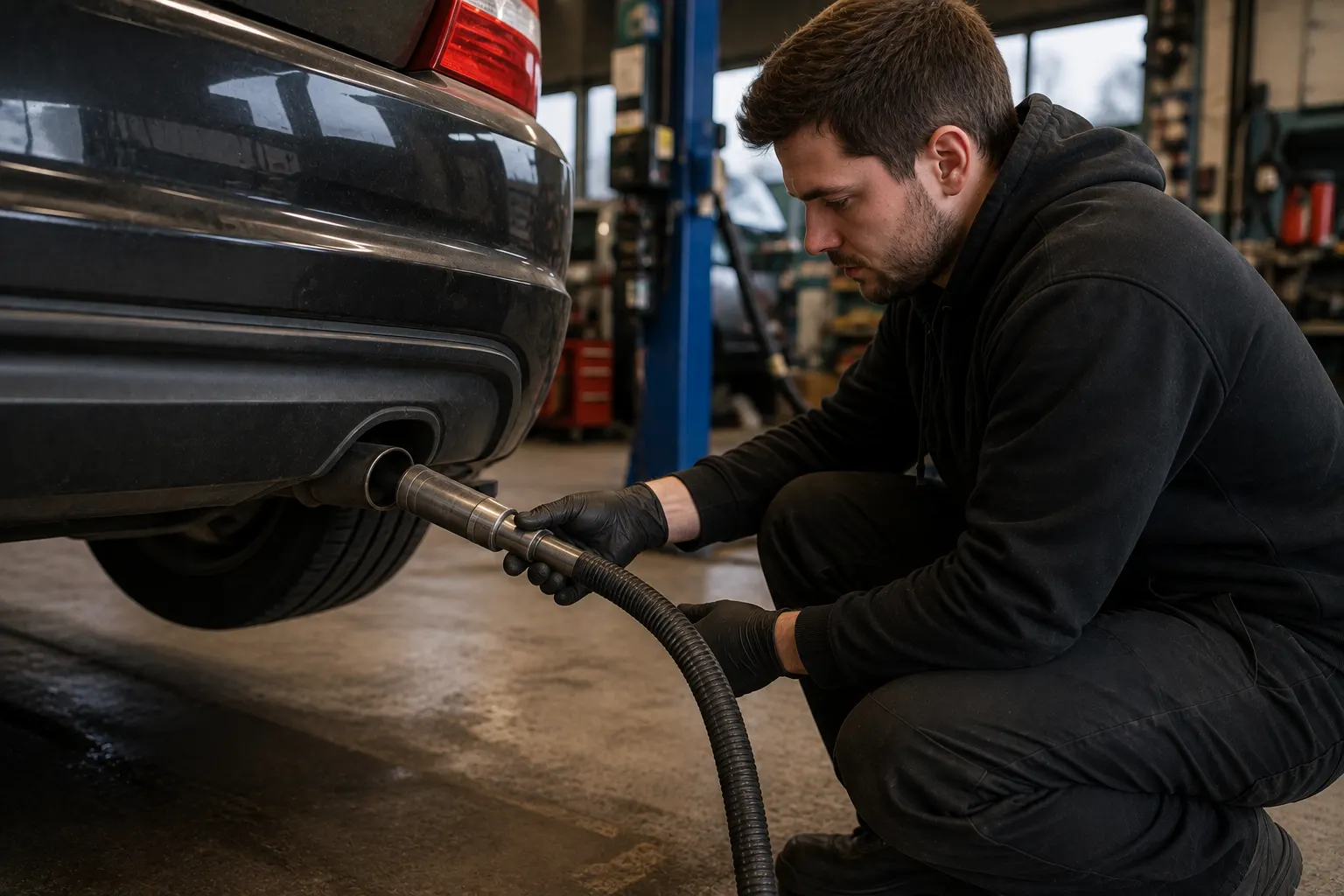
Exhaust System and Emissions
The MOT checks the exhaust system and emissions.
The exhaust system is inspected for:
- Security
- Serious leaks
- Excessive noise
- Missing components
- Catalyst presence where one was fitted as standard
The emissions test depends on the vehicle’s age, fuel type and emissions standard.
Petrol, diesel, hybrid and some alternative-fuel vehicles are tested differently. Electric cars do not have an exhaust emissions test because there is no tailpipe to test.
For diesel vehicles, the tester may refuse to carry out the smoke test if they believe it could damage the engine. GOV.UK advises presenting a diesel vehicle with a fully warmed-up engine because it can produce less smoke and is safer to test.
Useful source: GOV.UK car parts checked at an MOT
Seat Belts and Restraint Systems
Seat belts are checked carefully.
The MOT checks that mandatory seat belts are:
- Present
- Suitable for the vehicle
- Securely attached
- In good condition
- Working properly
The tester may also check warning lights for:
- Airbags
- Seat belt pretensioners
- Seat belt load limiters
A frayed, damaged, jammed or insecure seat belt can fail. So can certain restraint-system warning lights if they indicate a fault.
This is one area where “it still clicks in” is not enough. A seat belt has one important job, and it must be ready to do it.
Seats
The MOT checks that:
- The driver’s seat can be adjusted
- Seats are securely fitted
- Seat backs can be fixed in the upright position
A loose driver’s seat can be dangerous because it affects control of the vehicle. If the seat moves when it should not, the car may fail.
The tester is not judging whether your seats are comfortable, stylish or full of old chips. They are checking security and basic function.
Doors, Boot and Bonnet
Doors, boot lids, tailgates and bonnets are checked for security and operation.
The MOT may check that:
- Door latches are secure
- Front doors open from inside and outside
- Rear doors open from outside
- Hinges and catches are secure
- Boot or tailgate closes properly
- Bonnet closes securely
If a door cannot open properly, cannot close securely or has damaged catches, it can cause problems.
A bonnet that does not latch properly is especially serious because it can fly open while driving and block the windscreen. That is not a dramatic inconvenience. That is a genuine hazard.
Mirrors and Indirect Vision
The MOT checks mirrors and other indirect vision devices.
The tester checks:
- Minimum required mirrors are fitted
- Mirrors are secure
- Mirror condition is acceptable
- Rear visibility is not seriously impaired
Cracked, missing or insecure mirrors can fail if they affect the required field of view.
If your mirror is held on with tape, hope and the spirit of British improvisation, fix it before the MOT.
Brakes
Brakes are one of the most important parts of the MOT.
The tester checks:
- Brake condition
- Brake operation
- Brake performance
- Brake balance
- Parking brake
- Brake controls
- Servo operation
- ABS where fitted
- ESC where fitted
- Brake fluid warning light
- Electronic parking brake warning light
The brake performance test measures how effectively the brakes work. GOV.UK notes that wheels and trims are not removed as part of the test, so the MOT is not the same as a full brake strip-down inspection.
This is important. Your car can pass an MOT brake test but still need brake pads or discs soon afterwards.
MOT pass means the brakes met the standard during the test. It does not mean they have another year of life guaranteed.
Useful source: GOV.UK car parts checked at an MOT
Tyres and Wheels
Tyres and wheels are checked for condition, security, size, type and tread depth.
The MOT checks:
- Tyre tread depth
- Tyre condition
- Cuts, bulges or damage
- Correct tyre type
- Correct tyre size
- Wheel security
- Wheel condition
- TPMS warning light where applicable
For cars, the legal minimum tyre tread depth is 1.6mm across the central three-quarters of the tyre and around the full circumference.
Vehicles first used on or after 1 January 2012 are also checked to make sure the tyre pressure monitoring system warning light is working correctly.
Important detail: spare wheels and tyres are not inspected as part of the MOT.
That does not mean your spare should be ignored. It just means it is not part of the MOT pass or fail.
Useful source: GOV.UK car parts checked at an MOT
Registration Plates
Number plates are checked during the MOT.
The tester looks at:
- Condition
- Secure attachment
- Colour
- Character format
- Spacing
- Legibility
Dirty, cracked, badly spaced, incorrectly coloured or insecure plates can cause problems.
A personalised number plate is fine if it follows the rules. A plate arranged to spell something clever by ignoring spacing rules is less fine. The MOT tester is not there to appreciate your typography.
Lights
Lights are one of the most common and easiest MOT failure areas.
The MOT checks:
- Headlights
- Sidelights / position lamps
- Daytime running lights where applicable
- Indicators
- Hazard lights
- Brake lights
- Rear fog lights
- Reversing lights where applicable
- Number plate lamps
- Reflectors
- Headlamp aim
- Main beam warning light
- HID or LED lighting where fitted
- Headlamp washers or self-levelling where required
Headlamp aim is important. A bulb may work, but if it dazzles other road users or points at the ground like it is searching for coins, it can fail.
Before your MOT, check every light. It takes five minutes and can save a pointless fail.
Bonnet
The bonnet is checked to make sure it closes securely.
This sounds basic, but it matters. A bonnet latch failure at speed can block the windscreen and create a serious hazard.
If the bonnet release, latch or safety catch feels weak, damaged or unreliable, fix it before the MOT.
Wipers and Washers
The MOT checks that windscreen wipers and washers work properly so the driver has a clear view of the road.
The tester may check:
- Wiper condition
- Wiper operation
- Washer operation
- Washer fluid delivery
- Whether the screen is cleared effectively
Split wiper blades, empty screenwash, blocked jets or failed washer pumps can all cause trouble.
This is one of the most avoidable MOT fails. Turning up with no screenwash is like failing an exam because you forgot to bring a pen.
Windscreen and Driver's View
The windscreen is checked for condition and whether the driver has a clear view of the road.
The MOT can consider:
- Chips
- Cracks
- Damage in the driver’s view
- Stickers or objects blocking vision
- Wiper swept area
- General glass condition
A small chip may be acceptable depending on location and size. Damage in the driver’s direct line of sight is more serious.
Do not hang large air fresheners, phone mounts or decorations where they obstruct your view. Your windscreen is for seeing through, not storing accessories.
Horn
The horn is checked to make sure it works and is suitable for the vehicle.
It should produce a continuous, uniform sound.
A horn that does not work can fail. A comedy horn may also cause problems if it is not suitable. The MOT is not the place for novelty sound effects.
Steering
Steering is checked for condition, operation and safety.
The MOT can include checks on:
- Steering wheel
- Steering column
- Steering play
- Power steering components
- Steering oil level where applicable
- Steering lock mechanism
- Electronic power steering warning lights
- Inappropriate repairs or modifications
- Corrosion to steering pipes or hoses
Steering faults are serious because they affect control of the car. Excessive play, damaged components, leaks or warning lights can cause failure.
If your steering feels heavy, loose, noisy or vague before the MOT, get it checked. Cars are best when they go where pointed.
Suspension
Suspension components are inspected during the MOT.
The tester may check:
- Springs
- Shock absorbers
- Suspension arms
- Ball joints
- Bushes
- Mountings
- Wheel bearings
- Axles
- General suspension condition
- Inappropriate repairs or modifications
- Corrosion around suspension areas
Suspension faults can show up as knocking noises, uneven tyre wear, poor handling, wandering, pulling or a harsh ride.
A broken spring, leaking shock absorber or badly worn suspension joint can fail.
Vehicle Identification Number
The MOT checks the VIN on vehicles first used on or after 1 August 1980.
The tester checks that a single VIN is displayed, except in certain multistage-build cases such as some conversions.
A missing, altered or unclear VIN can cause problems because the vehicle’s identity must be verifiable.
Electrical Wiring and Battery
Visible electrical wiring and the battery are checked.
The MOT can consider:
- Battery security
- Battery condition where visible
- Visible wiring condition
- Insecure wiring
- Damaged insulation
- Electrical safety concerns
The tester is not dismantling the car’s wiring loom, but obvious visible defects can be recorded.
A battery sliding around the engine bay is not acceptable. Neither is wiring that looks as though it was repaired during a power cut using enthusiasm and household tape.
Dashboard Warning Lights
Some warning lights are checked during the MOT.
Depending on the vehicle, these may include warning lights for:
- ABS
- ESC
- Electronic parking brake
- Brake fluid
- Airbags
- Seat belt pretensioners
- Seat belt load limiters
- Electronic power steering
- Steering lock
- Engine malfunction indicator lamp for emissions-related checks
A warning light does not automatically mean every car will fail in every situation, because the test depends on the system, age and exact defect. But if important safety or emissions warning lights are on, do not ignore them.
A dashboard warning light is the car’s way of saying, “Before you spend £54.85 on a test, perhaps we should talk.”
What Is Not Checked in an MOT?
This is just as important as knowing what is checked.
An MOT does not check the general mechanical condition of the:
- Engine
- Clutch
- Gearbox
It also does not replace a service.
An MOT may check emissions, visible leaks, warning lights and some related items, but it does not fully assess whether the engine is healthy, whether the clutch is worn or whether the gearbox is about to become a very expensive paperweight.
An MOT also does not normally include:
- Oil and filter change
- Air filter replacement
- Spark plug replacement
- Full brake strip-down
- Timing belt inspection
- Full diagnostic scan
- Air conditioning service
- Clutch wear measurement
- Gearbox internal inspection
- Full battery health test
- Full wheel alignment check
- Spare tyre inspection
This is why a car can pass an MOT and still need maintenance.
Useful source: GOV.UK car parts checked at an MOT
MOT Defect Categories Explained
MOT defects are usually recorded as advisory, minor, major or dangerous.
| Result | What It Means | Does It Fail? |
|---|---|---|
| Pass | No MOT failure items found | No |
| Advisory | Issue to monitor or fix in future | No |
| Minor | Defect with no significant safety or environmental effect | No |
| Major | Defect that may affect safety, environment or road users | Yes |
| Dangerous | Direct and immediate risk to road safety or serious environmental impact | Yes |
If your car has a major or dangerous defect, it fails the MOT.
If it only has minor defects or advisories, it can still pass, but you should not ignore them. Advisories are often tomorrow’s repair bill politely introducing itself.
Useful source: GOV.UK MOT test result guidance
What Are Common MOT Failures?
Many MOT failures are caused by simple, visible items.
Common problem areas include:
- Blown bulbs
- Poor headlamp aim
- Worn tyres
- Low tyre tread
- Damaged wipers
- Empty screenwash
- Brake problems
- Suspension wear
- Warning lights
- Exhaust emissions
- Number plate issues
- Windscreen damage
- Corrosion
- Faulty horn
- Insecure mirrors
- Seat belt faults
The annoying part is that some of these can be checked in minutes before the test.
No one enjoys failing an MOT because a £3 bulb gave up.
What Can You Check Before an MOT?
Before booking your MOT, do a quick walk-around.
Check:
- All lights work.
- Indicators and hazards work.
- Brake lights work.
- Tyres have legal tread.
- Tyres have no bulges or serious cuts.
- Wipers clear the screen properly.
- Screenwash is topped up.
- Horn works.
- Mirrors are secure and not badly damaged.
- Number plates are clean and readable.
- Seat belts pull out, latch and retract.
- Warning lights go out as expected.
- Doors, boot and bonnet close properly.
- Fuel cap seals properly.
- Windscreen has no serious damage in the driver’s view.
This will not guarantee a pass, but it can prevent the most embarrassing fails.
Should You Service a Car Before an MOT?
It can be sensible, but it depends on the car.
A service before an MOT can help identify issues such as:
- Low oil
- Dirty filters
- Worn brakes
- Low fluids
- Tyre wear
- Coolant problems
- Battery weakness
- Warning lights
- Fluid leaks
But remember, a service and MOT are different.
An MOT checks minimum legal standards. A service maintains the car. A car that only ever gets MOTs and never gets serviced is basically being asked to survive on annual inspections and luck.
Does an MOT Check Tyre Pressure?
The MOT checks tyre condition, tread, type and security.
For vehicles first used on or after 1 January 2012, the tyre pressure monitoring system warning light is checked.
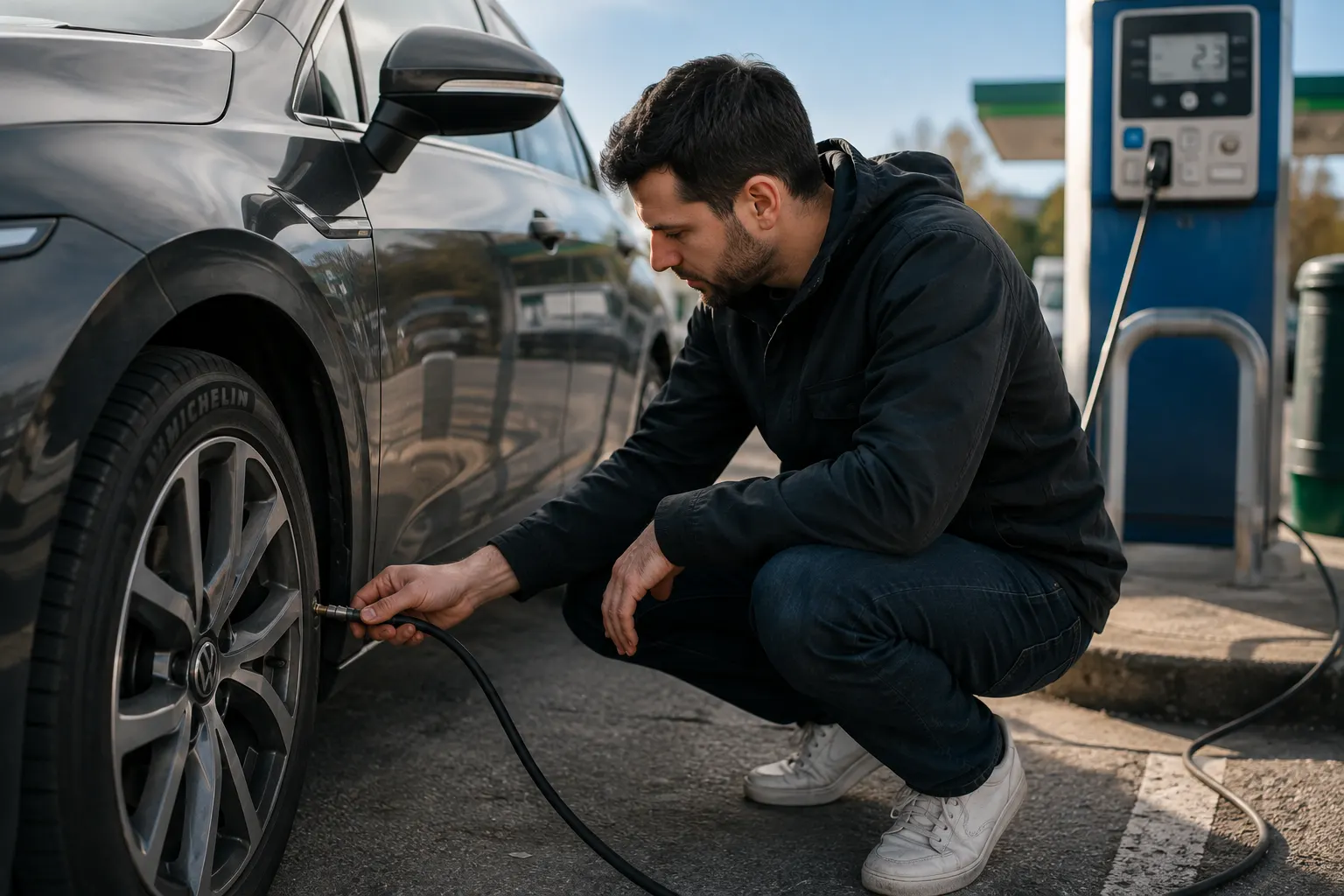
The test is not simply a normal tyre-pressure top-up service. You should check tyre pressures yourself before the MOT and before long journeys.
Incorrect tyre pressure can affect handling, braking, tyre wear and fuel economy.
Does an MOT Check Brake Pads?
The MOT checks braking condition, operation and performance, but the wheels and trims are not removed as part of the test.
That means the tester may identify visible brake defects or poor braking performance, but an MOT is not the same as a full brake inspection with wheels removed.
Your brake pads might be low but still pass if they meet the test requirements at that time.
If a garage advises your brake pads are nearly worn out, do not reply with “but it passed the MOT” as if that magically adds friction material.
Does an MOT Check the Engine?
Not in the way many people think.
The MOT does not check the general mechanical condition of the engine. It does check certain related things, including:
- Exhaust emissions
- Exhaust smoke
- Engine warning light where relevant
- Fuel leaks
- Exhaust system condition
- Serious fluid leaks
- Engine mountings where relevant
But it does not tell you whether the engine has been serviced properly, whether the timing belt is due or whether internal wear is developing.
For that, you need servicing, maintenance records and sometimes diagnostics or mechanical inspection.
Does an MOT Check the Clutch or Gearbox?
No, the MOT does not check the general condition of the clutch or gearbox.
A car could pass an MOT and still have a slipping clutch, noisy gearbox or worn dual-mass flywheel.
This is especially important when buying a used car. A fresh MOT is useful, but it does not prove the car is mechanically perfect.
Before buying, check your MOT history here to review MOT history, mileage records and previous defects, then still test drive the car properly.
Does an MOT Check Air Conditioning?
No, air conditioning is not a standard MOT test item.
The MOT may check demisting-related visibility items, such as the windscreen, wipers and washers, but it does not test whether the air conditioning blows cold.
A car can pass its MOT with broken air conditioning. It will just be legally roadworthy and mildly miserable in July.
Does an MOT Check Electric Cars Differently?
Electric cars still need an MOT once they are old enough, unless exempt.
Many of the same checks apply:
- Tyres
- Brakes
- Suspension
- Lights
- Steering
- Seat belts
- Body structure
- Wipers
- Windscreen
- Number plates
- Horn
- Visible electrical components
The main difference is that a pure electric car does not have an exhaust emissions test.
The DVSA inspection manual notes that high-voltage components are often inaccessible and testers should avoid touching high-voltage components and wiring.
If you own an EV, pay particular attention to tyres, brakes and suspension. EVs can be heavy, and instant torque can be hard on tyres if driven enthusiastically.
Does a Valid MOT Mean a Car Is Safe for a Whole Year?
No.
An MOT certificate means the vehicle met the required standard at the time of the test. It does not guarantee the vehicle will remain roadworthy for the full year.
A tyre can become illegal after the MOT. A brake light can fail the next day. A suspension spring can snap two months later. A warning light can appear on the drive home.
You are responsible for keeping the vehicle roadworthy between MOTs.
The MOT is a snapshot, not a forcefield.
What Happens If Your Car Fails Its MOT?
If your car fails, you will receive a refusal of an MOT test certificate.
The result will show the defects found. Major and dangerous defects cause a fail.
Your options may include:
- Having the car repaired at the test centre
- Taking it elsewhere for repair if allowed
- Returning for a partial retest
- Appealing the result if you believe it is wrong
Be very careful with dangerous defects. A dangerous defect means the vehicle presents a direct and immediate risk to road safety or the environment. You should not drive it until repaired.
Useful source: GOV.UK MOT test result guidance
How Much Does an MOT Cost?
There is a maximum fee MOT test stations can charge.
For a standard car, the maximum MOT test fee is £54.85. Some garages charge less, especially if the MOT is booked with a service or promotion.
Useful source: GOV.UK MOT test fees
The MOT fee does not include repairs. If the car fails, repair costs are separate.
A cheap MOT is not always bad, but be wary of suspiciously cheap offers from places you do not trust. Use a reputable MOT centre.
Common MOT Myths
“A fresh MOT means the car is perfect.”
No. It means the car met the minimum MOT standard at the time of the test.
“The MOT checks the engine.”
Not the general engine condition. It checks emissions and some related items, but not full engine health.
“If it passed, I do not need a service.”
Wrong. An MOT is not a service.
“Advisories do not matter.”
They matter. They may not fail the car today, but they can become future failures or safety issues.
“The spare tyre is checked.”
No. Spare wheels and tyres are not inspected as part of the MOT.
“A car with MOT is always legal to drive.”
Not necessarily. It must still be roadworthy, insured and taxed. A valid MOT does not protect you if the car has become dangerous since the test.
MOT Preparation Checklist
Before your MOT, check these simple items:
| Item | Quick Check |
|---|---|
| Lights | Test all exterior lights |
| Tyres | Check tread, sidewalls and pressure |
| Wipers | Make sure they clear the screen |
| Screenwash | Top it up |
| Horn | Test it briefly |
| Number plates | Clean and secure |
| Mirrors | Secure and not badly damaged |
| Seat belts | Latch, retract and show no serious damage |
| Windscreen | Check for major chips or cracks |
| Warning lights | Investigate anything staying on |
| Fuel cap | Make sure it opens and seals |
| Doors and bonnet | Open and close securely |
This is the easy stuff. Let the tester find the hidden suspension bush. Do not donate a fail on an empty washer bottle.
FAQs
What is checked in an MOT test?
An MOT checks lights, brakes, tyres, wheels, steering, suspension, seat belts, mirrors, windscreen, wipers, washers, horn, number plates, body structure, doors, bonnet, fuel system, exhaust, emissions, visible wiring, battery and certain warning lights.
What is not checked in an MOT?
An MOT does not check the general mechanical condition of the engine, clutch or gearbox. It is not the same as a service and does not include oil changes, filter changes or full mechanical diagnostics.
Does an MOT check the engine?
Not fully. The MOT checks emissions, exhaust smoke, certain warning lights, fuel leaks, exhaust condition and serious fluid leaks, but it does not check general engine health or servicing condition.
Does an MOT check the clutch?
No. The MOT does not check the general condition of the clutch. A car can pass an MOT with a clutch that is worn or beginning to slip.
Does an MOT check the gearbox?
No. The general condition of the gearbox is not checked during an MOT.
Does an MOT check tyre tread?
Yes. Tyre tread depth, condition, security, size and type are checked. For cars, the legal minimum tread depth is 1.6mm across the central three-quarters of the tyre and around the full circumference.
Are brake pads checked in an MOT?
Braking condition and performance are checked, but wheels and trims are not removed as part of the MOT. It is not the same as a full brake inspection.
Does an MOT check warning lights?
Yes, certain warning lights are checked, including lights related to ABS, ESC, airbags, seat belt restraint systems, electronic power steering, brake fluid and emissions systems where applicable.
Does an MOT check the spare tyre?
No. Spare wheels and tyres are not inspected as part of the MOT.
Does an MOT check air conditioning?
No. Air conditioning is not checked as a standard MOT item, although visibility-related items such as the windscreen, wipers and washers are checked.
Can an electric car fail an MOT?
Yes. Electric cars can fail on tyres, brakes, suspension, lights, steering, body condition, wipers, seat belts and other safety items. Pure EVs do not have an exhaust emissions test.
Does a valid MOT mean a car is roadworthy all year?
No. A valid MOT only shows the car met the required standard at the time of the test. You must keep the vehicle roadworthy between MOTs.
Conclusion
An MOT test checks the major safety and environmental parts of your vehicle, including brakes, tyres, lights, steering, suspension, seat belts, structure, emissions, visibility and key warning lights. It is an essential legal test, but it is not a full mechanical inspection and it is not a substitute for servicing.
The best approach is simple: check the easy items before the test, fix obvious faults early and take advisories seriously. A clean MOT is useful. A well-maintained car is better.
Before booking, buying or reviewing a used car, use the MOT history properly. It can reveal patterns in tyres, brakes, suspension, corrosion and mileage that one current MOT certificate will never explain on its own.