
What to Check When Buying a Used Car
Learn what to check when buying a used car in the UK, including MOT history, vehicle health checks, V5C, finance, mileage and recalls.
What to Check When Buying a Used Car: The Complete UK Buyer's Guide
Buying a used car can be a very sensible way to save money, provided you do not accidentally buy someone else's problem with wheels attached.
A good used car should have clean paperwork, sensible mileage, a solid MOT history, evidence of regular servicing and no worrying signs of neglect, finance issues or accident damage. A polished bonnet and fresh air freshener are nice, but they tell you very little about whether the car has been maintained properly or is quietly preparing to ruin your month.
This guide explains what to check when buying a used car in the UK, including MOT history, V5C documents, vehicle health checks, finance checks, recalls, mileage, tyres, brakes, bodywork, test drives and your rights as a buyer.
Quick Answer: What Should You Check When Buying a Used Car?
Before buying a used car, check the MOT history, V5C logbook, VIN, mileage, service history, outstanding finance, write-off history, recall status, tyres, brakes, bodywork, interior, engine condition and test-drive behaviour. You should also run a vehicle health check and understand whether you are buying from a dealer or a private seller, as your rights are different.
Used Car Buying Checklist
Here is the essential checklist before buying a used car:
| Area to Check | What to Look For |
|---|---|
| MOT history | Previous failures, advisories, mileage records and recurring faults |
| MOT status | Whether the vehicle currently has a valid MOT |
| V5C logbook | Correct registration, VIN, make, model, colour and keeper details |
| VIN | Must match the vehicle, V5C and any history check |
| Service history | Evidence of regular servicing and key maintenance |
| Vehicle health check | MOT patterns, mileage consistency and warning signs |
| Vehicle history check | Outstanding finance, theft, write-off or scrapped markers |
| Recall status | Unfixed manufacturer safety recalls |
| Tyres and brakes | Wear, damage, tread depth and braking performance |
| Bodywork | Rust, dents, poor repairs and mismatched paint |
| Interior | Warning lights, damp smells, wear and faulty electrics |
| Engine bay | Oil leaks, coolant leaks, low fluids and unusual smells |
| Test drive | Steering, brakes, clutch, gearbox, suspension and engine behaviour |
| Seller | Reputation, address, paperwork and pressure tactics |
If the seller refuses basic checks, treat that as a warning sign. A genuine seller should understand why you want to inspect the car properly.
Start With the MOT History
A used car's MOT history is one of the most useful checks you can do before viewing or buying.
It can show:
- Previous MOT passes and failures
- Dangerous, major and minor defects
- Advisory notices
- Recorded mileage at each test
- Whether the current MOT is valid
- When the next MOT is due
- Repeated faults over several years
This matters because patterns are revealing. One advisory for worn tyres is normal. Repeated advisories for corrosion, suspension wear, brake issues or oil leaks suggest the car may have been maintained only when absolutely necessary.
Mileage records are also important. They should usually rise steadily from one MOT to the next. If the mileage drops, jumps oddly or does not match the service records, ask questions before going any further.
Useful source: GOV.UK MOT history service
Check the V5C Logbook
The V5C registration certificate, often called the logbook, is essential.
It is not proof of ownership, but it does show the registered keeper and important vehicle details. GOV.UK recommends checking the V5C when buying a used vehicle.
Check that:
- The registration number matches the car
- The make and model are correct
- The colour matches the vehicle
- The VIN matches the car
- The registered keeper details make sense
- The seller's details match the situation
- The document looks genuine and has not been altered
Be cautious if the seller says the V5C is missing, delayed, "with a mate" or not important. It is important. Very important, in fact.
Useful source: GOV.UK used vehicle checks
Check the VIN
The Vehicle Identification Number, or VIN, is the car's unique identity number.
You can usually find it:
- At the base of the windscreen
- On a plate in the engine bay
- On the chassis
- Inside the driver's door area
- On the V5C logbook
The VIN on the car should match the V5C and any vehicle history check. Look carefully for signs of tampering, scratched plates or mismatched numbers.
If the VIN does not match, walk away unless there is a fully verified explanation. Cars do not accidentally forget who they are.
Run a Vehicle History Check
An MOT check is essential, but it does not tell you everything.
A paid vehicle history check can help reveal whether the car has:
- Outstanding finance
- Been reported stolen
- Been written off by an insurer
- Been scrapped
- Been imported or exported
- Had number plate changes
- Mileage discrepancies
Outstanding finance is one of the biggest risks. If the car is still on hire purchase or conditional sale, the seller may not have the legal right to sell it.
A vehicle history check is not the most exciting thing you will ever buy, but neither is paying for a car that later turns out not to be properly yours.
Useful source: Citizens Advice used car buying guidance
Check for Outstanding Recalls
A recall means the manufacturer has identified a safety-related issue that may need fixing.
You can check recall information using the vehicle registration number. Some recalls are minor; others are safety-critical.
Ask the seller whether any recall work has been completed and check with the manufacturer or official recall service if you are unsure.
Useful source: GOV.UK vehicle recall check
Review the Service History
MOT history tells you whether the car met minimum roadworthiness standards at the time of testing. Service history tells you how well it has been maintained between those tests.
Look for:
- Stamped service book
- Digital service records
- Garage invoices
- Parts receipts
- Oil change records
- Brake fluid changes
- Coolant changes
- Timing belt replacement, if applicable
- Major service records
A car with proper maintenance records is usually a safer bet than one with no paperwork and a seller saying, "My mate looks after it." That may be true. It may also mean the oil has not been changed since the last royal wedding.
Check the Mileage
Mileage should be judged against the car's age, condition and service record.
Compare the mileage shown on:
- The dashboard
- MOT history
- Service invoices
- Vehicle history report
- Sale advert
Mileage should usually rise logically over time. If it drops between MOT tests or does not match the paperwork, investigate before buying.
Also compare mileage with wear. A car showing 35,000 miles should not have a driver's seat and steering wheel that look as though they have done three laps of the moon.
Inspect the Bodywork
Always view the car in daylight and ideally when it is dry. Rain hides scratches, dents and mismatched paint rather well, which is convenient for dishonest sellers and nobody else.
Check for:
- Rust around wheel arches and sills
- Dents and scratches
- Mismatched paint
- Uneven panel gaps
- Overspray
- Poor bumper alignment
- Cracked lights
- Windscreen chips
- Signs of previous accident repairs
Small marks are normal on used cars. Poor repairs, structural rust and suspicious panel gaps are more serious.
Check the Tyres and Brakes
Tyres and brakes are safety-critical and can also reveal how the car has been treated.
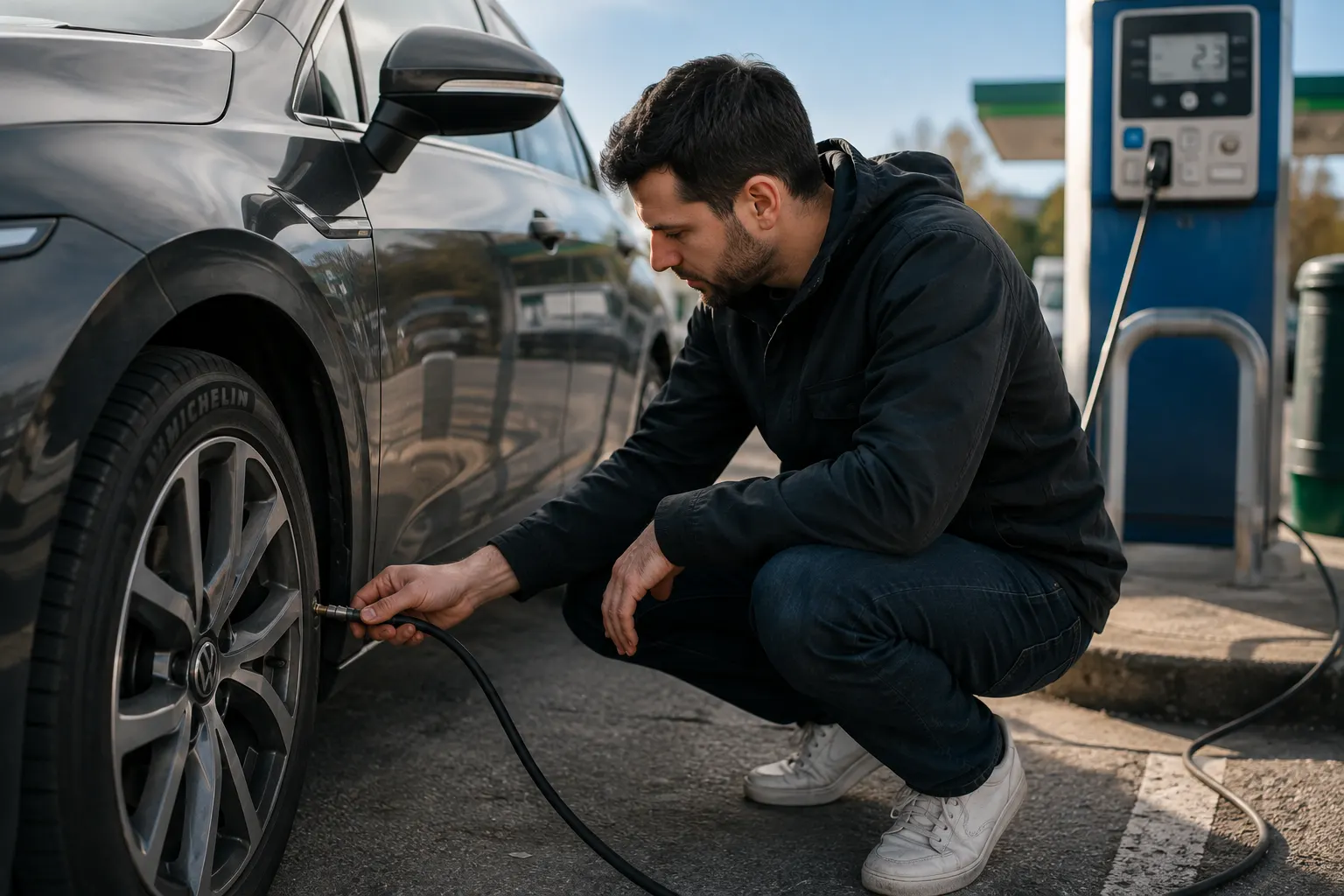
Check the tyres for:
- Tread depth
- Cracks
- Bulges
- Uneven wear
- Matching sizes
- Age and condition
The UK legal minimum tyre tread depth for cars is 1.6mm across the central three-quarters of the tyre and around the full circumference.
Uneven tyre wear may suggest wheel alignment, suspension or accident damage issues.
Check the brakes for:
- Grinding noises
- Vibration
- Pulling to one side
- Spongy pedal feel
- Warning lights
- Heavily scored discs
If the brakes feel wrong, do not ignore it. Stopping is one of the car's more important party tricks.
Look Under the Bonnet
You do not need to be a mechanic to spot obvious warning signs.
Check:
- Oil level
- Coolant level
- Brake fluid level
- Visible leaks
- Cracked hoses
- Corrosion
- Loose wiring
- Strange smells
- Smoke
- Signs of overheating
Milky residue under the oil filler cap can sometimes be harmless condensation from short journeys, but combined with coolant loss or overheating, it may point to more serious engine trouble.
Check the Interior and Electrics
The interior often tells you how the car has been used.
Test:
- Windows
- Mirrors
- Central locking
- Air conditioning
- Heater
- Infotainment system
- Bluetooth
- Parking sensors
- Reversing camera
- Seat adjustment
- Seat belts
- Dashboard warning lights
- Wipers and washers
- Horn
Make sure warning lights come on when you first switch on the ignition and then go out after the engine starts. A warning light that never appears may have been disabled, which is about as reassuring as a parachute packed by a stranger.
Also check for damp carpets, musty smells and heavy condensation. Water leaks can be irritating and expensive to fix.
Take a Proper Test Drive
Never buy a used car without a test drive unless you fully understand the risk.
During the drive, check:
- Cold start behaviour
- Idle quality
- Acceleration
- Gear changes
- Clutch biting point
- Steering feel
- Braking performance
- Suspension knocks
- Warning lights
- Temperature gauge
- Exhaust smoke
Try different road types if possible. A car can feel fine at 20mph around an industrial estate but reveal vibration, gearbox issues or wheel-bearing noise at higher speeds.
Turn the radio off. You are there to listen to the car, not the seller's favourite breakfast show.
Understand Your Rights: Dealer vs Private Seller
Your rights depend on who you buy from.
If you buy from a dealer, you usually have stronger protection under the Consumer Rights Act. The car should be of satisfactory quality, fit for purpose and as described.
If you buy privately, you generally have fewer rights. The car must still be accurately described and the seller must have the right to sell it, but you have less protection if problems appear later.
That is why private sales are often cheaper. You are accepting more risk.
Useful source: MoneyHelper consumer rights guidance
Check the Running Costs
Before buying, look beyond the sale price.
Check:
- Insurance group
- Vehicle tax
- Fuel economy
- Servicing costs
- Tyre prices
- MOT due date
- Clean Air Zone or ULEZ relevance
- Common repair costs
- Finance settlement if applicable
A cheap car with expensive insurance, worn tyres and a major service due is not cheap. It is merely delaying the bad news.
Red Flags: When to Walk Away
Walk away if you find:
- Missing V5C
- VIN mismatch
- Outstanding finance
- Stolen marker
- Undeclared write-off history
- Mileage inconsistencies
- Heavy corrosion
- Warning lights
- Overheating
- Major leaks
- Seller pressure
- Refusal to allow inspection
- Price far below market value with no clear reason
There will always be another car. There may not always be another wallet.
What to Do After Buying a Used Car
Once you buy the car:
- Tax it immediately.
- Arrange insurance before driving.
- Keep the green new keeper slip.
- Get a proper receipt.
- Save all paperwork.
- Book a service if due.
- Check the MOT due date.
- Repair any known safety issues.
Vehicle tax does not transfer with the car. The new keeper must tax it before driving on public roads.
Useful source: GOV.UK tax your vehicle
FAQs
What is the most important check when buying a used car?
The most important checks are MOT history, V5C logbook, VIN, vehicle history, service records and a proper test drive. Together, they help confirm whether the car is legal, safe and as described.
Should I check MOT history before buying a used car?
Yes. MOT history can reveal previous failures, advisories, mileage records and recurring faults. It is one of the most useful checks before buying.
Is a V5C proof of ownership?
No. The V5C shows the registered keeper, not legal ownership. However, it is still essential for checking the vehicle's identity and keeper details.
Should I buy a car with outstanding finance?
Be very cautious. If finance is still outstanding, the seller may not have the legal right to sell the car. Always run a vehicle history check before buying.
What should I check on a test drive?
Check starting, idling, acceleration, braking, steering, clutch, gearbox, suspension noises, warning lights, exhaust smoke and whether the car drives straight.
Is it safer to buy from a dealer or private seller?
Buying from a dealer usually gives stronger consumer protection. Private sales can be cheaper, but they carry more risk and fewer rights if problems appear later.
Can I drive a used car home after buying it?
Only if it is taxed, insured, roadworthy and has a valid MOT if required. Vehicle tax does not transfer from the previous keeper.
Conclusion
Buying a used car is not about finding the shiniest advert or the cheapest price. It is about checking the evidence. Review the MOT history, checking the MOT history, inspect the V5C, confirm the VIN, check for finance, look over the car properly and take a proper test drive.
If the condition, paperwork and history all match, you may have found a good one. If the story starts falling apart, walk away. The best used car is the one that does not become your most expensive mistake.