
Most Common MOT Failures UK: Latest DVSA Data
See the most common MOT failures using latest DVSA data, including lights, suspension, tyres, brakes, visibility and how to avoid them.
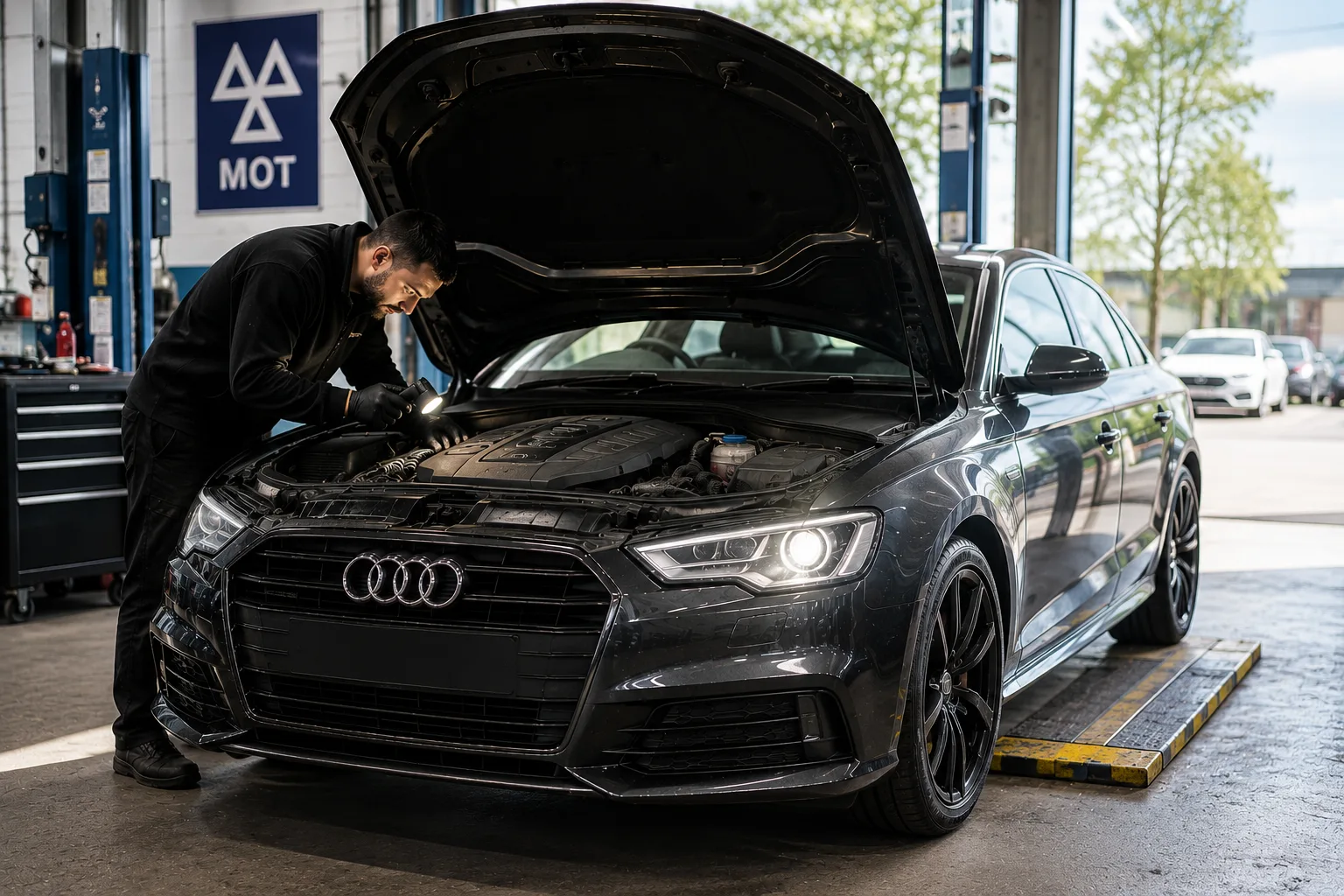
The Most Common MOT Failures in the UK — Latest DVSA Data
Most MOT failures are not caused by mysterious mechanical disasters hiding deep inside the engine. They are often caused by things drivers could have spotted earlier: blown bulbs, worn tyres, damaged wipers, weak brakes, suspension wear and visibility problems.
According to the latest DVSA MOT testing data for Class 3 and 4 vehicles, covering 2025/26 Quarter 1: April to June, the most common MOT failure category is lamps, reflectors and electrical equipment, followed by suspension, tyres, brakes and visibility.
That means many MOT failures are avoidable with basic checks before the test. Not all of them, of course. You are unlikely to spot every worn suspension bush on your driveway. But you can certainly check lights, tyres, wipers, screenwash, mirrors and warning lights before handing your car over to an MOT tester and hoping for mercy.
This guide explains the most common MOT failures in the UK, what the latest DVSA data shows, why cars fail, and how to reduce your chances of failing on simple items.
Quick Answer: What Are the Most Common MOT Failures?
The most common MOT failures in the UK are problems with lamps, reflectors and electrical equipment, followed by suspension, tyres, brakes, visibility, body structure, emissions and leaks, steering, seat belts and road wheels. Latest DVSA Class 3 and 4 data shows lamps and electrical equipment are the top failure category, affecting over 10% of initial MOT tests.
Useful source: DVSA MOT testing data for Great Britain
Latest DVSA Data: Top MOT Failure Categories
The latest DVSA aggregate data for Class 3 and 4 vehicles shows the following initial MOT failure categories for 2025/26 Quarter 1: April to June.
Class 3 and 4 vehicles include cars and light vans up to 3,000kg.
| Rank | Defect Category | Overall % of Tests |
|---|---|---|
| 1 | Lamps, reflectors and electrical equipment | 10.36% |
| 2 | Suspension | 8.65% |
| 3 | Tyres | 6.23% |
| 4 | Brakes | 6.10% |
| 5 | Visibility | 4.65% |
| 6 | Body, chassis and structure | 3.18% |
| 7 | Noise, emissions and leaks | 3.03% |
| 8 | Steering | 1.84% |
| 9 | Seat belts and supplementary restraint systems | 0.96% |
| 10 | Road wheels | 0.38% |
| 11 | Identification of the vehicle | 0.32% |
DVSA’s data also shows an overall initial failure rate of 27.24% for Class 3 and 4 vehicles in that quarter.
Important note: these percentages should not be added together to calculate the total failure rate. A single vehicle can fail for more than one item. One badly neglected car can arrive with faulty lights, worn tyres, weak brakes and suspension knocking like a toolbox in a washing machine.
Full-Year DVSA Data: 2024/25
The latest complete financial-year DVSA data gives a similar picture.
For 2024/25, the top failure categories for Class 3 and 4 vehicles were:
| Rank | Defect Category | Overall % of Tests |
|---|---|---|
| 1 | Lamps, reflectors and electrical equipment | 10.89% |
| 2 | Suspension | 8.73% |
| 3 | Brakes | 6.63% |
| 4 | Tyres | 6.39% |
| 5 | Visibility | 4.54% |
| 6 | Body, chassis and structure | 3.41% |
| 7 | Noise, emissions and leaks | 3.15% |
| 8 | Steering | 1.97% |
| 9 | Seat belts and supplementary restraint systems | 0.97% |
| 10 | Road wheels | 0.38% |
| 11 | Identification of the vehicle | 0.34% |
For the full 2024/25 financial year, DVSA recorded an overall initial failure rate of 28.08% for Class 3 and 4 vehicles.
Useful source: DVSA Class 3 and 4 initial failures by defect category
What Does “Overall % of Tests” Mean?
DVSA’s “overall % of tests” figure shows the percentage of initial MOT tests where that category appeared as a reason for failure.
For example, if lamps, reflectors and electrical equipment appear against 10.36% of tests, that means more than one in ten initial tests had a failure item in that category.
It does not mean lamps caused 10.36% of all MOT failures on their own, because one failed MOT can include several defect categories.
This is why the data is useful but needs careful reading. MOT failures overlap. A car can fail on tyres and brakes. It can fail on lights and visibility. It can fail on suspension, steering and tyres if it has spent too much time losing arguments with potholes.
1. Lamps, Reflectors and Electrical Equipment
This is the most common MOT failure category in the latest DVSA data.
It includes problems with:
- Headlights
- Sidelights
- Brake lights
- Indicators
- Hazard lights
- Rear fog lights
- Number plate lights
- Reflectors
- Headlamp aim
- Daytime running lights where required
- Electrical wiring
- Battery security
- Warning lights where relevant
This category is common because modern cars have a lot of lights and electrical systems. Some failures are simple, such as a blown bulb. Others are more involved, such as headlamp aim, LED units, wiring faults or dashboard warning lights.
How to avoid this MOT failure
Before your MOT:
- Turn on all exterior lights.
- Check headlights on dipped and main beam.
- Test indicators and hazard lights.
- Press the brake pedal and check brake lights.
- Check rear fog lights.
- Check number plate lights.
- Look for cracked lenses.
- Check dashboard warning lights go out as expected.
Ask someone to walk around the car while you operate the lights. If you are alone, use reflections in windows, garage doors or parked cars.
A bulb is cheap. Failing an MOT because of one is irritating in a very preventable way.
2. Suspension
Suspension is the second-biggest MOT failure category in the latest DVSA data.
Suspension problems can include:
- Broken coil springs
- Worn shock absorbers
- Leaking dampers
- Worn suspension bushes
- Damaged suspension arms
- Worn ball joints
- Excessive play
- Corrosion around mounting points
- Wheel bearing issues
Suspension takes constant punishment from potholes, speed bumps, kerbs and poor road surfaces. In the UK, that means it lives a difficult life.
A car with suspension problems may still drive, but it may not handle, brake or steer properly.
Warning signs of suspension problems
Look out for:
- Knocking over bumps
- Clunking when turning
- Uneven tyre wear
- Car sitting lower on one side
- Bouncy ride
- Steering pulling to one side
- Poor handling
- Vibration
- Creaking noises
Some suspension issues are hard to see without lifting the car. But noises, uneven tyre wear and poor handling are warning signs.
If your car sounds like someone has dropped a bag of spanners into the wheel arch, do not wait for the MOT tester to discover why.
3. Tyres
Tyres are one of the most serious and avoidable MOT failure areas.
MOT tyre failures can include:
- Tread below the legal limit
- Cuts
- Bulges
- Exposed cords
- Incorrect tyre size
- Incorrect tyre type
- Tyres fouling bodywork
- Tyre pressure monitoring system faults where applicable
- Seriously damaged sidewalls
For cars, the legal minimum tread depth is 1.6mm across the central three-quarters of the tyre and around the full circumference.
However, legal minimum does not mean ideal. Tyres close to the limit already have reduced wet-weather performance.
How to avoid tyre MOT failures
Before your MOT:
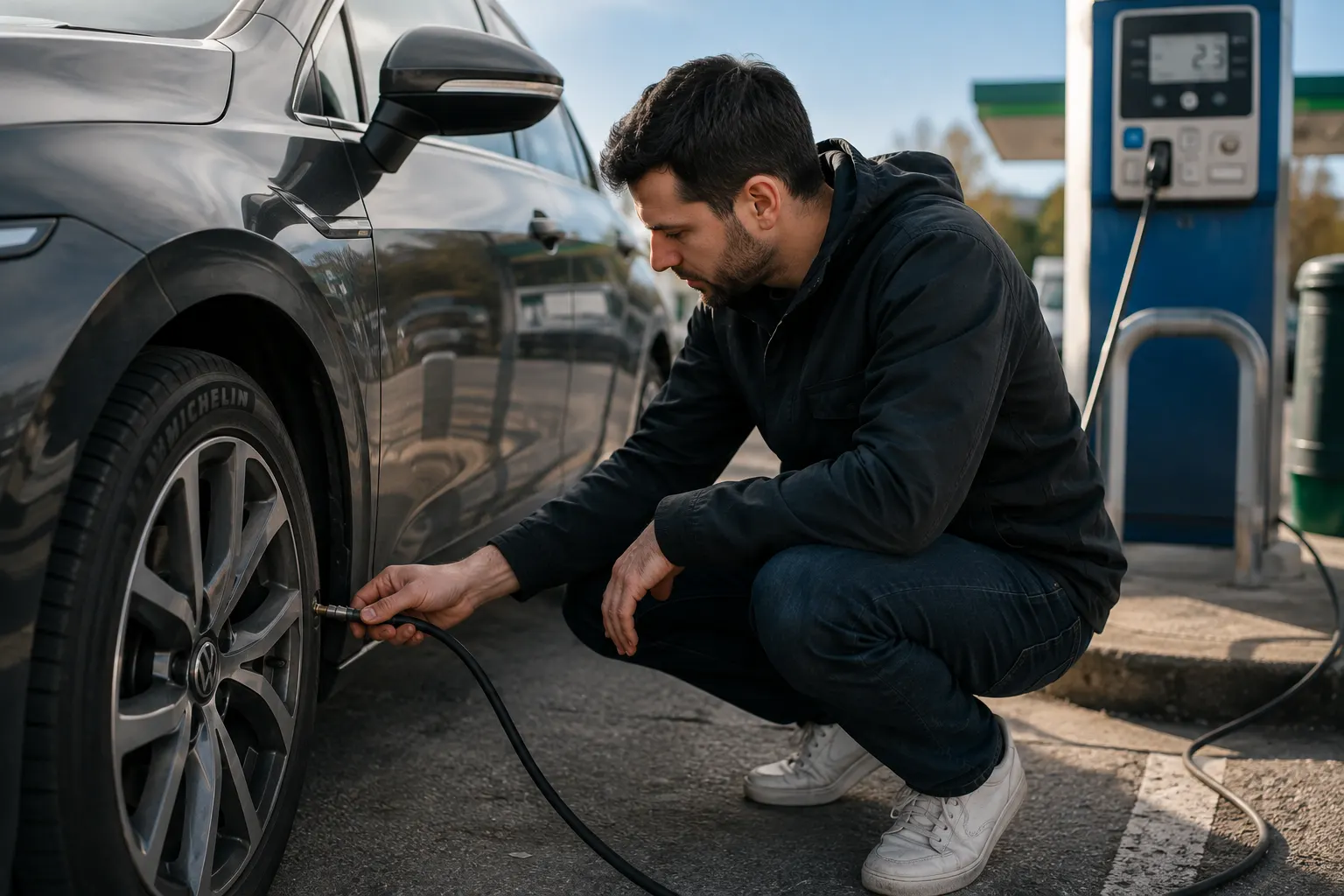
- Check tread depth on all four tyres.
- Look for bulges or cuts.
- Check the inside edges where possible.
- Check tyre pressures.
- Look for uneven wear.
- Make sure tyre sizes match what the vehicle needs.
- Check for cords or cracking.
- Check the TPMS warning light if your car has one.
Uneven tyre wear can also point to wheel alignment or suspension problems. So if the tyres look strange, the tyre may only be the visible symptom.
Tyres are not the place to be brave. They are the only part of the car touching the road, which makes them fairly important.
4. Brakes
Brakes are another major MOT failure category and one of the most important safety systems on the car.
Brake-related MOT failures can include:
- Poor brake performance
- Imbalanced braking
- Worn brake discs
- Worn brake pads
- Corroded brake pipes
- Brake fluid leaks
- Parking brake failure
- ABS warning light
- Electronic parking brake warning light
- Brake pedal issues
The MOT checks braking condition, operation and performance. However, wheels are not removed as part of a standard MOT, so it is not the same as a full brake inspection.
Warning signs of brake problems
Look out for:
- Grinding noises
- Squealing
- Vibration when braking
- Car pulling to one side
- Spongy brake pedal
- Brake warning light
- Longer stopping distances
- Handbrake not holding properly
- Burning smell after braking
If your brakes sound like they are chewing gravel, do not wait for the MOT. Get them checked.
Brakes are one of those systems where “it’ll probably be fine” has a very poor safety record.
5. Visibility
Visibility is one of the easiest MOT failure categories to prevent.
Visibility defects can include:
- Damaged windscreen
- Wipers not clearing properly
- Washer jets not working
- Empty screenwash
- Obstructed driver’s view
- Damaged mirrors
- Insecure mirrors
- Poor washer aim
- Stickers or objects blocking vision
This is the category where many drivers accidentally donate an MOT fail to the garage.
An empty washer bottle, split wiper blades or a cracked mirror can be sorted before the test. Yet visibility remains one of the top MOT failure categories.
How to avoid visibility MOT failures
Before your MOT:
- Top up screenwash.
- Test front and rear washers.
- Check washer jets hit the screen properly.
- Check wipers clear the glass without smearing.
- Replace split or noisy wiper blades.
- Check windscreen chips and cracks.
- Remove anything blocking the driver’s view.
- Check mirrors are secure and usable.
Useful internal link: How to stop car windows fogging up
A car can be mechanically healthy and still fail because it cannot clear the windscreen. That is annoying, but also fair. Seeing where you are going is one of driving’s more essential features.
6. Body, Chassis and Structure
Body, chassis and structure defects are often more serious and can be expensive to fix.
This category can include:
- Excessive corrosion
- Structural rust
- Sharp edges
- Damaged body panels
- Insecure bumpers
- Damaged sills
- Corrosion near suspension mounting points
- Corrosion near seat belt mounting points
- Unsafe body repairs
- Doors, bonnet or boot not closing properly
Rust is especially important. Cosmetic surface rust may not be a fail, but corrosion in structural areas can be.
Warning signs of structural problems
Look for:
- Rust around sills
- Rust near wheel arches
- Rust underneath the car
- Soft or crumbling metal
- Previous poor welding
- Uneven panel gaps
- Doors not closing properly
- Sharp damaged panels
- MOT advisories for corrosion
Corrosion is one of those problems that rarely gets cheaper with time. It usually begins with an advisory and ends with welding, regret or a classified advert saying “spares or repair”.
7. Noise, Emissions and Leaks
Noise, emissions and leaks are another common MOT failure area.
This can include:
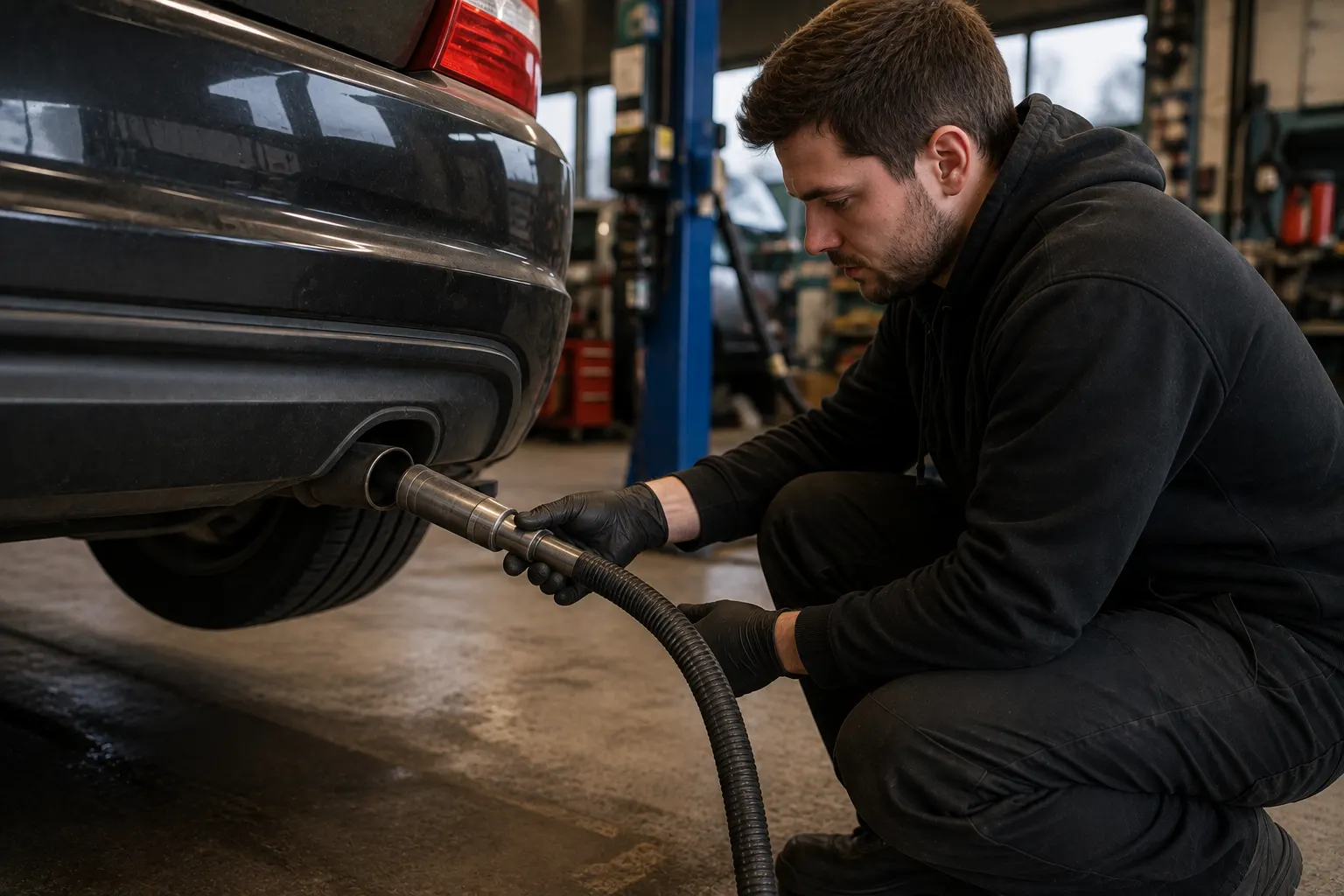
- Excessive exhaust noise
- Exhaust leaks
- Missing catalytic converter
- Emissions test failure
- Diesel smoke failure
- Fuel leaks
- Oil leaks
- Coolant leaks
- AdBlue or emissions-system issues on some vehicles
Modern emissions systems can be expensive, especially on diesels with diesel particulate filters, EGR systems, AdBlue systems and sensors.
Warning signs before the MOT
Look out for:
- Loud exhaust
- Rattling exhaust
- Strong fuel smell
- Smoke from the exhaust
- Engine warning light
- Emissions warning light
- Oil patches under the car
- Coolant loss
- Burning smell
- Poor running
An MOT emissions fail can sometimes be linked to poor servicing, short journeys, warning lights or engine faults.
Useful internal link: How to check car fluids
If your car is smoking, leaking and sounding like a small tractor, the MOT tester is unlikely to be charmed.
8. Steering
Steering defects are less common than lights, suspension or tyres, but they can be serious.
Steering-related MOT failures can include:
- Excessive steering play
- Worn steering joints
- Power steering faults
- Fluid leaks
- Damaged steering rack
- Steering column issues
- Electronic power steering warning light
- Inappropriate repairs
- Corrosion around steering components
Warning signs of steering problems
Look out for:
- Heavy steering
- Steering pulling to one side
- Vibration through the steering wheel
- Clunking when turning
- Excessive free play
- Power steering warning light
- Whining noise when turning
- Fluid leaks
Steering is not optional. If the car does not reliably go where you point it, the MOT is not the main concern.
9. Seat Belts and Supplementary Restraint Systems
Seat belts and restraint systems are checked because they are critical in a crash.
Failures can include:
- Damaged seat belt webbing
- Seat belt not locking
- Seat belt not retracting
- Insecure belt mounting
- Buckle not working
- Airbag warning light
- Seat belt pretensioner warning light
- Supplementary restraint system fault
How to check before the MOT
Before the test:
- Pull each seat belt out fully.
- Check for cuts, fraying or damage.
- Make sure each belt latches properly.
- Check each belt retracts.
- Check warning lights go out after starting.
- Make sure seats are secure.
A seat belt has one job. If it looks like it has been chewed by a dog or attacked by a door latch for ten years, fix it.
10. Road Wheels
Road wheel failures are less common, but still important.
This category can include:
- Damaged wheels
- Cracked wheels
- Missing or insecure wheel nuts
- Wheel distortion
- Incorrect fitment
- Dangerous wheel condition
Wheel damage can happen from kerbs, potholes or poor repairs.
Warning signs
Look for:
- Vibration at speed
- Visible cracks
- Bent wheel rims
- Missing wheel nuts
- Air loss from tyres
- Buckled wheel
- Recent pothole impact
A wheel should be round, secure and attached. Anything else is an issue.
Why Do So Many Cars Fail MOTs?
Cars fail MOTs for three main reasons.
1. Wear and tear
Tyres, brakes, suspension, wipers and bulbs wear out. That is normal.
The problem is when wear becomes neglect.
2. Drivers do not check basic items
Many failures are caused by simple checks being ignored.
These include:
- Dead bulbs
- Empty screenwash
- Worn wipers
- Bald tyres
- Dirty or damaged plates
- Cracked mirrors
These are often cheap compared with failing the MOT, booking repairs and returning for a retest.
3. Problems build up from previous advisories
Advisories are often early warnings.
A tyre advisory this year may become a tyre failure next year. Suspension wear this year may become a broken component next year. Corrosion advisories are especially important because rust tends not to heal itself in a moment of personal growth.
Use advisories as a maintenance plan, not decorative text.
Common MOT Failures You Can Check Yourself
You can check many common MOT failure items at home.
| Item | What to Check |
|---|---|
| Lights | All exterior lights work |
| Tyres | Tread, cuts, bulges, pressure |
| Wipers | Clear screen without smearing |
| Screenwash | Bottle topped up and jets working |
| Mirrors | Secure and not badly cracked |
| Number plates | Clean, readable and properly fixed |
| Horn | Works properly |
| Seat belts | Latch, retract and are not damaged |
| Warning lights | Key lights go out after starting |
| Windscreen | No major chips or cracks in driver’s view |
| Fuel cap | Opens, closes and seals |
| Doors and bonnet | Open and close securely |
This will not catch every MOT problem, but it can reduce your chance of failing on the silly stuff.
MOT Failures That Usually Need a Garage
Some items are harder to check properly without tools, lifting equipment or mechanical knowledge.
These include:
- Suspension bushes
- Ball joints
- Brake pipes
- Brake efficiency
- Corrosion under the vehicle
- Exhaust leaks
- Emissions faults
- Steering rack play
- Wheel bearing wear
- Structural rust
- Electronic faults
- ABS and airbag diagnostics
If your car has advisories in these areas, do not wait until the next MOT and hope the problem has got bored and left.
A garage inspection before the MOT can be useful if the car is older, has previous advisories or has started making new noises.
Most Avoidable MOT Failures
Some MOT failures are genuinely hard for drivers to spot. Others are avoidable with a five-minute check.
The most avoidable failures include:
- Blown bulbs
- Empty screenwash
- Split wiper blades
- Dirty number plates
- Insecure mirrors
- Tyres obviously below the limit
- Warning lights ignored for weeks
- Windscreen chips left unrepaired
- Fuel cap not sealing
- Horn not working
These are the failures that hurt most because they are often cheap and simple to fix before the test.
No one wants to fail an MOT because the screenwash bottle was empty. That is not a mechanical failure. That is the car equivalent of forgetting your PE kit.
MOT Preparation Checklist Based on Common Failures
Before your MOT, do this:
- Check all lights.
- Check indicators and hazard lights.
- Check brake lights.
- Check tyre tread.
- Look for tyre cuts and bulges.
- Check tyre pressures.
- Test wipers.
- Top up screenwash.
- Check washer jets.
- Test the horn.
- Clean number plates.
- Check mirrors.
- Check seat belts.
- Look for dashboard warning lights.
- Check for visible leaks.
- Check the windscreen.
- Listen for suspension knocks.
- Check brakes feel normal.
- Read last year’s MOT advisories.
- Repair obvious defects before the test.
Reading last year’s advisories is one of the smartest things you can do. The MOT tester has already given you a preview of likely future problems. Ignoring it is like watching the trailer and being surprised by the film.
What Are the Most Serious MOT Failures?
Not all failures are equal.
Some failures are inconvenient. Others are dangerous.
More serious MOT failures include:
- Dangerous tyre defects
- Brake failure
- Steering defects
- Serious suspension failure
- Severe structural corrosion
- Fuel leaks
- Dangerous body damage
- Serious emissions faults
- Wheel security issues
- Seat belt mounting corrosion
- Airbag or restraint faults
If your MOT result includes a dangerous defect, do not drive the car until it has been repaired.
A dangerous MOT defect means there is a direct and immediate risk to road safety or serious environmental impact.
Useful internal link: What happens if your car fails its MOT?
Do Older Cars Fail More Often?
Generally, older cars are more likely to fail because components wear with age and mileage.
Older cars are more likely to have:
- Suspension wear
- Brake corrosion
- Tyre wear
- Exhaust problems
- Emissions issues
- Corrosion
- Electrical faults
- Wiper and washer problems
- Steering wear
That does not mean old cars are bad. A well-maintained older car can pass cleanly. But age increases the chance that something has worn, seized, corroded or given up quietly.
The worst combination is not old age. It is old age plus no maintenance.
Does a Failed MOT Always Mean Expensive Repairs?
No.
Some MOT failures are cheap:
- Bulb replacement
- Wiper blades
- Screenwash
- Number plate bulb
- Horn repair
- Tyre replacement
- Mirror glass
- Washer jet adjustment
Others can be expensive:
- Suspension rebuilds
- Brake pipe corrosion
- Emissions faults
- DPF problems
- Catalytic converter failure
- Structural welding
- Steering rack issues
- Multiple tyre and brake failures
The category matters, but the exact defect matters more.
“Suspension failure” could mean a relatively simple worn drop link or a more serious structural issue. “Emissions failure” could mean the car needs a proper run and service, or it could mean a very expensive exhaust after-treatment problem.
Should You Service Your Car Before an MOT?
If the car is due a service, doing it before the MOT can make sense.
A service can help with:
- Oil level
- Filters
- Fluid checks
- Brake inspection
- Tyre checks
- Lights
- Wipers
- Battery
- Coolant
- General condition
But remember: a service and an MOT are not the same thing.
An MOT checks minimum legal safety and environmental standards. A service maintains the car.
A car that only gets MOTs but never gets serviced is not being maintained. It is being inspected annually and otherwise left to fend for itself like a houseplant in a rented flat.
How to Use DVSA Data as a Driver
The DVSA data tells you where the risk is.
If the top categories are lights, suspension, tyres, brakes and visibility, then your pre-MOT routine should focus heavily on those areas.
That means:
- Check lights first.
- Check tyres carefully.
- Do not ignore suspension noises.
- Take brake symptoms seriously.
- Make sure wipers and washers work.
- Read previous MOT advisories.
- Fix cheap obvious issues before the test.
- Use MOT history to spot repeated patterns.
The data does not guarantee what your car will fail on. But it does show where many cars go wrong.
FAQs
What are the most common MOT failures in the UK?
The most common MOT failures in the UK are lamps, reflectors and electrical equipment, followed by suspension, tyres, brakes, visibility, body structure, emissions and leaks, steering, seat belts and road wheels.
What is the number one MOT failure?
According to the latest DVSA Class 3 and 4 aggregate data, lamps, reflectors and electrical equipment are the most common MOT failure category.
Are lights a common MOT failure?
Yes. Lights, reflectors and electrical equipment are the top MOT failure category in the latest DVSA data. Blown bulbs, faulty brake lights, indicators, fog lights, number plate lights and headlamp aim can all cause failures.
Are tyres a common MOT failure?
Yes. Tyres are one of the most common MOT failure categories. Cars can fail for low tread depth, cuts, bulges, exposed cords, incorrect tyre type or tyre pressure monitoring system faults where applicable.
Are brakes a common MOT failure?
Yes. Brake problems are one of the leading MOT failure categories. Common issues include poor brake performance, worn components, imbalanced braking, brake fluid leaks, corroded pipes and warning lights.
Are suspension problems common MOT failures?
Yes. Suspension is one of the most common MOT failure categories. Worn bushes, broken springs, leaking shock absorbers, ball joint wear and wheel bearing issues can all cause MOT failures.
Can an empty screenwash bottle fail an MOT?
Yes. If the washers do not provide enough fluid to clear the windscreen, the car can fail. This is one of the easiest MOT failures to avoid.
Do advisories become MOT failures?
They can. Advisories do not fail the car at the time, but they often warn about issues that may become failures later, such as worn tyres, corrosion, brake wear or suspension play.
Can I check common MOT failures myself?
You can check many common MOT failure items yourself, including lights, tyres, wipers, washers, screenwash, mirrors, number plates, horn, seat belts and warning lights.
Does MOT history show previous failures?
Yes. MOT history shows previous test results, failures, advisories, mileage records and defect details. A MOT history check can help you review these patterns before buying or preparing for an MOT.
Conclusion
The latest DVSA data makes one thing clear: many MOT failures are caused by familiar, visible and often preventable problems. Lights and electrical equipment remain the biggest failure category, followed by suspension, tyres, brakes and visibility.
You cannot inspect every component properly at home, but you can reduce your chances of failing by checking the basics: lights, tyres, wipers, washers, mirrors, number plates, horn, seat belts and dashboard warning lights.
The smartest move is to read your previous MOT history before the next test. If the same advisories keep appearing, they are not background noise. They are the car politely warning you that next year’s MOT may be less polite.