
Can You Sell a Car on Finance?
Find out if you can sell a car on finance, how PCP and HP settlement works, what negative equity means and how to sell safely.
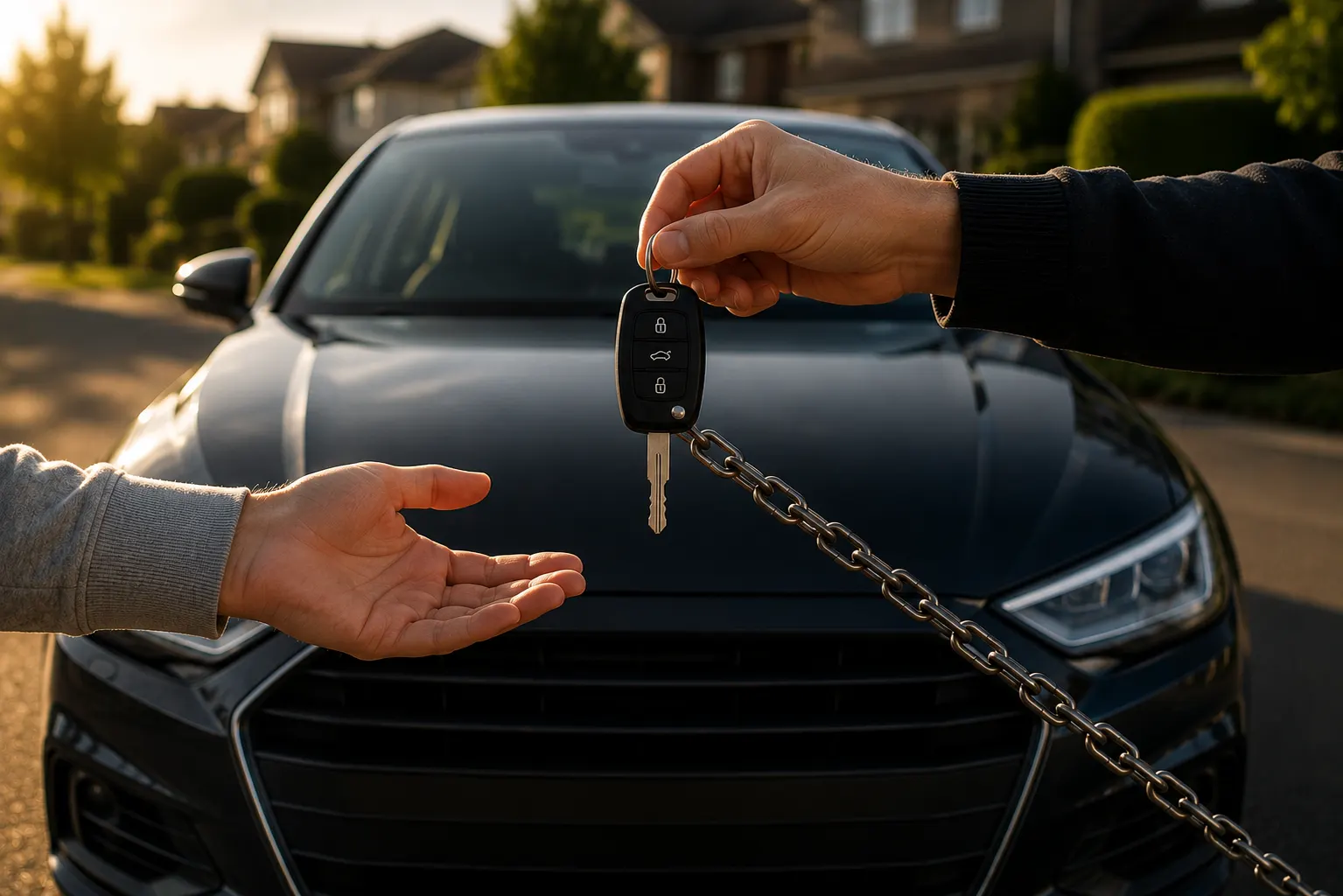
Yes, you can sell a car that has finance on it — but usually only after the finance has been settled or as part of a properly managed sale where the finance is paid off before ownership transfers.
That detail matters. If your car is on Hire Purchase, Conditional Sale or PCP, you usually do not legally own the car until the agreement is paid off. The finance company does. That means you cannot simply take the money from a buyer, hand over the keys and pretend the finance agreement is someone else’s problem.
A car with outstanding finance can still be sold, part-exchanged or traded in, but the finance needs to be handled properly. Done correctly, it is common and straightforward. Done badly, it can become a legal and financial mess with number plates attached.
Quick Answer: Can You Sell a Car on Finance?
You can sell a car on finance, but if it is on HP or PCP, you normally need to settle the finance first because the lender is usually the legal owner until the agreement is paid off. You can ask the finance company for a settlement figure, pay it yourself, or arrange for a dealer or buyer to pay the lender directly before the sale is completed.
Useful source: MoneyHelper car finance early settlement guidance
Can You Sell a Car with Outstanding Finance?
You can sell a financed car, but the correct process depends on the type of finance.
The main question is: who legally owns the car right now?
With many car finance agreements, especially HP and PCP, you are the registered keeper and the person using the car, but you are not the legal owner until the finance is settled.
That means the sale usually needs to work like this:
- You ask the finance company for a settlement figure.
- The outstanding finance is paid off.
- The lender confirms the finance is cleared.
- The car can then be sold or transferred properly.
Do not confuse being the registered keeper with being the legal owner. The V5C logbook is not proof of ownership. It only shows who is responsible for registering and taxing the vehicle.
Selling a Car on HP Finance
Hire Purchase, or HP, is one of the clearest cases.
With HP, you do not own the car until the final payment has been made. Citizens Advice explains that under HP, you hire the goods and pay by instalments, and while you are still making payments, you are not allowed to sell or dispose of the goods without the lender’s permission.
Useful source: Citizens Advice hire purchase and conditional sale guidance
So if your car is on HP, you normally need to:
- Contact the finance company
- Ask for a settlement figure
- Pay the settlement amount
- Get confirmation the finance is cleared
- Then sell the car
Selling an HP car without settling the finance or getting permission can cause serious problems. The lender may still have rights over the vehicle, and the buyer could find themselves dealing with a finance company that wants answers.
This is not a “sort it later” situation. This is a “sort it before the car leaves your driveway” situation.
Selling a Car on PCP Finance
Personal Contract Purchase, or PCP, is also usually treated as finance where you do not own the car until the agreement is settled and any final payment is made.
With PCP, you normally have three broad options at the end of the agreement:
- Return the car
- Pay the final balloon payment and keep the car
- Use any equity towards another car
If you want to sell the car before the end of the PCP agreement, the usual route is to ask the finance provider for a settlement figure.
That settlement figure will normally include what is needed to clear the agreement. Once it is paid and the finance is closed, you can sell the car.
Useful source: Finance & Leasing Association PCP guidance
Selling a Car Bought with a Personal Loan
A personal loan is different.
If you used a bank loan or unsecured personal loan to buy the car, the car is usually yours from the start. The loan is attached to you, not usually secured against the vehicle.
That means you can normally sell the car, but you still remain responsible for repaying the loan.
For example:
- You borrow £10,000 from a bank.
- You buy a car.
- You sell the car later for £7,000.
- You still owe the bank whatever remains on the loan.
The buyer does not take over your personal loan. The debt stays with you.
This is one of the cleaner types of finance when selling because there usually should not be outstanding vehicle finance showing against the car itself. But you still need to manage your own debt properly.
Can You Sell a Leased Car?
Usually, no.
If the car is on Personal Contract Hire, often called PCH or leasing, you do not own the car. You are renting it for a fixed period.
That means you cannot sell it.
If you want to end a lease early, you need to speak to the leasing company. There may be early termination charges, and these can be expensive.
A lease car is not your car to sell. It is more like borrowing a very expensive library book that needs tyres.
How to Sell a Car on Finance Properly
Here is the safest process.
Step 1: Check What Type of Finance You Have
Find your agreement and check whether it is Hire Purchase, PCP, Conditional Sale, Personal Contract Hire, a personal loan, credit card borrowing, a bank loan or dealer finance. This matters because the selling rules are different. If the agreement says HP, PCP or Conditional Sale, assume you need to settle the finance before selling unless the lender confirms otherwise.
Step 2: Ask for a Settlement Figure
Contact the finance provider and ask for an early settlement figure. A settlement figure is the amount needed to clear the finance agreement on a specific date. It may include outstanding capital, interest up to the settlement date, any early settlement fees, a final payment or balloon payment on PCP, and administration charges depending on the agreement. Settlement figures are usually only valid for a limited time, so check the expiry date. Do not rely on the balance shown in an app if you are not sure it is the actual settlement figure. Get the figure directly from the lender.
Step 3: Compare the Settlement Figure with the Car’s Value
Now work out whether you are in positive or negative equity.
| Situation | Meaning |
|---|---|
| Positive equity | The car is worth more than the settlement figure |
| Negative equity | The car is worth less than the settlement figure |
| Break-even | The car value roughly matches the finance settlement |
Example:
| Car Value | Settlement Figure | Result |
|---|---|---|
| £12,000 | £9,000 | £3,000 positive equity |
| £9,000 | £11,000 | £2,000 negative equity |
| £10,000 | £10,000 | Break-even |
Positive equity is good. Negative equity means you may need to pay the shortfall yourself before the car can be sold.
Step 4: Decide How the Finance Will Be Paid
There are usually a few options for settling the finance before the sale completes, covered in detail below.
Option 1: You Pay the Settlement First
This is the cleanest method. You pay off the finance, wait for confirmation, then sell the car normally. Best for private sales, cleaner paperwork, reassuring buyers and avoiding confusion. The downside is obvious: you need the money available first.
Option 2: The Buyer Pays the Finance Company Directly
In some private sales, the buyer may pay the settlement amount directly to the finance company, then pay any remaining balance to you.
Example: sale price £12,000, settlement figure £9,000, buyer pays £9,000 to the lender, buyer pays £3,000 to you, finance is cleared, sale completes.
This can work, but it requires trust, transparency and written proof. Many private buyers will be nervous, and understandably so.
Option 3: A Dealer Settles the Finance
This is common with part-exchange or selling to a car buying service. The dealer values your car, gets the settlement figure and pays the finance company as part of the deal.
If the car is worth more than the settlement figure, the difference can go towards your next car or be paid to you. If the car is worth less than the finance, you may need to pay the shortfall or roll it into a new finance agreement. Be careful with that. Rolling negative equity into another car can make the next deal more expensive before you have even driven away.
Can You Sell a Financed Car Privately?
Yes, but it is more complicated.
A private buyer will usually want proof that the finance is settled before they take ownership. That is sensible because if the car still has outstanding finance, there may be a dispute about who has the right to the vehicle.
If selling privately, be upfront. Tell the buyer:
- The car has finance outstanding
- The settlement figure
- The finance company name
- How the settlement will be paid
- When confirmation will be available
- Whether the buyer can pay the lender directly
You should provide:
- Written settlement figure
- Receipt or confirmation of payment
- Finance clearance confirmation
- Proper sale receipt
- V5C transfer confirmation
Do not hide outstanding finance. It is the sort of thing buyers check, and when they find it, the trust leaves the room at impressive speed.
Can You Part-Exchange a Car on Finance?
Yes, this is very common.
Dealers regularly handle cars with outstanding finance. They will usually ask for your finance details and settlement figure.
If the part-exchange value is higher than the settlement figure, you have equity. Example: dealer values car at £14,000, settlement figure is £10,000, £10,000 clears finance, £4,000 can go towards your next car.
If the part-exchange value is lower than the settlement figure, you have negative equity. Example: dealer values car at £9,000, settlement figure is £11,000, you have £2,000 negative equity.
The dealer may offer to add that £2,000 to the next finance deal, but be careful. That means you are borrowing money for a car you no longer own. It can quickly become financial lasagne: layers of old debt covered by a fresh monthly payment.
What Is Negative Equity?
Negative equity means your car is worth less than the amount needed to settle the finance.
This is common with PCP and HP, especially early in the agreement when depreciation can be heavy.
For example: car value £16,000, settlement figure £19,000, negative equity £3,000.
You normally need to cover that £3,000 before the finance can be cleared. Your options may include:
- Paying the shortfall yourself
- Waiting until the car value and finance balance improve
- Part-exchanging and rolling the shortfall into a new agreement
- Considering voluntary termination if eligible
- Keeping the car until the numbers look better
Rolling negative equity into a new deal can make sense in some cases, but it should not be done casually. It can leave you owing more than the next car is worth from day one.
What Is Positive Equity?
Positive equity means the car is worth more than the settlement figure.
Example: car value £13,000, settlement figure £9,000, positive equity £4,000.
That £4,000 can potentially be used as:
- Cash back after sale
- Deposit towards another car
- Part-exchange equity
- Money to reduce your next finance amount
Positive equity is the happy version of car finance maths. Enjoy it. It does not always visit.
Can You Use Voluntary Termination Instead?
Possibly.
Voluntary termination is a legal right under regulated HP and PCP agreements. It allows you to end the agreement and return the car once you have paid at least half of the total amount payable, or paid the difference to reach that halfway point.
This is not the same as selling the car. With voluntary termination:
- You return the car to the finance company
- You do not sell it privately
- You usually do not get money back if you have paid more than half
- The car must have been reasonably looked after
- Excess damage may cause charges
- Missed payments can complicate things
MoneyHelper explains that voluntary termination can make sense if the car has depreciated so much that remaining payments would cost more than the car is worth.
Useful source: MoneyHelper car finance early termination guidance
Voluntary termination can be useful, but it is not a loophole for selling the car. It is a way to end the agreement and hand the vehicle back.
What Happens If You Sell a Car Without Settling Finance?
This can cause serious problems. Possible consequences include:
- The lender may still have a claim over the vehicle
- The buyer may demand their money back
- You may breach your finance agreement
- You could damage your credit record
- You may face legal action
- In some cases, selling goods under HP without permission can be a criminal offence
Citizens Advice says that under HP, while you are still making payments, you are not allowed to sell or dispose of the goods without the lender’s permission.
Do not take the risk. Settle the finance properly.
What If You Bought a Car That Still Has Finance on It?
If you are the buyer and discover the car still has finance, the situation can be complicated.
Citizens Advice says private buyers may sometimes have a right to keep the car, known as “good title”, if they bought it honestly, did not know about the finance and had no reason to suspect a problem.
Useful source: Citizens Advice outstanding hire purchase guidance
However, you should not rely on sorting this afterwards. Always run a vehicle history check before buying privately. If a car has outstanding finance, ask for it to be settled before you complete the purchase. As part of your wider checks when buying a used car, always confirm finance status before you hand over any money.
Should You Tell the Buyer About Finance?
Yes.
If there is outstanding finance, disclose it clearly and explain how it will be settled. A serious buyer may still proceed if the process is transparent.
You should be ready to show:
- Finance company name
- Settlement figure
- Settlement expiry date
- Payment instructions
- Proof of settlement
- Confirmation of clearance
Trying to hide finance is pointless. Many buyers will run a history check before paying, and outstanding finance is one of the first things they are looking for.
Does Outstanding Finance Show on an MOT Check?
No, not usually.
An MOT check can show test history, failures, advisories and mileage records, but it does not replace a proper vehicle history check for outstanding finance.
That means buyers should use both an MOT history check for condition and mileage patterns, and a vehicle history check for finance, write-off or stolen markers. If a car has previously been written off, it’s also worth understanding what Cat N means on a car before you buy.
If you are buying a car privately, use a MOTChecker.com vehicle health check to review MOT history, mileage records and previous defects before you commit.
For finance status, also run a proper vehicle history check that includes outstanding finance.
Does Finance Affect the Car’s Value?
Outstanding finance does not automatically make the car worth less once settled, but it can affect buyer confidence.
A buyer may be cautious if:
- Finance is still outstanding
- The seller is vague
- Settlement proof is missing
- The seller wants all money paid to them first
- The car is priced suspiciously low
- The seller refuses a history check
Once the finance is cleared, the car can be valued like any other similar vehicle, based on age, mileage, condition, service history, MOT history, specification, market demand, previous write-off status and number of owners.
Finance is mainly a legal and ownership issue, not a condition issue.
What Paperwork Do You Need When Selling?
When selling a car that had finance, keep records. Useful paperwork includes:
- Finance settlement letter
- Proof of payment
- Finance clearance confirmation
- V5C logbook
- MOT history
- Service history
- Receipts and invoices
- Sale receipt
- Buyer details
- DVLA transfer confirmation
After selling or transferring a vehicle, you must tell DVLA. GOV.UK says this service changes the registered keeper, and vehicle tax is cancelled when you tell DVLA.
Useful source: GOV.UK tell DVLA you have sold or transferred a vehicle
The buyer must tax the vehicle before using it on the road, because vehicle tax does not transfer with the car.
How to Protect Yourself as the Seller
Before selling:
- Read your finance agreement.
- Contact the lender.
- Get a settlement figure in writing.
- Check how long it is valid.
- Get a realistic car valuation.
- Decide whether you are in positive or negative equity.
- Be honest with the buyer or dealer.
- Settle the finance before transfer.
- Keep proof of settlement.
- Tell DVLA after the sale.
Do not cancel your direct debit until the lender confirms what to do. A missed payment at the wrong moment can create unnecessary trouble.
How to Protect Yourself as the Buyer
Before buying a used car:
- Ask whether there is finance outstanding.
- Run a vehicle history check.
- Check the V5C details.
- Check MOT history.
- Review service records.
- Confirm the seller’s identity.
- Avoid cash pressure.
- Do not pay the seller directly if finance still needs settling.
- Get settlement proof.
- Walk away if the story keeps changing.
Useful official source: GOV.UK buy a vehicle step by step
A seller with genuine outstanding finance should be able to explain the settlement process clearly. If they cannot, be careful. It’s also worth reviewing what makes a good used car and when the MOT is due as part of your overall check before committing to a purchase.
Can You Sell a Car on Finance to We Buy Any Car or Similar Services?
Often, yes.
Many car buying services and dealers can handle outstanding finance. They will usually ask for finance provider name, agreement number, settlement figure, vehicle details, your ID, V5C, and service and MOT details.
If their offer is higher than the settlement figure, they may pay the lender and pay you the difference. If their offer is lower than the settlement figure, you may need to pay the difference before the sale can complete.
Always check the process and get written confirmation.
Can You Transfer Car Finance to Someone Else?
Usually, no.
Most car finance agreements are based on your credit application, income, affordability and contract terms. You cannot normally just transfer the finance into someone else’s name.
If someone else wants the car, the usual route is: they buy it after the finance is settled, they arrange their own finance, a dealer handles the transaction, or the existing lender confirms what is allowed.
Do not let someone “take over the payments” informally. The agreement remains in your name, and missed payments can affect your credit file.
Common Mistakes to Avoid
Avoid these:
- Selling before settlement
- Thinking the V5C proves ownership
- Hiding outstanding finance from the buyer
- Assuming PCP means you own the car
- Confusing a personal loan with HP or PCP
- Ignoring negative equity
- Rolling old debt into new finance without thinking
- Cancelling direct debits too early
- Failing to get written settlement confirmation
- Letting a buyer drive away before finance is cleared
- Forgetting to tell DVLA after the sale
- Skipping a vehicle history check when buying privately
Most problems happen when people treat finance as a small detail. It is not. It is the legal ownership of the car.
FAQs
Can I sell a car on finance?
Yes, but if the car is on HP or PCP, you normally need to settle the finance before ownership can transfer. Ask your finance provider for a settlement figure.
Can I sell a PCP car privately?
You can sell a PCP car privately only if the finance is settled properly. Usually, the settlement figure must be paid to the lender before the sale is completed.
Can I sell an HP car?
Not while the HP finance is outstanding unless the lender gives permission. With HP, you normally do not own the car until the agreement is fully paid.
Can I part-exchange a car with finance?
Yes. Dealers commonly settle outstanding finance as part of a part-exchange. If the car is worth more than the settlement figure, you may have equity. If it is worth less, you may need to pay the shortfall.
What is a car finance settlement figure?
A settlement figure is the amount needed to pay off your finance agreement early. It is usually valid for a limited time and should come directly from your lender.
Can someone else take over my car finance?
Usually not. Finance agreements are normally tied to the original borrower. The other person would usually need to arrange their own finance or buy the car after yours is settled.
Can I sell a car bought with a personal loan?
Usually, yes. With a personal loan, the car is normally yours, but you still need to keep repaying the loan even after selling the car.
Does outstanding finance show on an MOT check?
No. MOT history can show mileage, failures and advisories, but it does not usually show outstanding finance. Use a vehicle history check to check finance status.
What happens if I buy a car with outstanding finance?
You may face a dispute with the finance company. In some cases, private buyers may have “good title” if they bought honestly and had no reason to know about the finance, but it is much better to check before buying.
Do I need to tell DVLA after selling a financed car?
Yes. Once the sale or transfer is complete, you must tell DVLA that you have sold or transferred the vehicle. Your vehicle tax will be cancelled, and any refund is handled by DVLA.
Conclusion
You can sell a car on finance, but you need to deal with the finance first. With HP or PCP, the lender usually owns the car until the agreement is settled, so you cannot treat it like a normal private sale.
Ask for a settlement figure, compare it with the car’s value, decide whether you are in positive or negative equity, and make sure the lender is paid before the vehicle changes hands. If you are part-exchanging, the dealer can often handle this. If you are selling privately, be transparent and keep everything in writing.
The simple rule is this: do not sell a car as if you own it outright unless you actually do. Car finance is manageable, but only when the paperwork is cleaner than the paintwork.