
What Does Cat N Mean on a Car?
Learn what Cat N means on a car, how it differs from Cat S, whether Cat N cars are safe, insurable and worth buying.
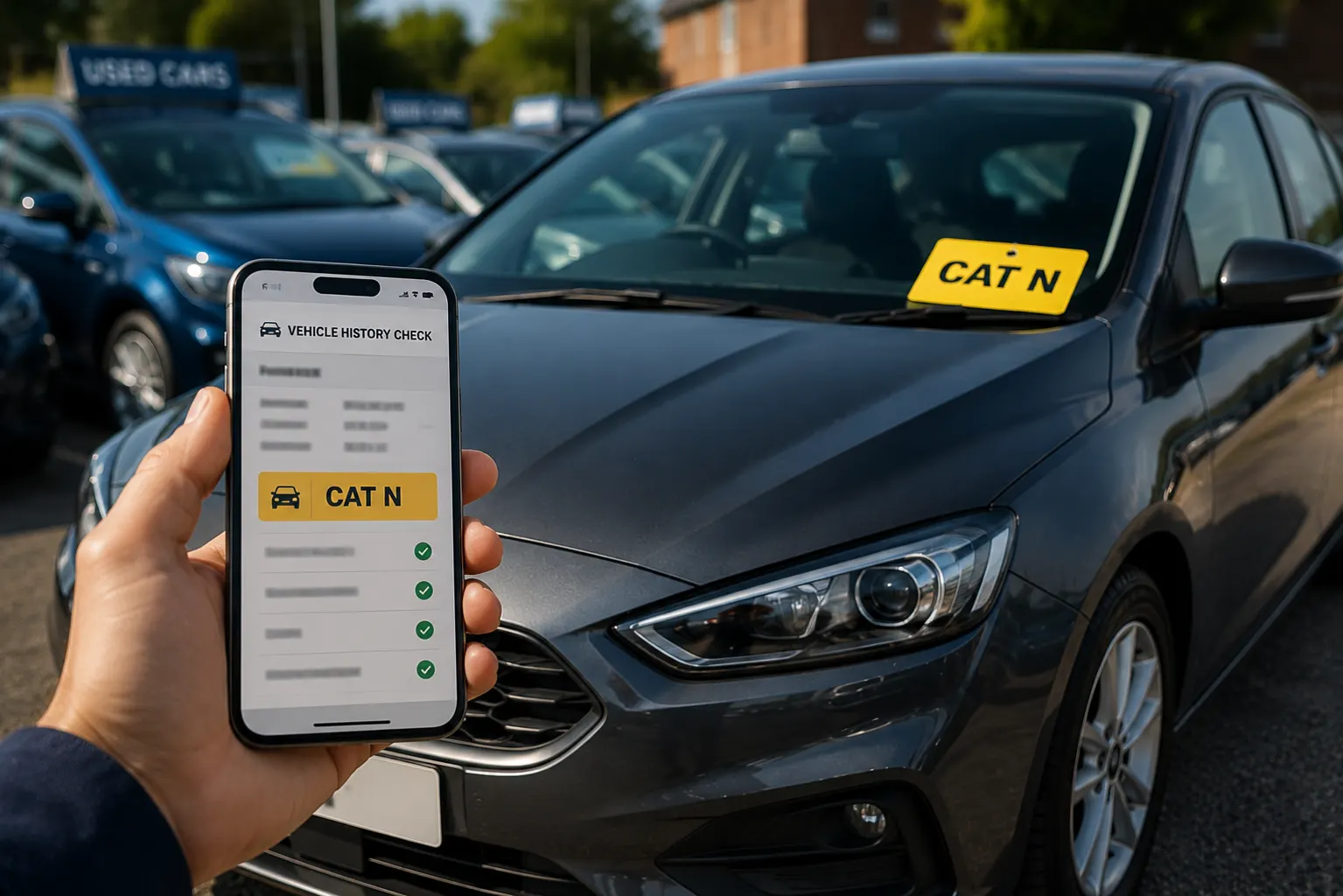
If you have seen a used car advertised as “Cat N”, it means the vehicle has previously been written off by an insurer because repairing it was not considered economical — but the damage was classed as non-structural.
That last part matters. Cat N does not mean the car was crushed into the shape of a crisp packet. It means the insurer decided the vehicle was repairable and had not suffered structural damage. However, it also does not automatically mean the damage was minor, cosmetic or nothing to worry about.
A Cat N car can be a bargain if it has been repaired properly, inspected carefully and priced realistically. It can also be a deeply regrettable purchase if the repairs were rushed, undocumented or performed by someone whose main qualification was owning a big hammer.
This guide explains what Cat N means, how it differs from Cat S, whether Cat N cars are safe, how it affects insurance and resale value, and what to check before buying one.
Quick Answer: What Does Cat N Mean on a Car?
Cat N means Category N: a vehicle that has been written off by an insurer due to non-structural damage but is considered repairable. The car’s chassis or main structure should not have been damaged, but it may still have had damage to bodywork, electrics, suspension, brakes or other non-structural parts. Always check repair quality, MOT history and insurance before buying.
Useful source: GOV.UK insurance write-off guidance
What Is a Cat N Car?
A Cat N car is an insurance write-off that has suffered non-structural damage.
In simple terms, the insurer has decided:
- The vehicle was damaged
- The cost of repair made it uneconomical to fix through the insurer
- The damage was not to the vehicle’s main structural frame or chassis
- The vehicle can potentially be repaired and returned to the road
The “N” stands for non-structural.
The Association of British Insurers’ Salvage Code of Practice defines Category N as repairable non-structural damage. This category is used when the vehicle does not fall into the more serious salvage categories.
Useful source: ABI Code of Practice for vehicle salvage categorisation
Does Cat N Mean Minor Damage?
Not necessarily.
This is one of the biggest misconceptions. Non-structural does not automatically mean “small scratch on the bumper”.
Cat N damage may include:
- Body panels
- Bumpers
- Lights
- Electrical systems
- Interior components
- Wheels
- Brakes
- Steering parts
- Suspension components
- Safety systems
- Cosmetic damage
- Vandalism damage
- Fire or water-related damage in some cases
The key distinction is that the vehicle’s main structure should not have been damaged. But a non-structural repair can still be expensive, complex and safety-critical.
For example, replacing headlights, sensors, airbags, wiring, suspension parts and driver-assistance systems can be costly. A modern bumper is no longer just a piece of plastic. It may contain parking sensors, radar units, cameras and enough electronics to make a small moon landing jealous.
Cat N vs Cat S: What Is the Difference?
The main difference is structural damage.
| Category | Meaning | Can It Go Back on the Road? |
|---|---|---|
| Cat N | Non-structural damage, repairable | Yes, if repaired and roadworthy |
| Cat S | Structural damage, repairable | Yes, if repaired and roadworthy |
| Cat B | Body shell should be crushed, parts may be salvaged | No, not as a complete vehicle |
| Cat A | Scrap only, no parts reused | No |
Cat S means the vehicle has suffered structural damage. Cat N means the damage is non-structural.
A Cat N car is usually less concerning than a Cat S car, but that does not mean you can ignore the details. A badly repaired Cat N car can still be unsafe, unreliable or expensive to fix.
Useful source: GOV.UK repaired write-off consumer guide
Why Would an Insurer Write Off a Cat N Car?
A car is written off when the insurer decides it is not economical to repair.
That does not always mean the car is beyond saving. It may simply mean the repair cost is too high compared with the car’s market value.
For example, an older car worth £2,500 might be written off after damage that would cost £2,000 to repair professionally. The same damage on a newer, more valuable car might be repaired without a write-off category.
Insurers consider factors such as:
- Repair cost
- Vehicle value before the damage
- Parts prices
- Labour rates
- Courtesy car costs
- Storage costs
- Specialist repair requirements
- Safety system calibration
- Paint and bodywork costs
Modern repair costs can climb quickly. A cracked headlight on some cars can cost more than an entire cheap runabout used to.
Can a Cat N Car Be Driven?
Yes, but only if it is roadworthy, insured, taxed and has a valid MOT if required.
A Cat N marker does not automatically ban the car from the road. Once repaired properly, a Cat N vehicle can be used legally.
However, roadworthy is the key word. If the car still has unsafe damage, defective brakes, damaged suspension, faulty lights or compromised safety systems, it should not be driven.
An MOT may identify some safety defects, but it is not a full accident-repair inspection. A car can have poor body repairs or hidden issues that an MOT does not fully assess.
Does a Cat N Car Need a New MOT?
Not automatically.
GOV.UK guidance distinguishes between Category N and Category S when it comes to logbook handling. If you keep a Category N vehicle after an insurance payout, you can keep the logbook. Category S has an additional V5C process.
However, even if a new MOT is not automatically required simply because of the Cat N classification, it is still sensible to have the vehicle inspected after repairs.
A fresh MOT can provide some reassurance, but it should not be treated as proof that the accident repair was done properly.
Need to understand the car’s test history? Use the MOTChecker.com vehicle health check to review MOT history, mileage records and previous defects before buying.
Is a Cat N Car Safe?
It can be, if repaired properly.
The problem is that Cat N tells you the category, not the repair quality. Two Cat N cars can be very different:
- One may have had a damaged bumper, light and wing professionally replaced.
- Another may have had electrical faults, airbag damage and suspension issues repaired cheaply with second-hand parts and enthusiasm.
Before buying a Cat N car, check:
- What damage occurred
- Who repaired it
- Whether there are repair invoices
- Whether photos of the damage exist
- Whether genuine or quality parts were used
- Whether safety systems were checked
- Whether wheel alignment was done
- Whether ADAS cameras or sensors were recalibrated
- Whether there is a recent MOT
- Whether the car drives properly
If the seller cannot explain the damage or repairs clearly, be cautious.
Should You Buy a Cat N Car?
A Cat N car can make sense if the price is right and the repair history is strong.
It may be worth considering if:
- The damage was clearly non-structural
- Repairs were carried out professionally
- There are invoices and photos
- The car has a clean current MOT
- A vehicle inspection confirms good repair quality
- Insurance quotes are acceptable
- The price is significantly lower than an equivalent non-written-off car
You should be cautious if:
- The seller has no repair evidence
- The damage history is vague
- The car has warning lights
- The MOT history shows recurring issues
- Panel gaps are uneven
- Paint does not match
- The car pulls to one side
- Safety systems do not work
- The price is suspiciously low
- You are relying on the seller saying “it was only light damage”
“It was only light damage” is a phrase that has done a lot of heavy lifting in used car sales.
How Much Cheaper Should a Cat N Car Be?
There is no fixed discount, but Cat N cars are usually worth less than equivalent non-written-off cars.
The discount depends on:
- Age
- Make and model
- Mileage
- Repair quality
- Damage type
- Service history
- MOT history
- Market demand
- Insurance availability
- Whether the car is being sold privately or by a dealer
As a rough principle, a Cat N car should be noticeably cheaper than a comparable clean-title car. If it is only slightly cheaper, ask yourself why you would accept the extra risk.
For many buyers, the saving needs to be meaningful enough to justify the potential downsides in resale, insurance and buyer confidence. Wondering what makes a good used car in general? Checking mileage and history matters just as much as the write-off category.
Does Cat N Affect Insurance?
Yes, it can.
You can often insure a Cat N car, but not every insurer will automatically cover previously written-off vehicles. Some may charge more, some may ask extra questions, and some may refuse cover.
GOV.UK warns that insurance can be more expensive for previously written-off vehicles and not all insurers will automatically provide cover.
Before buying a Cat N car, get insurance quotes using the correct details. Do not wait until after purchase to discover that your insurer has suddenly developed strong opinions.
Useful source: GOV.UK repaired write-off consumer guide
Does Cat N Affect Resale Value?
Yes.
A Cat N marker stays with the vehicle’s history and can reduce resale value. Future buyers may be cautious, even if the car has been repaired properly.
When selling a Cat N car, expect:
- Lower market value
- More questions from buyers
- Fewer interested buyers
- Possible insurance concerns
- More need for repair evidence
- Longer selling time
Good documentation helps. Keep invoices, inspection reports, MOT records and any photos showing the damage before and after repair.
A well-documented Cat N car is far easier to sell than one with a mysterious past and a seller saying, “Don’t worry about it.”
How to Check If a Car Is Cat N
A Cat N marker may appear in vehicle history checks and some sales adverts.
To check properly, use:
- A paid vehicle history check
- Insurance write-off check
- MOT history
- V5C details
- Seller documentation
- Repair invoices
- Inspection reports
An MOT history check will not always tell you whether the car is Cat N, but it can reveal related warning signs such as repeated failures, mileage issues and recurring defects. You can also check when a car's MOT is due as part of your background checks.
A MOTChecker.com vehicle health check can help you review the vehicle’s MOT history, mileage consistency and previous defects before deciding whether the car is worth viewing.
What to Check Before Buying a Cat N Car
Before buying, work through this checklist. It builds on the general guidance in our what to check when buying a used car guide, with extra steps specific to write-off history.
1. Ask What the Damage Was
Ask the seller to explain exactly what happened.
Good signs include: a clear explanation, photos of the damage, repair invoices, an inspection report and professional repairer details.
Bad signs include: “I don’t know”, “it was like that when I got it”, “just bumper damage”, “Cat N doesn’t matter”, or no paperwork at all.
2. Check the Repair Quality
Inspect panel gaps, paint match, bumper alignment, headlights and rear lights, wheel alignment, tyre wear, suspension noises, warning lights, the airbag light, parking sensors, cameras and driver assistance systems.
Poor alignment, mismatched paint or dashboard warning lights suggest further investigation is needed. It's also worth checking what mileage is reasonable for a used car of that age, since mileage and repair history together tell a fuller story.
3. Check the MOT History
Review previous MOT results for dangerous defects, major defects, suspension issues, brake problems, steering issues, tyre wear, lighting faults, mileage inconsistencies and recurring advisories.
A clean MOT history after repair is reassuring, but not conclusive.
4. Get an Independent Inspection
For anything more than a cheap runabout, consider an independent inspection.
A professional inspection can assess repair quality, suspension alignment, structural concerns, safety systems, engine bay repairs, warning lights and road test behaviour.
This is especially important if you are not mechanically confident.
5. Get Insurance Quotes First
Before paying, check whether you can insure the car and at what cost.
Use the correct write-off status when seeking quotes. Failing to disclose material information can cause problems later.
6. Check the Price Properly
Compare the Cat N car with similar non-written-off examples.
The price should reflect the history. If the saving is tiny, you may be taking on extra risk for very little reward.
Cat N and Finance: Will Lenders Accept It?
Some finance providers may be cautious about Cat N cars.
Lenders consider vehicle value and resale risk. Because Cat N vehicles are worth less and may be harder to sell, some lenders may refuse finance or offer different terms.
If you plan to buy on finance, check with the provider before committing.
Also be careful when buying any used car: run a finance check to confirm there is no outstanding finance already attached to the vehicle.
Cat N vs Cat D: Are They the Same?
Cat N replaced the older Category D classification in October 2017.
Broadly speaking, Cat D was the older non-structural repairable category, and Cat N is the newer non-structural repairable category.
You may still see Cat D on older cars written off before the category changes. The wording changed to focus more clearly on structural versus non-structural damage.
Can a Dealer Sell a Cat N Car?
Yes, but it should be described accurately.
A dealer must not mislead buyers. If a car is advertised without disclosing important history, such as a previous insurance write-off, that may raise consumer rights issues.
Private sales usually come with fewer protections, but the car must still be accurately described.
If you are buying from a dealer, keep copies of the advert, invoice, written description, messages, vehicle history report and warranty terms.
Useful source: Citizens Advice used car buying guidance
Common Cat N Buying Mistakes
Avoid these:
- Assuming Cat N means minor cosmetic damage
- Failing to get insurance quotes first
- Not checking repair invoices
- Skipping an independent inspection
- Ignoring warning lights
- Trusting a seller’s description without evidence
- Paying too close to clean-title market value
- Forgetting it will be harder to resell
- Treating an MOT as a full repair-quality inspection
- Buying because it is cheap without understanding why
The saving can be real. So can the risk.
FAQs
What does Cat N mean on a car?
Cat N means the car has been written off by an insurer due to non-structural damage. It can be repaired and returned to the road if it is roadworthy, insured, taxed and has a valid MOT where required.
Is Cat N bad?
Not always. A Cat N car can be a good buy if the damage was properly repaired and the price reflects its history. However, poor repairs, missing paperwork and insurance issues can make it risky.
Is Cat N better than Cat S?
Generally, Cat N is less serious because it means non-structural damage. Cat S means structural damage. However, repair quality matters more than the label alone.
Can a Cat N car be insured?
Yes, many Cat N cars can be insured, but some insurers may charge more, ask extra questions or refuse cover. Always get quotes before buying.
Does Cat N show on the V5C logbook?
GOV.UK says that if you keep a Category N vehicle after an insurance payout, you can keep the logbook. Category S has a separate V5C process. A vehicle history check is usually the better way to confirm write-off status.
Does Cat N need a new MOT?
A Cat N classification does not automatically mean the car needs a new MOT, but the vehicle must be roadworthy. A fresh MOT and independent inspection are sensible after repairs.
Are Cat N cars cheaper?
Usually, yes. Cat N cars are typically worth less than equivalent cars without write-off history. The discount should reflect the damage history, repair quality and resale risk.
Can you sell a Cat N car?
Yes, you can sell a Cat N car, but the history should be disclosed accurately. Buyers will usually expect a lower price and evidence of proper repair.
Should I buy a Cat N car as a first car?
Be careful. Young or new drivers may already face high insurance costs, and Cat N status can make insurance more expensive or harder to arrange. Always get quotes first.
Can Cat N be removed from a car’s history?
No. Once a car has been categorised as Cat N, the marker normally remains part of its history.
Conclusion
Cat N means a car has been written off because of non-structural damage, but it can be repaired and returned to the road. That does not automatically make it unsafe, nor does it automatically make it a bargain.
A good Cat N purchase depends on evidence: clear damage history, professional repairs, sensible pricing, insurance availability, clean MOT records and ideally an independent inspection. If the seller cannot explain what happened or prove how it was repaired, walk away. There are plenty of used cars out there, and not all of them arrive with a mystery novel attached.